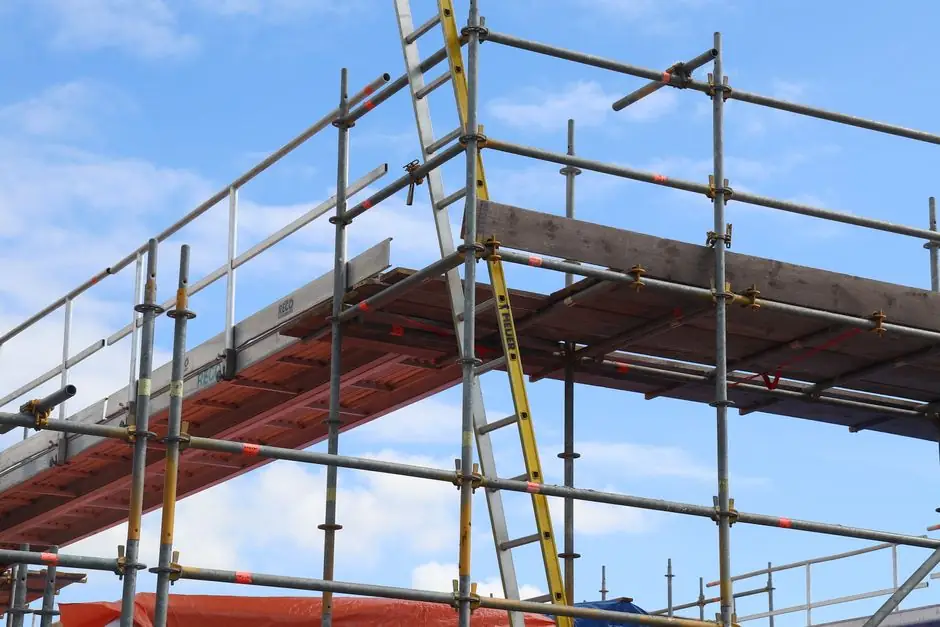
For demolition work outside Class 1 and Class 2, Australian WHS Regulation 142M(1) requires a heavy duty scaffold to AS/NZS 1576.1:2019, erected to the full height of the structure being demolished [S1]. The duty sits on the PCBU or principal contractor, not the hire company, which is why the spec needs to be written into the demolition method statement before the first tube goes up.
Demolition scaffolds differ from access scaffolds in one engineering-critical respect: they must resist both the live load of operatives with breakers and the impact load of falling debris, which is why heavy duty (4.5 kPa working load) is the regulatory floor, not the design target [S1][S3]. Used systems are acceptable for selective concrete cutting and gutting, but only when components are inspected, dimensionally checked, and free of fire or impact damage [S9].
What "demolition-rated" actually means in load terms
Heavy duty to AS/NZS 1576.1:2019 is a defined duty classification, not a marketing phrase, and it ties the platform to a 4.5 kPa uniformly distributed working load with concentrated load checks for tools and debris [S1]. Demolition platforms are sometimes built from fresh tubes and sometimes from materials recovered from the structure being pulled down, and both routes are permissible provided the duty class and connection integrity are met [S4]. Selecting a lighter access rating is the most common specification error on small demolitions: a standard access scaffold (2.5 kPa) will deflect visibly under a 30 kg breaker plus a 50 kg debris pile, and that deflection is what initiates platform collapse [S3][S4].
Two ancillary items sit on the same spec line: full-edge debris containment (solid sheeting, brick guards, debris nets) and a documented inspection regime. Debris containment is what separates a demolition scaffold from a general access scaffold, because the dominant failure mode on a demolition platform is not worker fall but platform overload from uncontrolled rubble [S3][S6].
System types: tube-and-fitting, modular (Kwikstage / system), and cantilever
Three scaffold families cover almost every demolition scenario, and the choice is driven by façade condition, height, and proximity to occupied property rather than contractor preference [S3][S4].
Tube-and-fitting (steel tube with right-angle clamps) is the most adaptable for irregular façades, salvage work, and partial demolitions where the building line is uneven. It is also the slowest to erect and the most dependent on the erector's competence for joint torque [S4].
Modular systems (Kwikstage, Cuplok, Ringlock equivalents) dominate UK commercial demolition because the pre-engineered node geometry removes most of the torque-verification work and gives a known capacity per bay. They are faster to erect on repetitive floor plates but require a full-bay access face and a sound base [S3][S4].
Cantilever (needle) scaffolding is specified where the ground line cannot be built on, for example above a basement, a pavement, or an adjacent structure. It transfers load back into the building through needles cast or bracketed into the slab, which is why it must be designed, not improvised, and tied back into a structural element capable of carrying the imposed reactions [S3][S6].
A useful comparison set: tube-and-fitting scores high on adaptability and low on erection speed; modular scores high on speed and quality control but needs a regular footprint; cantilever is the only option when ground bearing is unavailable but introduces the most complex tie-back design. Suspended (swing-stage) scaffolding is generally not acceptable for demolition because impact and debris loads exceed the rated rope and hoist capacities [S3][S4].
Anchor fixings: torque, proof-loading, and the 1.25x rule
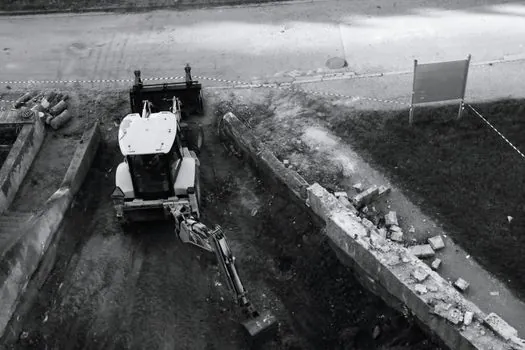
Anchor specification is where most demolition scaffold failures initiate, and the rule is concrete: drill-in expansion anchors must be installed with a torque wrench set to the manufacturer's required torque, unless the anchor has an in-built torque indicator, and a site document must record the install date, location, and the competent person's name [S5]. Chemical anchors must be proof-loaded to the working load multiplied by a factor of 1.25, with the test result recorded and held on site [S5].
Three points engineers routinely get wrong on demolition scaffolds. First, mixing aluminium tube with steel tube in the same structure is prohibited under WHS because the two materials have different stiffness, different corrosion behaviour, and different slip characteristics at the clamp interface [S5]. Second, mobile plant and overhead electric lines are listed hazards, not background noise: a demolition scaffold erected against a live LV overhead line must keep the relevant approach distance, and the scaffold must be earthed [S5]. Third, dismantling sequence is part of the scaffold design: a scaffold that is structurally adequate for erection may be inadequate for dismantling once the building it was tied into has been partially removed, so the demolition method statement and the scaffold design must be written by the same hand [S3][S5].
Selection criteria, ranked for the specifier
Five parameters decide the scaffold class on a demolition project, and they should be set in this order before quoting: (1) duty class, defaulting to heavy duty (4.5 kPa) per AS/NZS 1576.1:2019 and only dropping with documented engineering justification [S1]; (2) full-structure-height erection, which is a regulatory requirement outside Class 1 and Class 2 demolition, not an option [S1]; (3) tie pattern and anchor proof-loading to the 1.25x factor for chemical or torque-verified expansion anchors [S5]; (4) debris containment, which is the difference between a demolition platform and a general access platform [S3][S6]; (5) dismantling sequence, which must be engineered in parallel with the demolition method statement [S3][S5].
The scaffolding page on this site covers the broader classification matrix (supported, suspended, cantilever, mobile) and the duty class definitions that sit behind the heavy duty specification called up here.
When scaffolding is the wrong answer

The NFDC hierarchy of control is explicit: scaffold is only used when elimination or substitution of work at height is not reasonably practicable, which on demolition usually means machine-assisted top-down demolition is not feasible because of adjacent property, dust, or vibration limits [S2]. For selective internal strip-out, a demolition hammer on a low-level work platform is often a safer and cheaper combination than a full perimeter scaffold, and it removes most of the anchor verification burden.
For low-rise internal or partial demolitions, a mobile aerial work platform or an aerial work truck with outriggers on a prepared pad will frequently replace the scaffold entirely, subject to reach and load constraints. Conversely, on a façade retention or partial façade demolition where operatives must work above an occupied pavement, scaffolding with full debris sheeting and a designed cantilever outrigger is the only defensible option, because no mobile platform combination provides the same debris catchment area [S3][S6].
Reasonable signal nodes to track next
Two verifiable items to watch into late 2026. First, revision activity around AS/NZS 1576.1:2019 and the WHS Regulation 142M series: any change to the heavy duty threshold or the Class 1 / Class 2 boundary will shift the spec baseline for every demolition tender in Australia. Second, the take-up of torque-indicated and pre-proofed anchor systems on UK commercial sites, which the HSE guidance treats as the preferred route because it collapses the on-site torque-verification paperwork into the component itself [S5].
For related coverage, see Helical Gear Reducer Selection for Agriculture Machinery: 2026 Spec Gate.