A 2026 vendor-lineup snapshot shows new 4-axis SCARA arms covering roughly 1 kg to 20 kg+ payload, 200–800 mm reach, with published list prices running from a low-USD-thousands entry band (small Epson, Yaskawa, Denso benchtop units) up to USD 30k–75k+ for cleanroom/Stericlean, long-reach or ceiling-mounted machines such as the Stäubli TS2-80 Stericlean or Epson GX20-B [S1][S4][S6].
SCARA — Selective Compliance Articulated Robot Arm — has been the dominant pick-and-place architecture since the early 1980s, with two parallel joints giving compliance in the XY plane and rigidity on the Z axis [S2][S5]. The category is large enough that Allied Market Research sized the global SCARA robot market at USD 7.10 billion in 2018, projected to USD 14.78 billion by 2026 [S3].
Price bands by payload class (what the market is showing 2026)
New SCARA robots in 2026 cluster into three rough commercial bands, with a fourth long-tail at the high end. Epson alone markets "more than 300 models" of SCARA, signalling how granular the tiering is once reach, payload, mount and cleanroom options are stacked [S4].
Entry / benchtop (1–6 kg payload, 200–400 mm reach): typical new-arm list prices sit roughly USD 8,000–15,000 for Asian-OEM and Epson T-series-class units; this is the volume tier for electronics assembly, lab automation and small-parts pick-and-place [S2][S4].
Mid-range workhorse (6–12 kg, 400–600 mm): roughly USD 15,000–28,000. Most general factory pick-and-place, packaging and small-payload machine-tending applications fall here [S3][S4].
Higher payload / long reach (12–20 kg, 600–800 mm+): roughly USD 25,000–45,000. The 4-axis Epson GX20-B ceiling-mounted packaging robot exemplifies this band, with payload and reach scaled beyond the benchtop class [S1].
Cleanroom, Stericlean, food-grade, ESD-protected or pharma-validated arms: roughly USD 40,000–75,000+ before options, with the Stäubli TS2-80 Stericlean explicitly positioned for pharmaceutical, laboratory and harsh-environment duty [S6].
Spec levers that actually move the price
Five OEM-visible spec levers account for most of the price spread inside a given brand's catalog, and they map almost one-to-one to costed bill-of-materials additions. [S1]
1. Payload + reach. Doubling payload from 5 kg to 10–20 kg usually lifts list price by 40–80% within the same series, because gearing, servo sizing and arm structure scale nonlinearly [S1][S4].
2. Mounting option. Floor, ceiling and wall variants — the Stäubli TS2-80 ships with floor, hanging and wall configurations in the same spec sheet — are usually a USD 2,000–6,000 adder versus the base configuration, mostly mechanical and cable-routing rework [S6].
3. Cleanroom / Stericlean / IP rating. Moving from ISO Class 7 to ISO Class 5 or specifying pharma-grade finishes (Stäubli's Stericlean line) can double the list price of an equivalent standard arm [S6].
4. Cycle time / repeatability tier. Sub-0.02 mm repeatability and high-speed servo packages (Epson's G-series, Stäubli's TS2 high-dynamics variants) carry a 15–30% premium over general-purpose siblings [S4][S6].
5. Vision, conveyor tracking and fieldbus. Bundled vision, conveyor-tracking firmware, EtherCAT / PROFINET / DeviceNet modules and force-sensing can stack another USD 5,000–20,000 on top of a bare arm, and are often quoted separately by the integrator [S2][S4].
Hidden cost lines integrators rarely quote up front
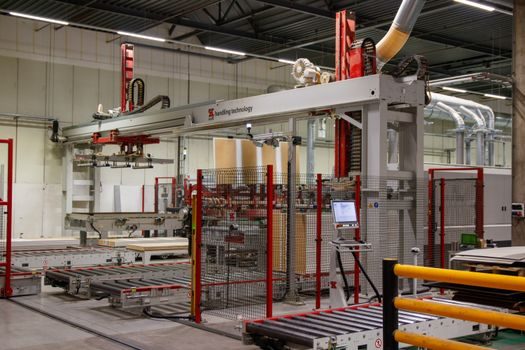
The arm is typically only 35–55% of a deployed SCARA cell's total cost. The remaining 45–65% lives in mechanical, controls and integration line items, and a 2026 buying process that ignores them will blow the budget. [S2]
Mechanical fixturing (frames, part trays, conveyor modifications, guarding, light curtains): commonly USD 5,000–25,000 per cell. Controls (PLC, HMI, safety relay, cabinet, E-stop hardware): USD 3,000–12,000. Software / integration labour at USD 100–200/hour can dominate the project — a 200-hour integration cycle on a USD 12,000 arm pushes the cell to USD 32,000–52,000 before the arm is even earning [S2][S3].
End-of-arm tooling (EOAT) — grippers, vacuum generators, force/torque sensors — is also billed separately. A pneumatic gripper block runs USD 500–2,500; servo-electric grippers USD 3,000–8,000; smart vacuum / servo-electric fingers with vision-guided alignment can add USD 10,000+ per station [S2][S4].
Comparison of the main commercial options (entry vs workhorse vs cleanroom)
Four practical selection criteria line up the three main SCARA options a 2026 buyer is likely to shortlist. Anchor: payload/reach band, indicative list-price band, typical duty, integration lead-time. [S3]
Entry / benchtop (Epson LS/T, Denso, Yaskawa SG-class equivalents): 1–6 kg, 200–400 mm; USD 8k–15k new; electronics / lab / small pick-and-place; 2–6 weeks [S2][S4].
Mid-range workhorse (Epson G-series, Stäubli TS2 standard, Yaskawa MH-series equivalents): 6–12 kg, 400–600 mm; USD 15k–28k new; general factory pick-and-place, packaging, light machine-tending; 4–10 weeks [S3][S4].
Higher-payload / long-reach / ceiling (Epson GX20-B, Stäubli TS2 long-reach, Denso HM-class equivalents): 12–20 kg, 600–800 mm+; USD 25k–45k; packaging lines, large-payload assembly, ceiling-suspended cells; 6–12 weeks [S1][S6].
Cleanroom / Stericlean (Stäubli TS2-80 Stericlean, Epson Cleanroom / ESD models): payload defined by Stericlean model class; USD 40k–75k+; pharma, semiconductor, food, lab automation with validated surfaces; 8–16 weeks [S4][S6].
Who a SCARA is — and isn't — the right tool for in 2026

SCARA's mechanical sweet spot is still tightly defined: high-speed, high-repeatability pick-and-place, screw-driving, dispensing and small-payload assembly in a planar work envelope. Two parallel joints — typically pivoting on a crossed roller guide at each rotary axis — provide XY compliance and Z rigidity, the architecture that made the category dominant in electronics and packaging from the 1980s onward [S2][S5].
SCARA is the right answer for: electronics PCB assembly, small-payload packaging (think the Epson GX20-B ceiling-mount positioning [S1]), pharmaceutical and laboratory automation needing cleanroom-rated arms (Stäubli's TS2-80 Stericlean being the canonical 2026 example [S6]), and high-throughput small-parts pick-and-place where Delta and cartesian architectures lose on cost-per-station [S2][S3].
SCARA is the wrong answer for: heavy-payload welding, large-paint work, long-reach palletising beyond ~1 m, and high-mix heavy-payload tending where an articulated robot with 6 axes and a 10–20 kg+ payload makes more economic sense — see the Articulated Robot vs SCARA Robot spec map for the side-by-side envelope and sourcing logic. For general background on the four-axis SCARA architecture and its price-performance ratio, the SCARA robot encyclopedia entry consolidates the baseline.
Standards, compliance and what to put on the RFQ
A spec-first SCARA RFQ in 2026 should pin down at minimum: payload (kg), reach (mm), repeatability (mm, typically 0.01–0.05 mm for this class), Z-axis stroke (mm) and the linear guide format backing it, cycle time at a stated payload/reach/stroke (e.g. 0.3 s for a standard 25-300-25 mm cycle), mounting configuration, IP / cleanroom rating (ISO 14644 class if relevant), and fieldbus / vision interface list [S1][S2][S6].
For pharmaceutical, food and semiconductor duty, ISO 14644 cleanroom class, surface finish validation, and — in the EU — any applicable CE / Machinery Directive conformity, plus ATEX zoning if solvents or powders are present, must be on the datasheet, not left to the integrator's discretion [S6]. For ESD-sensitive electronics, an explicit ANSI/ESD S20.20-conformant variant should be requested from the OEM [S4].
One practical sourcing reality the catalog pages do not flag: the gap between the published list price (the number on the Directindustry or OEM product page [S1][S6]) and the integrator's all-in cell price is typically 2–3× once fixturing, controls, EOAT and integration labour are loaded. A 2026 cost-down lever is to standardise on a single OEM platform across a plant and lock multi-arm quantity discounts, rather than spec-shopping per cell [S3][S4].
Buying channels and 2026 sourcing reality
Lead-time signal to watch in 2026: ceiling-mounted, long-reach and cleanroom-validated arms (Epson GX20-B class [S1], Stäubli TS2-80 Stericlean class [S6]) are still quoted at 8–16 weeks by European and US integrators, while the Chinese OEM equivalents in the same payload/reach band are quoting 4–8 weeks for non-cleanroom variants — a gap that is the most common lever in 2026 cost-down RFQs. Buyers should also check whether quoted cycle times are "best-case at 0.1 kg payload" or at the application payload; the difference routinely halves the rated picks-per-minute and changes the cell count needed for a given line throughput [S2][S4].
Trackable next signals: (1) 2026 H2 cleanroom-class SCARA list-price revisions as Stäubli, Epson and Denso refresh their pharma/life-science catalogs [S4][S6]; (2) whether the projected 2026 USD 14.78 billion global SCARA market size [S3] translates into measurable price erosion at the entry 1–6 kg tier through 2026 Q4; (3) Chinese OEM penetration into European pharmaceutical SCARA projects, currently gated by validation/documentation more than by list price.