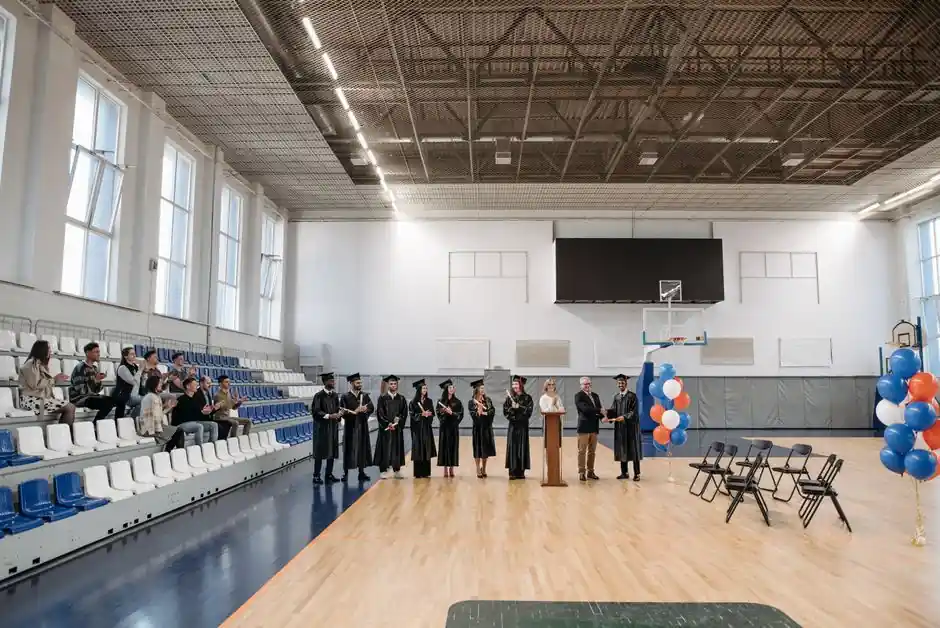
School flooring decisions are made room by room, and a K-12 specification matrix maps LVT, carpet tile, homogeneous sheet vinyl, and rubber to classrooms, libraries, hallways, cafeterias, gyms, and science labs based on traffic, moisture, and chemical exposure [S3].
Three performance numbers anchor most commercial school specifications: a 20 mil (0.5 mm) commercial wear layer for LVT in cafeterias and hallways, an NFSI-tracked coefficient of friction for slip resistance, and homogeneous sheet vinyl with heat-welded seams plus flash cove base for sanitary wet zones [S2][S3].
LVT and Carpet Tile: Classrooms, Libraries, Hallways
Luxury vinyl tile with a 5 mm thickness and 20 mil wear layer is the workhorse for K-12 classrooms and hallways because it tolerates rolling AV cart loads and frequent desk reconfigurations without telegraphing seams [S3]. Carpet tile is specified for lower-grade classrooms and libraries where sound absorption (NFSI-listed soft-surface acoustic benefit) and underfoot comfort outweigh the cleanability advantage of hard surfaces [S3][S4]. For higher education residence halls, vinyl plank is preferred over cold institutional tile to deliver a residential aesthetic while still meeting rolling-load durability targets in corridors [S4]. The selection logic is straightforward: hard surface for hygiene and rolling loads, soft surface for acoustics and comfort, with LVT bridging the two when a single specification must cover both.
Heat-Welded Sheet Vinyl and Rubber: Cafeterias, Gyms, Wet Zones
Cafeterias are the toughest hygiene zone in any school, and the dominant specification is homogeneous sheet vinyl with heat-welded seams, flash cove integral base, and minimal floor-to-wall crevices so moisture and food waste cannot penetrate grout lines [S1][S3]. Rubber sheet or rubber tile is the second-line cafeteria option because it has the highest slip coefficient among hard flooring in both wet and dry conditions and is naturally sound-absorbent, a property that matters when 300+ students are eating in the same room [S2]. In weight rooms and gymnasiums, vulcanized rubber flooring is specified for slip resistance, point-elastic shock absorption, and the ability to take inlaid game lines without a separate surface layer [S3]. Sheet linoleum remains a low-VOC, bacteriostatic option for schools targeting stricter indoor air quality programs, while poured resin and urethane systems are written into commercial kitchen and locker-room specs where hot water, chlorinated water, and frequent detergent washdown are routine [S1][S5].
Epoxy and Urethane Resin Systems: Labs, Locker Rooms, Mechanical Rooms
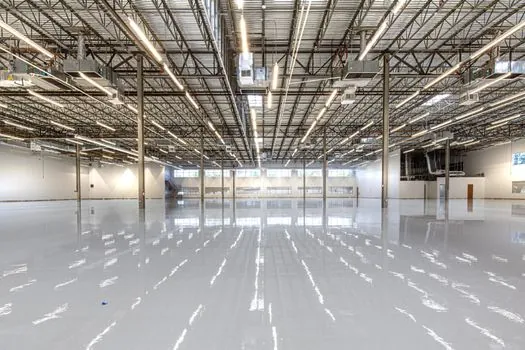
Resinous flooring, including epoxy, urethane, and methyl methacrylate systems, is the default specification for school laboratories, locker rooms, and mechanical rooms where chemical resistance, antimicrobial additives, and integral cove bases are required by institutional hygiene standards [S1][S7][S8]. For school laboratories, the resin system is normally specified with a textured or quartz-aggregate surface to maintain slip-inhibiting performance even when wet, and is laid over a moisture-mitigating primer because slab moisture vapor is a recurring failure mode in slab-on-grade school construction [S1]. Epoxy and urethane systems are also recommended for mechanical rooms where shock-absorbing, slip-resistant surfaces protect staff and dampen vibration from HVAC equipment [S1]. The cost premium over VCT is recovered through longer life cycles in these wet, chemical, or impact-loaded zones, which is why resinous floors are no longer used only in K-12 corridors but are migrating into STEM lab buildouts [S8].
Slip Resistance, Acoustics, and Indoor Air Quality: Spec Drivers
Acoustic performance is the second driver: classrooms and libraries are typically specified to a target Noise Reduction Coefficient (NRC) range through carpet tile or rubber underlayment because hard LVT and VCT alone will not bring reverberation time into the range required for intelligible speech in primary-grade classrooms [S3]. Indoor air quality is the third, and most newer school specifications now require FloorScore, GREENGUARD, or equivalent low-VOC certification on the entire flooring assembly, including adhesives, which is one reason water-based acrylic and urethane industrial adhesives have replaced solvent-borne mastics in K-12 install specs [S3][S5].
Material Comparison: LVT, Sheet Vinyl, Rubber, Carpet Tile, Epoxy
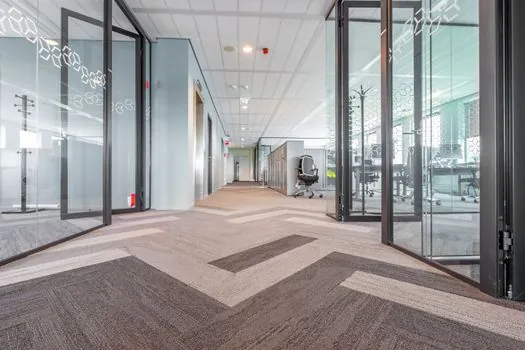
For an architect or facilities director comparing the five main school flooring families on a single page, the practical scoring matrix is: homogeneous sheet vinyl wins on hygiene and seam integrity in cafeterias and labs; rubber wins on slip coefficient and acoustic damping in gyms and wet zones; LVT with a 20 mil wear layer wins on design range and rolling-load tolerance in hallways and classrooms; carpet tile wins on acoustics and replaceability in libraries and lower-grade classrooms; and epoxy or urethane resin systems win on chemical resistance and life-cycle cost in labs, kitchens, and mechanical rooms [S2][S3][S4]. The industrial flooring category in commercial catalogs groups epoxy, urethane, and MMA systems together, while the more rigid SPC flooring sub-category, a stone-plastic composite with a rigid core, has begun appearing in higher-ed residence hall specs as a more dimensionally stable alternative to traditional LVT. The dominant failure mode for each family is also specific: LVT scratches under moving furniture if the wear layer drops below 20 mil, homogeneous sheet vinyl fails at cold-welded seams if the installer is not certified, rubber tiles can telegraph subfloor moisture, carpet tile separates at the backing if the adhesive is wrong, and resin systems delaminate when the slab moisture vapor barrier is skipped [S1][S2][S3].
Installation Window, Budget, and Long-Term Cost
School flooring replacement is constrained by a roughly 8-10 week summer install window, and the wrong product can blow the schedule: long-cure resin systems and water-based adhesives with 28-day full-cure windows must be specified with that lead time in mind, or the floor will not be open when teachers return [S3]. VCT is still used in K-12 hallways on tight budgets, but its total life-cycle cost is rising against LVT and rubber because of the strip-and-wax maintenance cycle, a labor pattern that small custodial teams cannot absorb [S3]. Resinous floors, by contrast, are specified on a higher first-cost / lower life-cycle basis, and that trade-off is now standard practice in K-12 capital planning documents reviewed between 2024 and 2026 [S7][S8]. When procurement teams ask whether to spec LVT or VCT in a 5,000 sq ft elementary corridor, the answer is almost always LVT at 20 mil, because the labor savings on maintenance over a 15-year life cycle more than offset the higher material cost, and the slip-resistance profile is also better.
Standards, Certifications, and Specification Checklist
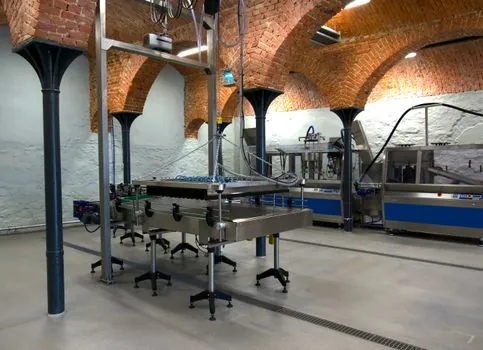
School flooring specifications should reference FloorScore or GREENGUARD for indoor air quality, NFSI-certified coefficient-of-friction testing for slip resistance, ADA-compliant transitions for accessibility, and a documented moisture-vapor test result for any slab receiving resilient or resinous flooring [S2][S3]. Walk-off entrance grids or Pedimat-style systems are specified at every primary entry to capture tracked moisture and grit before it reaches field floors, and a minimum 15-20 ft of walk-off coverage is a common K-12 design guideline [S3]. For STEM and chemistry labs, chemical-resistant welded sheet goods are listed in the master specification alongside the resinous system, with seam welding performed by a certified installer; in food-service and cafeteria lines, the integral cove base must rise a minimum of 4 in up the wall to satisfy most state health-department sanitation codes [S1][S3]. The procurement package should include the wear-layer thickness in mils, the slip-resistance test method and result, the adhesive type and VOC content, the moisture-vapor emission rate of the slab, and the installer's certification for the specific system being bid.
Trackable signals for the next 6-12 months include the publication of updated FloorScore and GREENGUARD v-aligned school procurement guides, additional K-12 districts shifting corridor specs from VCT to 20 mil LVT to cut wax-strip labor, and broader adoption of resinous industrial flooring systems in STEM and special-education lab buildouts as epoxy suppliers expand their antimicrobial and quartz-broadcast product lines [S1][S3][S8]. Procurement teams preparing 2026 summer install packages should also confirm whether their state health code still allows cold-welded sheet vinyl seams in cafeteria lines, because several jurisdictions tightened that requirement over the last 24 months in favor of heat-welded seams with integral cove base.
See also our earlier report, Fixed Gas Detector Selection for Chemical Plants: Sensor, Certification, Layout.