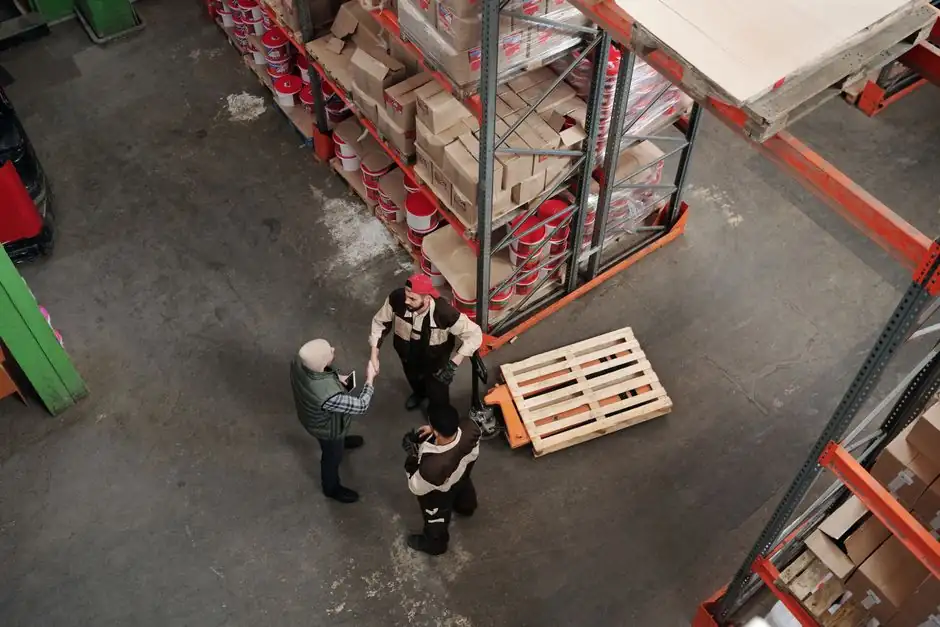
Urethane cement, also called PU concrete, is the most specified flooring for cold storage and freezer warehouses, holding a -40°F to 250°F operating range because its thermal expansion tracks the concrete substrate rather than fighting it [S4]. Cold storage zones operate at -20°F or lower, so any floor that cannot survive repeated defrost and hot-water wash cycles delaminates within the first one to two winters of service [S1][S4].
Three flooring families cover most cold-chain builds: PU cement (the freezer default), epoxy (cold rooms with stable temperature), and engineered panel systems such as ResinDek rated to -20°F for mezzanines and rack-supported work platforms [S3]. Specifying the wrong system is the single largest source of cold-storage floor failure: rigid epoxy films crack and delaminate in freezer service in 6 to 18 months after pull-down, while untreated concrete spalls under thermal shock and forklift abrasion [S1][S4].
Service Conditions That Drive the Floor Specification
Cold storage floors must survive five overlapping stresses: continuous low temperature, thermal shock from defrost and hot-water cleaning, forklift and pallet-jack abrasion, moisture and chloride exposure from condensate, and slip-risk from ice film during door cycling [S1][S5]. Freezer rooms commonly hold -10°F to -40°F while adjacent docks sit at 60 to 90°F, producing 150°F+ thermal differentials across a single floor pour [S4].
Beyond the slab itself, cold storage construction is layered: an insulated metal panel envelope, an FOAMULAR extruded polystyrene under-slab insulation, and a structural ground floor slab together form the cold-side assembly [S2]. A cold-storage floor is not just a wear surface, it is the upper boundary of the building's thermal envelope, and any crack or delamination becomes a heat-leak path as well as a hygiene failure [S2]. For spec writers building out the broader facility package, the industrial flooring selection map covers the substrate, vapor barrier, and insulation stack beneath the wear layer.
Material Comparison: PU Cement, Epoxy, Resin Panels, Sealed Concrete
PU concrete and urethane cement are the same chemistry class, a cementitious mortar bound by a polyurethane resin, and they sit at the top of the cold-storage specification because they tolerate 150°F+ thermal swings and expand at almost the same rate as the concrete beneath [S1][S4]. Epoxy is a rigid thermoset film that resists oils, acids, and cleaning agents well, but it does not track slab movement at sub-zero temperatures, so it is better matched to chill rooms held at 35 to 45°F than to true freezers [S1][S2][S5].
ResinDek panels are an engineered mezzanine-deck product rated to -20°F, used where a second-level rack-supported platform needs a cleanable, trafficable surface over a freezer or refrigerated zone [S3]. Sealed or polished concrete is the lowest first-cost option and the highest long-term risk: it handles heavy point loads but spalls under thermal cycling without a topical coating, and it cannot meet the seamless, non-porous hygiene standard demanded by USDA-inspected food storage [S4][S6].
The takeaway is simple: PU cement wins on thermal behavior, epoxy wins on installed cost, ResinDek wins on elevated platforms, and sealed concrete only belongs in non-freezer, non-food zones [S1][S3][S4][S5]. For designers comparing material families against a wider commercial-flooring spec, the commercial building flooring selection map lays the cost-versus-performance axes out across the full material spectrum.
Thickness, Installation Window, and Compliance Stack

Urethane cement is not a one-thickness system: 3/16" to 1/4" self-leveling installs cover interior freezer and packaging zones, while 1/4" to 3/8" trowel-applied builds handle dock transitions and high-load traffic lanes [S4]. The thicker trowel build is also the correct call wherever forklifts turn sharply or pallet jacks scrub the surface, because a thicker mortar absorbs point impact without telegraphing into the slab [S4].
Compliance is layered, and a cold-storage floor typically needs to clear four overlapping standards: FDA 21 CFR 175.300 for incidental food contact, USDA acceptance for federally inspected food storage, HACCP/SQF/GFSI program compatibility, and NSF/ANSI 51 for food-contact surface certification [S4]. Phased night-and-weekend installation in occupied freezers is now standard practice, with substrate moisture logs and audit-ready closeout documentation shipped with the install, because a single full-room shutdown in a cold-chain warehouse costs more than the floor itself [S4].
Who PU Cement Is For, and Where Epoxy Still Wins
Urethane cement is the correct call for any zone held below 35°F, for any room subject to defrost cycles or hot-water wash-down, and for any facility with USDA, FDA, or GFSI audit exposure [S1][S4]. It is overkill for a dry-goods chill room held at 40°F with no wash-down, where an epoxy system delivers the same hygiene and chemical resistance at 30 to 50% of the installed cost [S1][S5].
Epoxy also remains the default for facilities that want safety zoning, color-coded traffic lanes, or high-gloss aesthetics, because epoxy can be tinted and finished in ways PU cement cannot [S1][S5]. The decision rule: temperature stability of the room, not the building, drives the material choice. A facility with mixed zones (freezer + chill + dry) will commonly spec PU cement in the freezer, epoxy in the chill, and either system over a sealed concrete substrate in dry storage [S6]. For the broader layout question, including mezzanines, rack-supported work platforms, and the suspended services above, the warehouse suspended ceiling selection spec map covers how the structural envelope above the floor interacts with the floor spec below.
Failure Modes and Inspection Signals
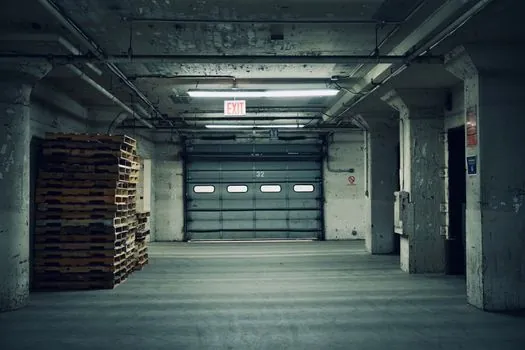
The most common cold-storage floor failure is epoxy delamination in a freezer zone, which presents as edge curl at cold-to-warm transitions, hollow-sounding patches when tapped, and visible cracking within 6 to 18 months of pull-down [S4]. The second most common is PU cement installed over a wet or under-cured slab, which produces osmotic blistering when the vapor drive reverses under negative-side slab pressure [S1][S4].
A pre-install substrate moisture test (calcium chloride or relative-humidity probe per ASTM F2170) and a pull-test of the existing slab are the two inspections that prevent the majority of cold-storage floor failures, and a reputable installer will ship those logs with the closeout documentation [S4]. Ongoing, a quarterly visual inspection for crack width, edge curl at door thresholds, and slip-test results in traffic lanes catches small failures before they become cold-chain audit findings [S1][S5].
Selection Checklist for a Cold Storage Floor Spec
Five numbers drive the spec: lowest sustained room temperature, maximum thermal differential during defrost or wash-down, expected forklift and pallet-jack traffic, hygiene standard required (USDA, FDA 21 CFR 175.300, NSF/ANSI 51, GFSI), and installation window versus shutdown cost [S1][S2][S4]. Any room held below 35°F or subject to thermal shock cycles defaults to PU cement at 1/4" to 3/8" trowel-applied at high-load zones; any stable chill room defaults to epoxy; any elevated platform defaults to ResinDek panels rated to -20°F [S3][S4].
Trackable signals for the next spec cycle: published case studies on PU cement installs older than 10 years in blast-freeze service (the current public data set skews to 2-5 year installations), and any revision to NSF/ANSI 51 or FDA 21 CFR 175.300 that tightens the incidental-food-contact surface criteria, which would force a re-test of currently accepted PU cement formulations [S4]. Also worth watching: cold-storage floor failures traced to lithium-ion forklift battery thermal-runaway events, an emerging risk that is not yet captured in any current floor standard.
The underlying component specifications are covered under spc flooring, and storage cage.