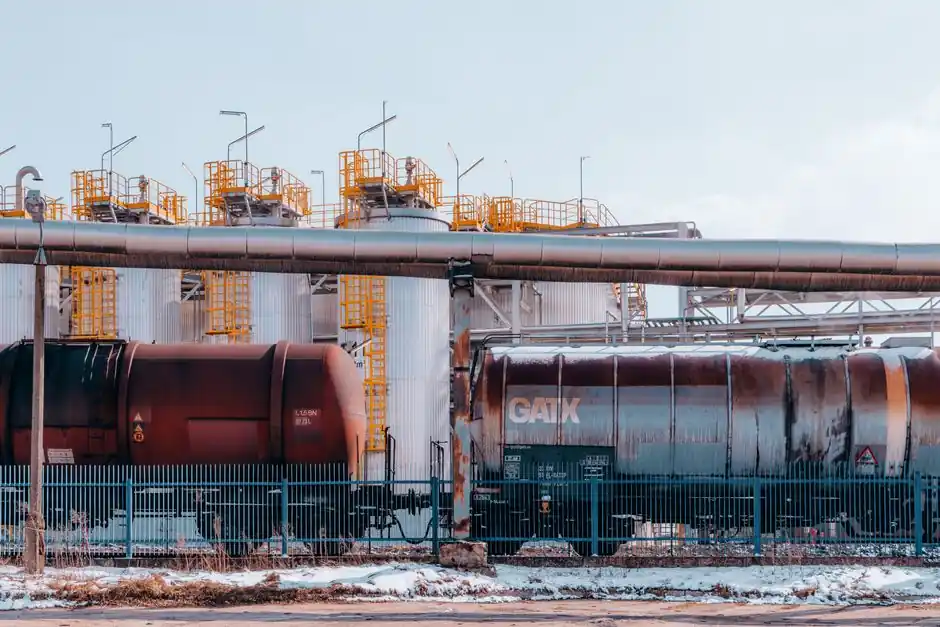
Fixed gas detection in chemical plants is governed by four coupled decisions: target gas identification, sensor technology match, hazardous-area certification, and physical layout relative to leak source geometry [S5].
Missteps in any one of these produce the same failure mode: a detector that meets paperwork but never sees the leak. OSHA-reported US chemical-industry data show 7.5 illnesses per 10,000 workers in 2019 from harmful-substance exposure, a baseline that drives the case for engineered, sensor-by-sensor selection [S1].
Sensor Technology Matched to Target Gas
Electrochemical sensors deliver high sensitivity for toxic gases such as CO and H2S, but are temperature-sensitive and limited in lifespan [S4]. Infrared (NDIR) sensors measure hydrocarbon absorption at characteristic wavelengths, are immune to catalytic poisoning, and suit continuous combustible-gas and CO2 monitoring in chemical service [S4]. Catalytic bead pellistors remain the lowest-cost option for flammable-gas detection in %LEL range, with a documented weakness in silicone- or lead-poisoned atmospheres common to chemical plants [S5]. Photoionization detectors (PIDs) respond to VOCs at sub-ppm levels but require known ionization potentials and humidity compensation, so they sit beside, not replace, the other three [S4].
A working rule from the field: pair one technology to the primary hazard (IR for methane/LEL, EC for H2S, PID for benzene-family VOCs), and use a second orthogonal technology at the highest-consequence nodes, since single-sensor architectures miss cross-interference and poisoning events that chemical streams routinely produce [S5].
Hazardous-Area Certification and Output Protocol
Detectors installed in Zone 1 or Zone 2 (or NEC Class I Div 1/2 equivalents) must carry the matching explosion-protection rating, typically ATEX 2014/34/EU or IECEx, with the temperature class matched to the process fluid's auto-ignition point [S8]. A detector certified for Group IIB may not be installed where Group IIC hydrogen is present, so certification grouping must be checked against the lightest gas on the gas list, not the most common one [S8].
Output protocol determines what the detector can talk to. A 4-20 mA analog loop with HART overlay covers most DCS and PLC integrations; Foundation Fieldbus or PROFIBUS PA are digital alternatives on greenfield builds. The detector datasheet must list the exact protocol, the diagnostic coverage, and the SIL rating if the loop is part of a Safety Instrumented Function [S5].
Detection Range, T90 Response, and Calibration Interval
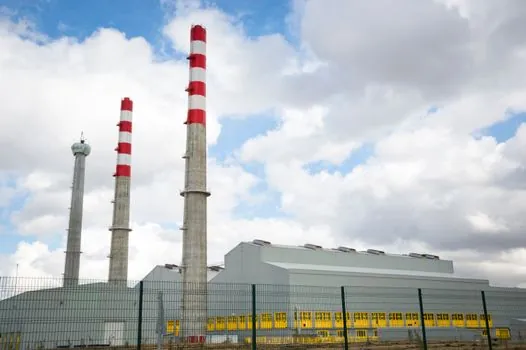
Range must bracket the regulatory exposure limit (PEL, TLV, or EU OEL) with headroom for both alarm setpoints, typically 50% and 100% of the OEL for two-stage toxic alarms [S5]. For combustible gases, range is normally 0-100% LEL with the low alarm at 20% LEL and high alarm at 40% LEL, in line with common IEC 60079-29-1 practice. T90 response time under 30 seconds suits most indoor chemical-area coverage; faster sensors (under 10 seconds) are required only where release momentum is high, such as compressor stations or pressurized transfer lines [S6].
Calibration interval is the hidden lifecycle cost. Electrochemical toxic sensors typically need 30-90 day bump tests and 6-12 month calibration; IR combustible sensors can run 12 months between calibrations with optical self-check; catalytic bead sensors need more frequent calibration in silicone-exposed streams [S4][S5]. Spec the interval into the maintenance plan before purchase, not after.
Layout: Height by Gas Density, Coverage by Release Geometry
Detector height is set by gas density relative to air, not by technician convenience. Hydrogen, methane, and ammonia (lighter than air) need ceiling or high-level mounting; chlorine, HCl, and most heavy VOCs (denser than air) need floor or low-level mounting, with a typical band 30-100 cm above grade [S5][S7]. For mixed gases, stack detectors at both heights rather than splitting the budget between two mediocre single-height arrays [S7].
Coverage radius is driven by release geometry and ventilation, not by detector count. A well-documented methodology (computational fluid dynamics coupled with release-rate modeling) places detectors at the intersection of highest concentration probability and earliest arrival time, which rarely coincides with the walk-through path [S3]. The simplified rule used in smaller plants: one detector per potential leak source (pump, valve, flange, compressor seal) plus one per ventilated enclosure change, with spacing capped at roughly 5-7 m indoors and 10-15 m outdoors where dispersion is faster [S7].
Common Failure Modes and Audit Findings
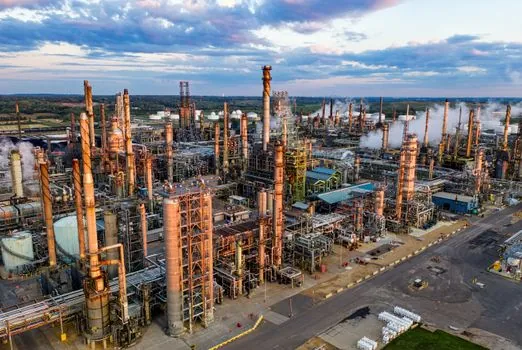
Five patterns account for most fixed-detector underperformance in chemical-plant audits: wrong gas on the sensor (an EC CO sensor watching for Cl2), wrong height (a floor-mounted H2 detector), skipped calibration (a pellistor last calibrated 18 months ago), poisoning exposure (a catalytic bead in a silicone-rich area, now reading zero), and a missing hazardous-area rating on a replaced head [S5]. Each is a paperwork-correct, function-wrong installation that survives routine inspection and fails during the actual release [S6].
Mitigation is procedural, not technical: a documented sensor-to-gas cross-reference table reviewed each time the gas list changes, a calibration log tied to the maintenance system, and a SIL/SIS loop test that exercises the detector end-to-end, not just the transmitter output [S5]. For combustible gas detector heads in hydrogen service, also verify the catalyst lot's poison-resistance data sheet, since generic pellistors are not interchangeable with poison-resistant versions [S4].
Selection Criteria Compared Across Detector Types
Across the four main fixed-detector technologies used in chemical plants, the decision splits on four axes: target gas class, poisoning resistance, calibration interval, and lifecycle cost per detection point. Infrared leads on poisoning resistance and calibration interval, but cannot see H2 or most inorganics. Electrochemical covers most inorganics at low ppm but demands the most frequent calibration. Catalytic bead is the cheapest entry to LEL combustible service and the most poisoning-prone. PID dominates sub-ppm VOC work but is blind to permanent gases and needs consumable lamp calibration [S4][S5].
The full gas detector spec, including enclosure IP rating (typically IP66 for outdoor chemical service), operating temperature range (commonly -40 to +65 degrees C), and output protocol, must be cross-checked against the plant's hazardous-area classification document before any order is placed, and the fixed gas detector head itself must carry the exact gas, range, and Group marking that the installation record shows [S8].
For a multi-gas and emissions-sampling spec, the RFQ spec for multi-gas detector in emissions sampling systems covers the related architecture. For hazardous-area hardware decisions broader than detection, explosion-proof vs anti-static: spec-first selection for hazardous areas lays out the matching logic.