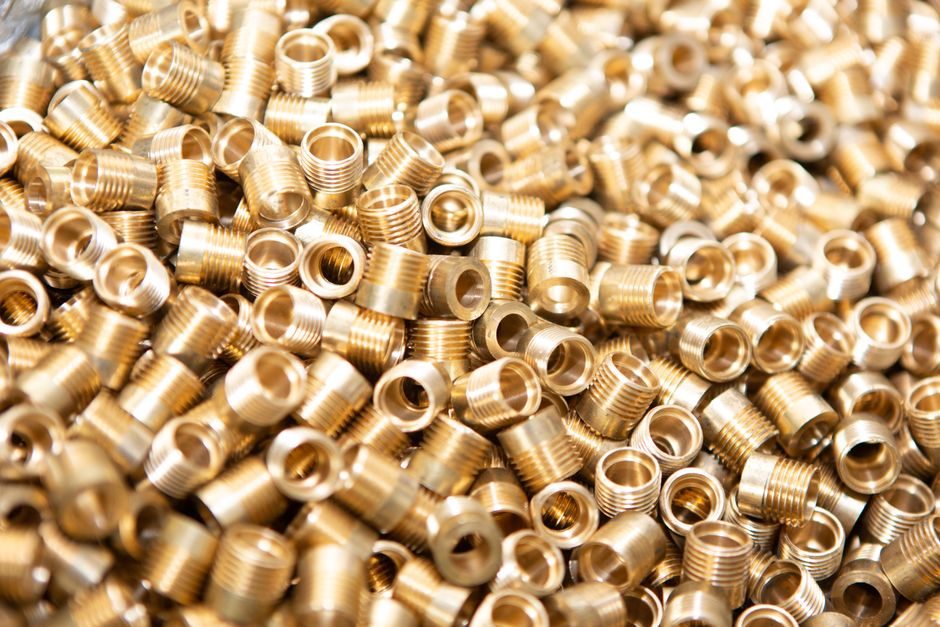
A sealing washer is a thin, often metal-cored shim shaped to sit under a bolt head, nut, or threaded plug; a gasket is a larger, flange-shaped seal compressed between two mating surfaces. The two parts overlap in function but are not interchangeable when the joint geometry, load path, or chemical service diverges from the design envelope.
Industrial sourcing data published 2026-06-18 lists non-asbestos compression gasket sheet at US$4.18–5.99/kg with a 250 kg MOQ, confirming that flat sheet stock remains the dominant bulk format for fabricators [S1]. By contrast, finished sealing washers such as the 5/8 thin GM AC-compressor variant ship in 100-unit retail packs and are dimensioned to a specific fastener, not a free flange [S2].
Functional Difference: Bolt-Loaded Face vs Flange Face
A sealing washer concentrates its sealing force on the small annular footprint under a single fastener, so it depends entirely on fastener preload and a smooth, flat counter-face. A gasket distributes load across the full flange width and depends on controlled bolt-pattern compression, often guided by ASME B16.5 flange class and bolt-stress calculations. [S1]
Pressure containment also differs: spiral-wound metal gaskets with V- or W-section steel strip and graphite or PTFE filler are explicitly engineered to tolerate high temperature, high pressure, cryogenic, and vacuum service simultaneously, because the metal winding supplies the spring-back and the filler supplies the chemical seal [S4]. A polymer sealing washer does not have that dual-element architecture and will cold-flow under sustained bolt load if mismatched to the medium.
Material Options and Chemical Compatibility Bands
Industrial gasket material listings published 2026-07-05 group offerings into customizable, fiber-reinforced sheet, rubber-cork, PTFE, graphite, and metallic categories, with finished custom-size gaskets priced from US$1.56 to US$3.89 per piece at 100-piece MOQ [S3]. Sealing-washer stock on the same platform typically pairs a metal carrier — aluminium, mild steel, stainless 304/316, or copper — with an elastomer or PTFE facing.
The published 2026-06-18 sheet-stock data confirms non-asbestos fibre (aramid/inorganic) with rubber binder is the default general-service grade, and the same source flags high-performance non-asbestos sheet for the upper end of the temperature band [S1]. For stainless spiral-wound units, the metal strip is usually 304, 316L, or 321 stainless paired with graphite, asbestos-free fibre, or PTFE filler, giving a broad medium-compatibility envelope from steam and hydrocarbons to aggressive acids when the filler is right [S4]. A typical copper-material sealing washer is reserved for soft, high-conductivity joints such as oil-pan drain plugs and hydraulic fittings where the copper deforms to fill micro-grooves.
Selection Criteria: Joint Geometry, Pressure, Temperature, Medium

Use a gasket when the joint is a flange pair with multiple bolts, the design pressure exceeds Class 150 (PN20), the temperature is outside 0–200 °C, or the medium is a process fluid (steam, hydrocarbon, acid, cryogenic LNG) that demands a defined leakage class. Use a sealing washer when the joint is a single threaded fastener, the cavity is small, the load is light, and the medium is oil, glycol, water, or low-pressure air — exactly the case for automotive AC compressor sealing plates [S2].
Material mapping by service, drawn from the 2026 product data: non-asbestos fibre sheet for general water, air, and low-pressure oil [S1]; PTFE-faced spiral wound or PTFE envelope for strong acids and solvents; graphite filler for high-temperature steam above the elastomer ceiling; EPDM or NBR for water and oil respectively on sealing washers; and FKM (Viton-class) for hydrocarbon and elevated-temperature fastener sealing. The spring-washer category is adjacent but distinct — its job is to hold bolt preload against vibration, not to seal a fluid path, and it should not be confused with a sealing washer even when both sit under the same bolt head.
Decision Matrix: Gasket vs Sealing Washer on Four Criteria
Comparison on the four criteria that drive 80% of real specifications: (1) Load path — gasket spreads force across a flange face, sealing washer concentrates force under one fastener; (2) Pressure rating — spiral-wound and ring-joint gaskets are rated to ASME B16.5 Class 2500 and above, while a typical elastomer sealing washer is limited to roughly PN16–PN40; (3) Temperature window — graphite-filled spiral wound operates continuously above 400 °C, whereas a nitrile sealing washer is usually capped near 110 °C; (4) Chemical envelope — PTFE and graphite fillers cover strong acids and steam, while copper and aluminium sealing washers are restricted to cool, non-corrosive fluids and to galvanic-compatible bolt metals [S1][S3][S4].
For an automotive AC line that sees refrigerant oil at sub-150 psi and modest temperature, the 5/8 thin sealing washer is the engineered choice and is sold as a fitment-specific part [S2]. For a chemical skid flange carrying 150 lb steam at 200 °C, the same logic forces a spiral-wound gasket with graphite filler and a stainless inner ring, not a sealing washer of any material [S4]. Specifying the cheaper, easier-to-source part in the wrong slot is the most common cause of joint leakage in skid retrofits — see the discussion of flame-arrester seating versus plastic pipe joints for a parallel compatibility failure pattern.
Failure Modes When Material and Service Are Mismatched
Three failure modes dominate field reports. First, elastomer sealing washers in hot oil or steam blister, harden, and lose compression set, after which the bolt re-torques but the seal does not recover. Second, non-asbestos fibre sheet in strong oxidising acid disintegrates along the fibre-matrix interface even when the binder is rated for the chemical; the correct swap is a PTFE-faced or pure PTFE envelope gasket. Third, mixed-metal galvanic couples — an aluminium sealing washer under a stainless bolt in a wet saline atmosphere — produce pitting that destroys the seal face within months; the mitigation is to match the sealing washer metal to the bolt metal or to insert an isolating plastic washer. [S1]
Spiral-wound units address a different failure mode — thermal cycling — by combining the metal winding's spring-back with a flexible filler, which is why they remain the default for refinery and petrochemical flanges where the alternative (compressed non-asbestos sheet) would be extruded on the first hot cycle [S4]. The same logic explains why a sealing washer is never used on a process flange: it has no spring-back element, so any thermal-expansion gap between the bolt and the joint defeats the seal.
Sourcing, Standards, and Sizing Discipline
Bulk procurement of gaskets and sealing washers remains heavily Asian-sourced: the 2026-06-18 listing on Made-in-China.com reports 239,772 active products under the Sealing & Gaskets category, and the 2026-07-05 sealing-gasket-material subcategory continues to publish direct-from-factory pricing for custom and stock parts [S1][S3]. The 250 kg sheet-stock MOQ versus the 100-piece washer-pack MOQ tells the buyer that gaskets are still a fabricated semi-finished market and sealing washers are a finished-component market [S1][S2].
Sizing discipline is the same in both worlds: a gasket must follow the flange standard (ASME B16.5 / B16.47 / EN 1092-1), and a sealing washer must follow the fastener standard (DIN 125 / ISO 7089 / SAE J849 for inch-series). Substitute parts that ignore these dimensional envelopes will sit proud of the counter-face, pinch unevenly, and leak regardless of material grade.
Trackable Next Signals

Confirm the 2026-07-05 Made-in-China category count and the 2026-06-18 non-asbestos sheet price band on the next sourcing cycle before locking annual contracts [S1][S3].