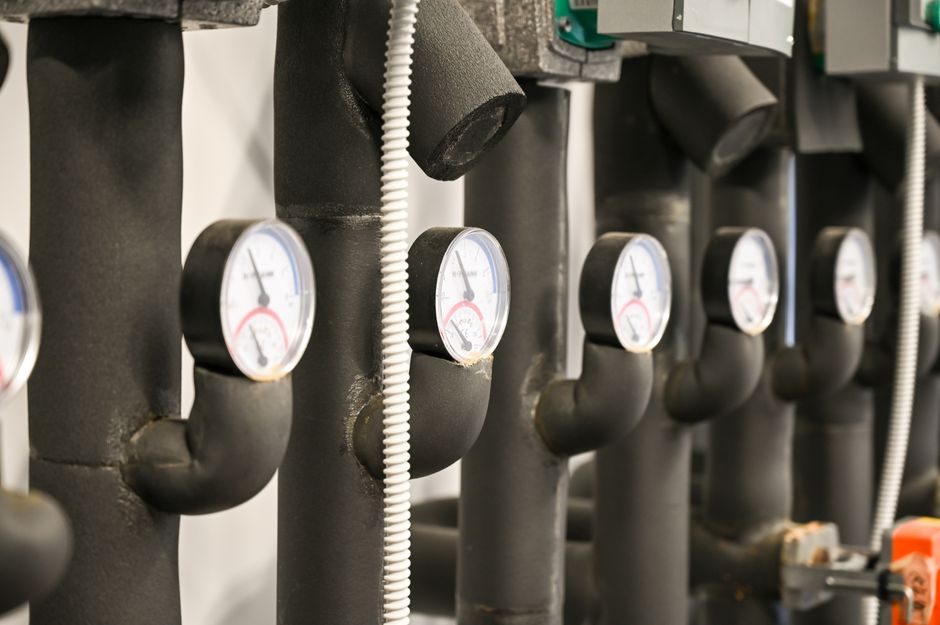
A pinch valve is a flex-body valve in which a resilient elastomer sleeve is closed by an external plunger or pinch block, so the process fluid touches only the sleeve and the two end connectors — never the actuator or the metal body [S4][S6].
Published 2026 product lines span an extreme size range: 6 mm (DN6) solenoid-pinch valves for pure-water and sample lines with a CV ≥ 0.05 on a 6 × 9 mm silicone tube [S3], up to DN2000 (2,000 mm) multi-jet bottom-discharge valves rated 2.5–100 bar with stainless-steel bodies in 1.4404 / 1.4462 for hydroelectric and penstock service [S1]. Screw-in electrically-actuated food-grade pinch valves sit in the middle, DN10–DN50 with G 3/4"–G 2" connections and POM or anodized aluminium wetted components [S2].
Operating Principle and Flex-Body Geometry
Closing force is applied perpendicular to the flow path by a solenoid, pneumatic, hydraulic, electric, or manual actuator compressing the sleeve through a pinch bar — meaning full bore is preserved when open and the elastomer is the only wetted dynamic seal [S4][S6]. The "direct-acting" or "solenoid" style (e.g. the 1269 series) closes by direct plunger travel with no pilot stage, simplifying clean-in-place on particle-laden or impure samples [S3]. The "full-port" sleeve geometry means the through-bore equals the connecting pipe, so pressure drop is dominated by the sleeve wall and not by a throttled metal seat — useful in slurry, dosing, and bottom-discharge duties where a pinch valve outperforms metal-seated alternatives.
Two sleeve-mount arrangements exist: external pinch (actuator outside the line, easiest to service) and internal pinch (mechanism inside the line, used where the housing must isolate the actuator from hazardous or sanitary media) [S6]. For DN2000 bottom-discharge service, the manufacturer specifies EN 593, EN ISO 1074-1 / 1074-2, DIN 3202, BS 5150, ISO 5752 face-to-face, ASME B16.10, EN ISO 19 marking, EN 1092-2 / ISO 2531 / BS 4504 flanges, and EN 12266-1 testing [S1].
Sleeve and Wetted-Material Selection
Sleeve polymer choice is the single biggest determinant of cycle life, chemical compatibility, and temperature ceiling — and the published 2026 product data shows three dominant material tracks [S2][S3][S6]. Natural or EPDM rubber handles abrasive slurries and lime/water treatment; silicone (60 Shore A in the 1269 series) handles pure water, pharma, and analytical samples with a verified life of more than 2 million cycles and an operating pressure window of –70,000 Pa to +80,000 Pa (–10.2 to +11.6 psi) [S3]; and POM or POM-ELS (conductive black) sleeves are used where the housing must be electrically dissipative but the medium stays inside an elastomer/polymer wetted path, as on the 80 series food-grade pinch valve [S2].
For food and pharma lines, the 80 series keeps the medium in contact only with the sleeve and the threaded cover, while the actuator housing uses a colourless-anodised food-grade aluminium alloy with no medium contact, available with POM, conductive POM-ELS, anodised aluminium, or stainless-steel covers [S2]. The 50 series uses the same architecture for industrial service at DN40–DN65 with G 11/2"–G 21/2" screw connections, sleeve changeable with the maker's assembly tool [S5]. A direct comparison: silicone on a 6 mm port handles clean water at < 1 bar with 2 M-cycle life; natural rubber on a DN2000 penstock handles 100 bar water but at cycle counts orders of magnitude lower; POM suits mid-range food dosing where cleanability outweighs high-pressure capability.
Size, Pressure Class and End Connection
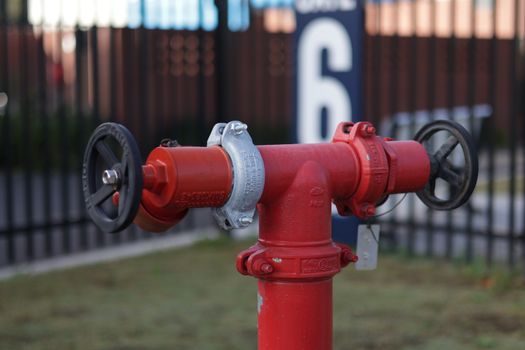
Pinch valves are specified by three numbers: DN (bore), PN or pressure class, and end-connection standard — and the 2026 data shows the envelope is wider than for most ball valve or butterfly valve families. The smallest published 2026 solenoid-pinch valve is DN6 with a 6 × 9 mm silicone tube, max 80 kPa (11.6 psi) [S3]. Screw-in electrically-actuated units span DN10–DN50 (G 3/4"–G 2") for the 80 series [S2] and DN40–DN65 (G 11/2"–G 21/2") for the 50 series [S5]. At the top end, the VH4 bottom-discharge / multi-jet pinch valve covers DN200–DN2000 (7.874"–78.74") at 2.5–100 bar (36.3–1,450.4 psi) with flow up to 14 m³/s (494.41 ft³/s) [S1].
End connections follow service class: threaded (G / BSP) for compact food and OEM skid builds; flanged to EN 1092-2, ISO 2531, or BS 4504 for municipal and penstock water; and ASME B16.10 face-to-face for cross-border hydrocarbon or process-plant builds. Compared with a globe valve of equal DN, a full-bore pinch valve typically drops the same line pressure with less seat-induced turbulence — but only if the sleeve is correctly elastomer-matched to the line temperature and chemical exposure.
Actuator and Control Architecture
Five actuator classes are visible in the 2026 catalogue data, each matched to a duty cycle: solenoid (direct-acting, fast, typically < 1 Hz, for sampling and dosing) [S3]; electric (continuous modulation via positioner, for OEM skids and food dosing) [S2][S5]; pneumatic (fast open/close, fail-safe by spring, for slurry and process isolation); hydraulic (high thrust, for DN ≥ 600 and pressures up to 100 bar) [S1]; and manual handwheel (low-cost, no power available). For the VH4 line, Di Nicola supplies mechanical, electrical, and hydraulic actuators on the same valve body, with accessories such as universal joints, flow-conveyor bells, operating headstocks, and position indicators [S1].
Control loops: on-off service is the default for solenoid and pneumatic pinch valves because of fast stroking and bubble-tight closure on slurries [S6]. Modulating service requires the sleeve to be reinforced (typically fabric-ply carcass) to avoid fatigue at partial-lift setpoints; this is the same constraint that limits a linear guide bearing life when it is run continuously at partial stroke rather than end-to-end. The 1269 series is explicitly positioned for on-off, sample-handling, and pure-water routing, not for continuous modulation [S3].
Service-Media Match: Slurry, Pure Water, Food, Bottom-Discharge
Match the sleeve and body to the service, not the other way round: abrasive mining or mineral slurries → natural rubber or high-grade EPDM sleeve with a rugged carbon-steel or stainless body; pure water, WFI, or analytical sampling → silicone sleeve on a clean-design solenoid valve with > 2 M-cycle life, as supplied on the 1269 series [S3]; food and dairy dosing → anodised-aluminium actuator housing with a POM or POM-ELS sleeve that can be swapped without breaking the line, as on the 80 series [S2]; penstock, hydropower, and large-diameter water mains → DN200–DN2000 multi-jet bottom-discharge valve in 1.4404 / 1.4462 stainless with hydraulic or electric actuator to EN 593 / EN ISO 1074-1-2 [S1].
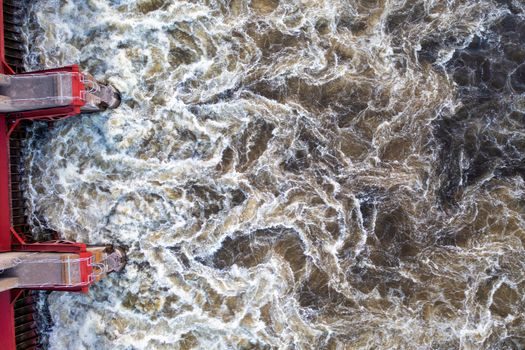
Cavitation is the dominant failure mode on large bottom-discharge valves: the multi-jet geometry is designed to dissipate kinetic energy and suppress the gas-bubble implosion that erodes metal seats, which is one reason a butterfly valve is often replaced by a multi-jet pinch design on penstock outlet duties [S1]. For related isolation duty on abrasive or fibrous lines, see how a gate valve is sized for the same envelope when full-bore isolation is required with metal-to-metal shutoff.
Failure Modes, Limits and Common Mis-Specs
The published data and the application notes converge on four recurring failure modes [S3][S6]: sleeve fatigue at the pinch point (driven by over-pressure, partial-lift modulation, or wrong polymer for the temperature); chemical attack on the sleeve (silicone is weak against concentrated hydrocarbons and some solvents — natural rubber handles water and mild slurries better); particle entrapment between sleeve and pinch bar in the open position; and actuator undersizing on DN ≥ 600 lines where pneumatic thrust cannot close against 100 bar differential. Cycle life spans from > 2,000,000 on a 6 mm silicone analytical valve [S3] to tens of thousands on a large-diameter rubber-sleeve bottom-discharge valve [S1][S6].
A common mis-spec is treating a pinch valve as a drop-in replacement for a metal-seated ball or globe valve on high-temperature steam or hydrocarbon service: most elastomer sleeves are limited to roughly –20 °C to +150 °C depending on compound, well below the rating of a comparable crossed-roller guide bearing or a metal-seated process valve. Another is specifying a fabric-reinforced sleeve for clean-room or pharmaceutical service, where particle shedding and cleaning validation become blockers — that is why the 1269 series stays with smooth, non-reinforced silicone for clean duties [S3].
Specification Checklist and Sourcing
A specifier-ready checklist drawn from the 2026 catalogue data: (1) service media and chemistry → pick sleeve polymer; (2) DN and flow (Cv or m³/s) → pick size class; (3) max differential pressure and temperature → confirm PN rating and sleeve compound; (4) end connections (G / BSP, EN 1092-2, ASME B16.10, ISO 2531) → pick body standard; (5) actuator type and control mode (on-off solenoid, modulating electric, fail-safe pneumatic, hydraulic) → pick actuation; (6) cycle duty (continuous modulation vs on-off) → pick reinforced or non-reinforced sleeve; (7) applicable standards (EN 593, EN ISO 1074-1/-2, DIN 3202, ISO 5752, ASME B16.10, EN 12266-1) → pick tested product line [S1][S2][S3][S4].
For a parallel reference on adjacent isolation valves, see this Globe Valve Selection: Body Pattern, Trim and Shutoff Class Decoded and this Plug Valve Selection Guide: 2026 Spec Boundaries and Service-Media Match; for a contrasting isolation technology on a similar envelope, the Gate Valve Selection Guide: Body, Class and Bonnet Gates lays out metal-seated alternatives. Open-source reference designs such as the OpenValve 3D-printable pinch mechanism (released 2026-06-02) also let small-scale irrigation and sensor-driven liquid-control prototypes be benchmarked against commercial solenoid-pinch valves before committing to a DN6 [S3].