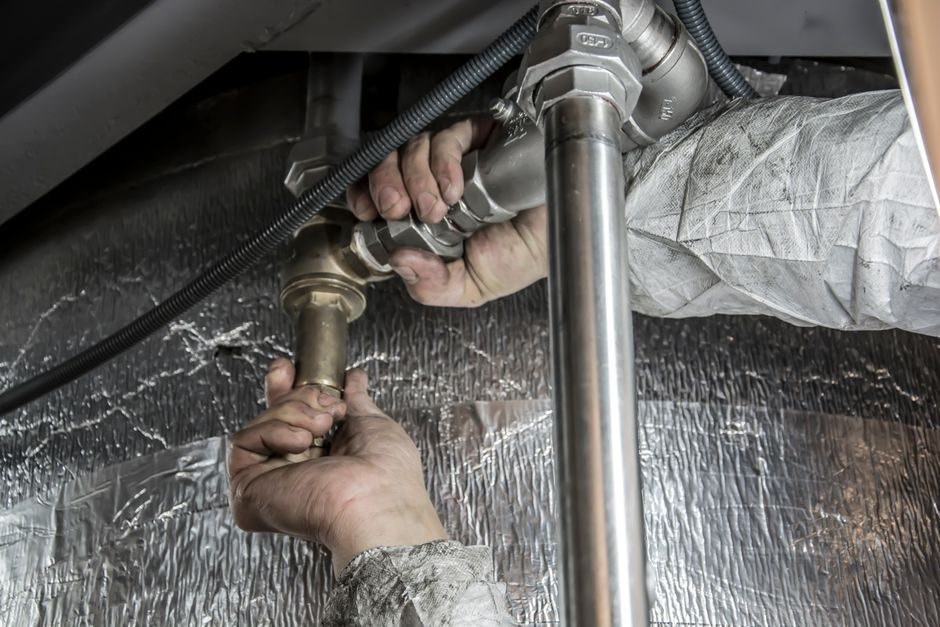
A solenoid valve is a two-part device — an electromagnetic coil with a moving plunger plus a valve body with one or more orifices — that opens or closes a flow path when the coil is energised [S3]. Selection work therefore splits cleanly: pick the right fluid-handling hardware first, then match an electrical coil whose duty cycle, voltage and enclosure rating will survive the cabinet it sits in.
This guide walks the four engineering gates that decide whether a valve works in service: media compatibility, port/way geometry, pressure-Cv envelope, and coil/excitation duty. The same gates apply whether the fluid is compressed air in a pneumatic manifold, steam on a heat exchanger, or 350 bar hydraulic oil on an excavator boom circuit [S3][S6].
Gate 1 — Media and Materials: Body, Seat and Seal
Solenoid valves are produced in two functional modes: normally closed and normally open, defined by the de-energised state of the coil [S3]. The mode is secondary to the question of whether the wetted parts survive the process fluid, because a failed seal kills the valve long before the coil does.
Brass and 316 stainless steel bodies are the default choices for neutral media: compressed air, inert gases, water and synthetic oils [S2][S7]. Stainless is mandatory when external wetted parts contact more aggressive fluids, and elastomer seals — NBR, Viton (FKM) or PTFE — are paired with the body to control both piston and seat leakage [S3]. PTFE seats are specified for steam and hot water, FKM for hydrocarbons and elevated temperature, EPDM for hot water and low-pressure steam, NBR for general-purpose air and water at ambient temperature. Manufacturers such as OMEGA-FLO publish dedicated sub-lines for steam, hot water and anti-water-hammer service so the seat material is locked to the application rather than left to the buyer [S7].
For cryogenic duty, specialised cryogenic solenoid valves enter the catalog with extended bonnets and low-temperature seal compounds [S2]. When the fluid is a hydraulic mineral oil at 200–350 bar, the body moves to carbon steel with hardened poppet seats, and the catalogue line is labelled “high pressure” rather than “general purpose” [S2].
Gate 2 — Port Count, Orifice and Cv: 2/2, 3/2, 5/2, 5/3
Port count is the first number a buyer quotes: 2-port 2-way (2/2) is the on/off workhorse; 3-port 2-way (3/2) diverts or mixes; 5-port 2-position (5/2) and 5-port 3-position (5/3) drive double-acting pneumatic cylinders [S4]. AirTAC’s catalog separates these by series: 4STV is the 3/2 line, 4SV and 7SV are the 5/2 and 5/3 lines, and the 6D/6DW integrated manifolds add a fieldbus communication module on top of the pneumatic port set [S4].
Direct-acting 2/2 valves use the plunger itself to open the orifice; they tolerate zero differential pressure and stay simple, but Cv stays modest — typically suited to analytical instruments, instrument air and small water lines [S3][S7]. Pilot-operated and forced-pilot designs use the line pressure to assist opening, trading a minimum pressure differential for much higher Cv in the same envelope, and they dominate steam, process water and compressed-air ring mains at line sizes DN8 to DN50 [S7]. A side-by-side view for typical duty:
Direct-acting 2/2 — clean neutral media, zero ΔP, low Cv, fastest response, smallest envelope. Pilot-operated 2/2 — general fluids at line pressure above ~0.5 bar, medium-to-high Cv, larger body, slower response. 3/2 direct-acting — actuator pilot duty, instrument air, drain valves. 5/2 and 5/3 — pneumatic cylinder direction control, with 5/3 closed-centre, open-centre and pressure-centre variants for mid-position logic [S4].
For OEM pneumatics, an air solenoid valve is the standard part; for process fluids the specifier reviews the solenoid valve family against the media gate first.
Gate 3 — Pressure, Temperature and Response Envelope
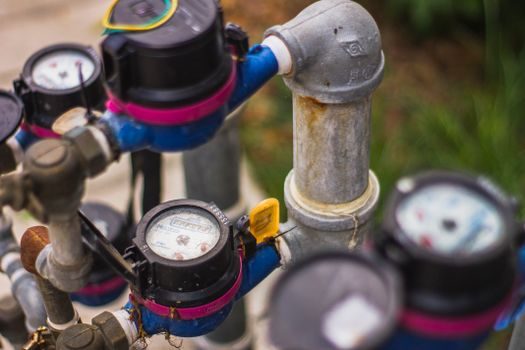
Response time is set largely by whether the coil is AC or DC, and how the plunger is sprung. AC solenoid-operated valves give response in the 8–15 millisecond band, while DC units sit in the 30–40 millisecond range — the trade is that DC coils are not subject to the high inrush currents that overheat and damage AC coils during accidental spool seizure or fast cycling [S3]. AC coils handle higher initial pressures; DC coils run cooler under sustained duty but cap out at lower differential pressure [S3].
For the process envelope, three numbers need to be matched: minimum operating pressure differential (often 0 bar for direct-acting, 0.3–1 bar for pilot-operated), maximum working pressure differential (1 MPa is a common catalog ceiling for brass-body general-purpose units, rising to 10–35 MPa for high-pressure hydraulic lines [S2]), and maximum fluid temperature (set by the soft seal — NBR to ~80 °C, FKM to ~150 °C, PTFE to ~180 °C, dedicated steam bodies to 200 °C and above [S2][S7]). On pneumatic service, ISO 5599-compliant 5/2 and 5/3 valves from the 4SV and 7SV lines are routinely specified up to 1 MPa with sub-millisecond actuation under the right lubrication regime [S4].
Where the solenoid sits on a safety instrumented function, a time-delay with hand reset is added so a transient electrical interruption cannot dump a pneumatic actuator or vent a diaphragm case unintentionally [S3]. The solenoid valve is normally open, passes the positioner output to the diaphragm case, and on a confirmed power loss closes the port and bleeds the case to drive the control valve to its fail-safe position [S3].
Gate 4 — Coil, Enclosure and Electrical Duty
The coil is the part that fails first if it is misapplied. Continuous-duty coils (100 percent ED) are the catalog default; their winding class — typically Class F (155 °C) or Class H (180 °C) — sets the ambient temperature ceiling once the valve body is also radiating heat. IP65 is the typical minimum enclosure for an industrial cabinet; IP67 and NEMA-4 stainless solenoid heads are specified for washdown or outdoor service [S4][S7].
Voltage selection follows the control architecture. 24 V DC is the dominant cabinet standard and pairs with PLC discrete outputs; 110/230 V AC is the line-voltage option for relay-logic panels. Where the valve must commute fast, AC is preferred; where the duty is continuous or the ambient is hot, DC is preferred, and a solenoid coil of the right class should be ordered as a spare because the coil is the only field-replaceable part on most valves [S3].
For OEM pneumatics, an air solenoid valve with a NAMUR or ISO 5599 interface and a multi-pin connector is now standard, and integrated 6D/6DW derivatives stack valve outputs on a fieldbus node rather than running one cable per coil [S4]. That removes a meaningful share of cabinet wiring, which is one reason a balancing valve on a downstream HVAC loop is sometimes paired with electrically actuated control valves built on solenoid platforms rather than dedicated motorised actuators.
Application Snapshots: Pneumatic, Steam, Hydraulic and Analytical
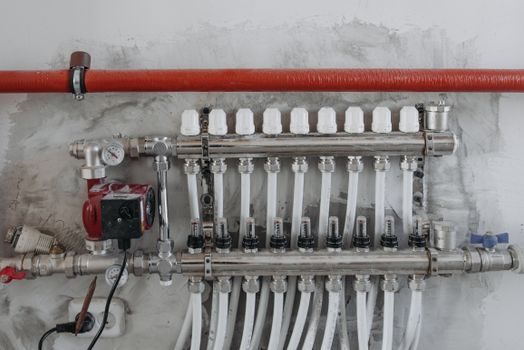
Pneumatic directional control — A 5/2 or 5/3 valve from the 4SV/7SV line, 24 V DC, IP65, with a silencer on the exhaust ports and a manual override for commissioning. In a 30-valve machine the integrated 6D/6W manifold with fieldbus cuts panel space by half [S4].
Steam and hot water — A 2/2 normally closed pilot-operated valve, PTFE seals, 316 stainless body, rated to 1.6 MPa and 180 °C minimum. The seat material is non-negotiable here; an FKM seat on saturated steam fails in days [S2][S7].
Mobile hydraulic — High-pressure 2/2 or 3/2 cartridge valves at 25–35 MPa, fitted inside the excavator main control block so a solenoid spool shifts the pilot stage that drives the larger section valve [S6]. Mobile spec also demands 12 or 24 V DC coils, vibration-resistant encapsulation, and Deutsch-type connectors.
Analytical and instrument air — A miniature direct-acting 2/2 valve in a 1/4″ or 6 mm body, FKM seals, zero minimum pressure differential, Cv in the 0.05–0.2 band, mounted directly on the sample conditioning panel [S2][S7].
Common Selection Mistakes and Failure Modes
Specifying a general-purpose NBR-sealed brass body on steam or hot-oil service is the single most common error — the seat swells or hardens and the valve either will not close or leaks by within hours [S2][S7]. Fitting a DC coil where a fast AC response is expected gives sluggish actuation; fitting an AC coil on a high-cycle service without an inrush limiter burns the winding.
Forgetting the minimum pressure differential is the second trap. A pilot-operated valve installed on a dead-ended drain line with 0 bar across the orifice will not open because there is no line pressure to lift the diaphragm [S3][S7]. A direct-acting or zero-differential variant is the fix. Specifying Cv too low for the line size chokes the process and the valve looks undersized; oversizing Cv costs money and gives a seat that never seats cleanly because the orifice is too large relative to the plunger travel.
Where a check valve sits downstream of a solenoid, sizing both together is the right habit, and the same gate logic used in [check valve selection]( /news/check-valve-selection-four-engineering-gates-before-you-pick-a-type.html) applies to the solenoid’s seat: orifice area, cracking pressure, and backpressure behaviour must be reviewed as a system rather than part-by-part.
Sourcing, Standards and Final Checks
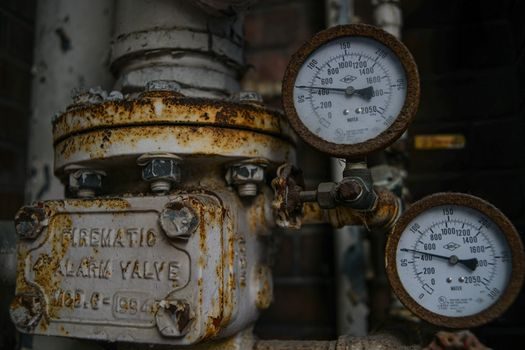
General-purpose solenoid valves for neutral media — air, water, inert gases, synthetic oils — are stocked as catalog items by OMEGA (OMEGA-FLO 2/2 and 3/2 lines in brass and 316 SS, NEMA-4 stainless head) and by AirTAC for pneumatic directional control (4STV, 4SV, 7SV, 6D/6W) [S4][S7]. Specialist Chinese OEMs such as Ningbo Quansheng produce the solenoid base accessories — bodies, manual overrides, mounting kits — that feed into pneumatic manifold assembly [S1].
Standards to confirm before sign-off: enclosure rating (IP65 minimum, IP67 or NEMA-4 for washdown), coil insulation class (Class F or H), seat and body material matched to media and temperature, declared Cv at the stated ΔP, and a cycle-life figure at the duty cycle the application actually demands. For safety-instrumented duty, a time-delay with hand reset is the documented practice to ride through transient power loss without spuriously tripping the downstream actuator [S3].
Track these signals on the next sourcing pass: published Cv tables per orifice size from each shortlisted vendor, lead time on the matched replacement coil, and the OEM’s declaration of conformity to ISO 5599 for pneumatic directional valves and to the relevant pressure-equipment directive for steam and hydraulic service. A linear guide or crossed-roller guide sitting in the same machine has no functional link to the solenoid’s seat, but the cabinet-level review should still check that the coil’s ambient rating is consistent with the heat the nearby motion components throw into the enclosure.
For related coverage, see AGV Robot Types, Navigation Stacks and Selection Gates.