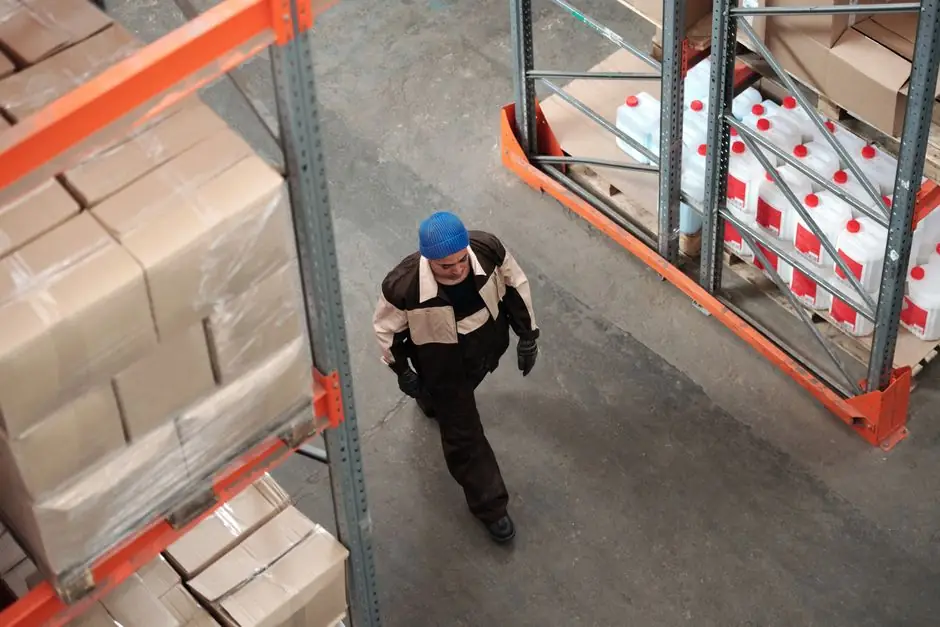
A plastic pallet used in warehouse racking does not automatically require fire-retardant additives, but added flame retardants become necessary when the facility, insurer, fire authority, or customer acceptance criteria specify reduced combustibility [S1][S4].
For automatic fire sprinkler design, plastic pallets are generally considered a higher fire hazard than wood pallets, and NFPA 13 identifies requirements for warehouse owners using wood or plastic pallets for storage [S3][S8].
Fire-retardant additives: what they change
Fire-retardant additives alter combustion behavior by reducing flame spread, melt-drip, and the tendency of the polymer to support fire propagation. HDPE and polypropylene pallets can be compounded with flame-retardant additives for that purpose [S2][S4].
The additive package is part of the polymer formulation, not a separate storage control. A prototype documented in full-scale fire testing combined flame-retardant additives with magnesium hydroxide and red phosphorus, demonstrating that performance depends on the complete compound and pallet design rather than additive presence alone [S2].
One supplier describes FM-approved plastic pallets as flame-retardant, non-toxic, and non-halogen, but a purchasing specification should require test documentation for the exact pallet model, material grade, dimensions, and intended storage arrangement [S6]. The descriptive supplier claim does not replace project-specific approval [S6].
Compare ordinary, treated, and non-combustible pallets
Ordinary plastic pallets provide reusable handling benefits but are generally treated as a higher fire hazard than wood pallets when evaluating automatic sprinkler design [S3]. HDPE or polypropylene pallets can be compounded with flame-retardant additives, commonly tested under plastic flammability standards, to reduce melt-drip and flame spread [S4].
Conditions that can trigger an FR requirement
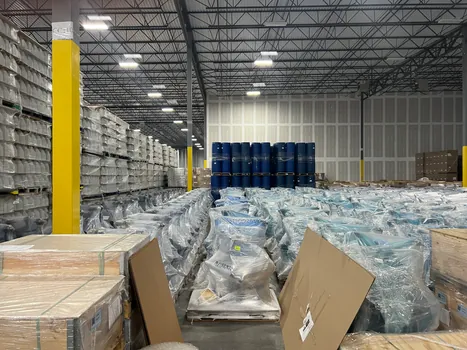
Some warehouses can accept only flame-retardant plastic pallets, and because open-pool plastic pallets can go to any warehouse, they must be flame retardant [S1]. This is a commercial and operational requirement as well as a fire-safety trigger, particularly in rental or closed-loop pool systems.
A facility should obtain the requirement in writing before ordering. Useful evidence includes the rack or storage permit conditions, insurer instructions, fire marshal guidance, customer specifications, and the pallet supplier’s test report or approval documentation [S4].
Who should use FR plastic, and who should not
FR plastic pallets fit warehouses with explicitly required flame-retardant pallet specifications, restricted customer pools, or high-density storage arrangements where reduced polymer combustion is part of the approved protection strategy [S1][S4]. They are also relevant where a supplier offers FM-approved FR pallets and the project design references that approval [S6].
They are not automatically necessary for every plastic pallet used in a rack. A warehouse with ordinary commodity storage, approved sprinklers, no restrictive insurer or customer terms, and no code requirement may have no basis for paying for an FR formulation. The engineering case must come from the facility’s documented fire-load and storage assessment [S3][S8].
One safety guidance set advises stacking plastic pallets no higher than 4 feet, limiting each pile to 2 stacks, and keeping the pallets separated from other stored material [S7].
Certification and procurement evidence

Specify more than the words “fire retardant.” The procurement package should identify the polymer, additive system, pallet model, test method, tested configuration, issuing laboratory or approval body, and whether the evidence applies to the exact product offered [S4][S6].
For closed-deck and open-deck sanitation decisions, the geometry of the pallet remains relevant alongside flammability. Closed-deck versus open-deck plastic pallets compares cleanability and drainage, while the separate fire decision requires flammability evidence and an approved storage basis.
Limits, inspection, and field performance
Fire-retardant performance can be compromised by damage, contamination, wear, or an unsuitable test configuration, so pallets should be inspected and maintained rather than treated as permanent passive protection [S4]. Additive performance also depends on the resin and complete formulation, not on a generic label applied to “plastic pallet” [S2].
Storage controls remain part of the design. NFPA 13 addresses idle pallet storage for automatic sprinkler design, and plastic pallets generally receive greater fire-hazard consideration than wood pallets in that evaluation [S3]. Rack arrangements must also be checked for sprinkler interaction and in-rack sprinkler requirements [S10].
The practical decision is straightforward: specify FR additives when an approved requirement or documented risk strategy calls for reduced flammability, and document that basis. Until the fire authority, insurer, customer, or facility engineer confirms a requirement, “warehouse racking” alone is not enough to justify an FR formulation.