
A pallet rack drum cradle converts a standard 42-inch rack bay into horizontal storage for 30- and 55-gallon steel drums, with an 800 lb capacity [S7].
The correct arrangement combines load-rated pallet rack, drum-specific support and restraint, and separate secondary containment for hazardous liquids [S3][S4].
Horizontal Drum Storage Starts with the Rack Format
Horizontal storage uses the drum's cylindrical body as the load path, unlike ordinary pallet storage for boxed or bagged material. A 42-inch pallet rack with box or step beams can become a horizontal drum station when fitted with compatible cradles [S7].
Dedicated steel drum pallet racks are another format. Models listed for 30- and 55-gallon drums hold either 12 or 16 drums, depending on configuration [S1]. These drum pallet racks are designed to store 30- and 55-gallon drums and hold either 12 or 16 drums, depending on the model.
This arrangement suits oil, chemicals, lubricants and other drum-packed materials that are stored horizontally and accessed for dispensing [S4]. It does not suit every inventory: upright drums, incompatible container shapes and loads requiring full-fork access require a different stand, cabinet or rack layout [S3].
Cradles and Chocks Solve Different Movement Problems
A drum cradle supports the container and keeps it positioned within the rack beam, while a drum chock limits rolling along the support surface [S4][S5]. One product should not be treated as a substitute for the other or for a properly rated rack.
Vertical drum stands elevate one drum for controlled pouring and access, and many support movement by pallet truck or forklift while incorporating anti-tip features [S3]. For 55-gallon drums, DENIOS lists racks, stands, cabinets and rollers as distinct equipment classes: racks provide multi-drum horizontal storage, stands handle single drums, cabinets secure upright flammable-liquid drums, and rollers rotate sealed drums for mixing [S3].
Chocks are most relevant when horizontal drums can shift during placement or removal [S4]. They reduce movement, collision and falling-container risk, but they do not provide spill containment and cannot guarantee that a leak will not occur [S4].
Compare the Main Storage Configurations
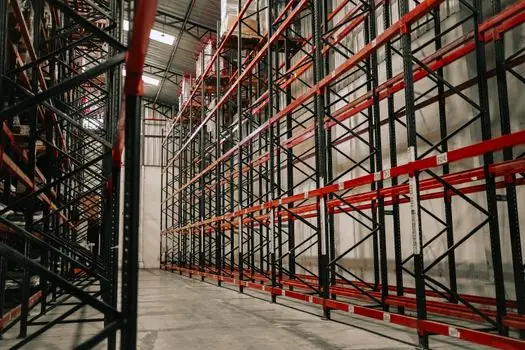
The primary comparison is rack-mounted cradles, dedicated drum racks, single-drum stands and vertical cabinets. DENIOS describes multi-level drum racks as welded-steel systems with adjustable beams and heavy-duty galvanized sumps, while single-drum stands prioritize mobility and controlled pouring [S3].
For existing 42-inch pallet rack, a cradle retrofit is usually the most direct way to add horizontal drum positions, provided the beam type and load rating are verified [S7]. For hazardous liquids, the selection is incomplete unless floor containment and dispensing controls are addressed separately [S3].
Containment Is a Separate System
Secondary containment must be specified independently from rolling restraint because a chock has no leak-capture function [S4]. DENIOS offers heavy-duty galvanized steel or polyethylene sumps for drum racks and describes these as corrosion-resistant containment components for industrial chemical environments [S3].
Integrated containment is intended to collect leaks during storage, handling and dispensing, protecting the floor and reducing cleanup demands [S3]. The rack product page also identifies 55-gallon drum racks as equipment for secure and compliant storage in industrial chemical environments, but the supplied material does not establish one universal containment volume or a universal compliance standard for every application [S3].
That distinction matters during procurement. Specify the drum size, stored material, number of drums, rack dimensions, beam compatibility, rated load and containment requirement as separate line items. A 42-inch cradle and an 800 lb cradle capacity do not by themselves establish the rack's permissible load or the containment performance [S1][S7].
Loading and Compatibility Determine Performance
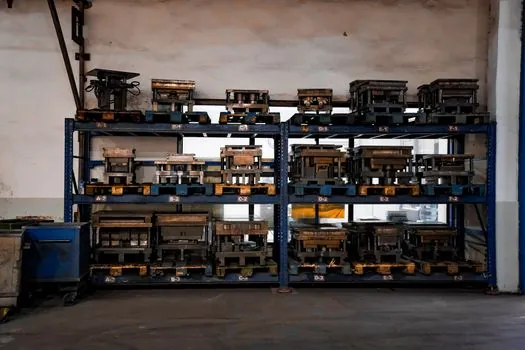
Pallet rack drum cradles are engineered around specific rack geometries. The cited 42-inch model works with both box and step beams and supports 30- and 55-gallon steel drums [S7]. A dedicated rack listing is broader: its cradle bars are described for 55-gallon drums and for creating heavy-duty drum racks from pallet rack [S6].
Before installation, verify the drum diameter, length, filled weight, rack bay width, beam type and combined load rather than relying on the drum capacity alone. The 800 lb figure applies to the listed cradle configuration, while the dedicated rack family holds either 12 or 16 drums by model [S1][S7].
Access is another constraint. A horizontal cradle stores the drum within the beam envelope and may complicate fork entry, while a mobile stand is built around controlled dispensing and material handling [S3][S7]. If pallets, storage cages, or nearby goods share the aisle, their clearance requirements must be included in the layout review.
Inspection and Handling Still Control the Risk
A drum chock helps prevent drums or barrels from rolling off horizontal supports, but it cannot replace correctly rated racking, proper loading or safe drum-handling procedures [S4]. Its selection depends on drum dimensions, rack design, storage method and the handling process [S4].
Operationally, inspect supports, beams, welds, fasteners and restraints for damage, deformation or loosening. Confirm that drums are seated fully and that chocks engage as designed before workers approach the rack. The cited guidance identifies shifting during placement or access as the movement scenario that a correctly selected chock helps control [S4].
For steel drums containing chemicals, lubricants or flammables, combine the physical restraint system with compatible secondary containment and site-specific emergency procedures [S3][S4]. Chocks reduce movement-related incidents; they do not control the consequences of a damaged container or a chemical release [S4].
The next procurement step is to document drum dimensions, filled mass, rack model, beam profile and containment needs, then verify those inputs against the cradle's 42-inch format, 800 lb rating and drum-size compatibility [S1][S7].