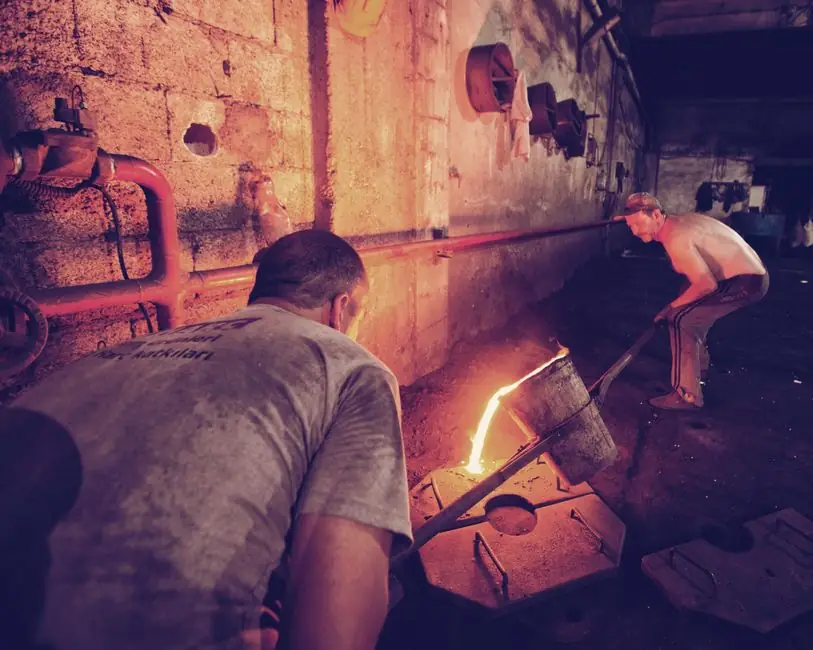
A hot-chamber gooseneck combines a hopper, bush pot, shot cylinder, and curved melt channel, with iron-based construction exposed continuously to molten metal [S1][S2].
Material selection is alloy-specific because the shot system handles zinc, magnesium, tin, or lead alloys at lower melting points than aluminum, while the gooseneck remains immersed in the melt [S2][S3].
What the Gooseneck Must Survive
The gooseneck is a cast metal body immersed in the holding-pot melt. It houses the shot cylinder and the curved channel that carries metal upward to the heated nozzle and die [S2].
Three damage mechanisms dominate this duty. Molten-metal erosion attacks the exposed channel, plunger-to-cylinder sliding wear reduces seal efficiency, and heat at the nozzle encourages metal freezing and leakage [S2]. The hopper also heats and stores liquid metal, while the bush pot conducts it toward the mold under injection pressure [S1].
Wear symptoms are measurable at the machine level: slower die filling, fluctuating casting weight, and nozzle leakage indicate that the shot system is no longer holding its intended flow and sealing performance [S2]. In a functioning sequence, the retracted plunger admits melt through a fill port, then moves downward to close the port and force metal through the channel and nozzle [S2].
Compare Common Gooseneck Materials
Cast iron is the established baseline for hot-chamber shot-system bodies because it is iron-based, inexpensive relative to fabricated alternatives, and used for parts held in the molten-metal bath [S2].
High-temperature, corrosion-resistant cast iron improves the hopper option for erosive high-temperature alloy service, while heat-resistant alloy construction is used for the gooseneck body.
Heat-resistant tool steel is an identified construction route for an integrally cast gooseneck containing a casting chamber [S6].
Material Selection by Alloy and Duty
Hot-chamber construction is suited to zinc, magnesium, tin, and lead-based alloys because these lower-melting-point metals do not require the operating temperature associated with aluminum; iron pickup from the gooseneck is also cited as a reason aluminum is not normally processed in this system [S3]. Zinc and magnesium are identified as suitable low-melting-point alloys for hot-chamber die casting, while aluminum is normally excluded because it can absorb iron from the cast [S3][S5].
For zinc and tin service, the selected body must tolerate both sustained molten-metal contact and thermal cycling while preserving a smooth shot-cylinder bore. For magnesium, material compatibility, melt cleanliness, and the risk of contamination must be controlled as part of the gooseneck decision, rather than treating cast iron as a universal answer [S1][S5].
Who Benefits from Corrosion-Resistant Construction
Corrosion-resistant and heat-resistant goosenecks are appropriate for foundries running erosive zinc or magnesium alloys, high-volume automatic shot cycles, and machines where maintaining stable part weight and nozzle sealing has priority over minimum replacement cost [S1][S2].
This specification is not the best fit for operations casting aluminum in a hot chamber, because the published process guidance excludes aluminum from normal hot-chamber use because of potential iron absorption into the casting [S3]. Cold-chamber systems are the relevant architecture when the metal must be transferred separately from the furnace.
For inspection and procurement teams, a generic instruction to order a “corrosion-resistant gooseneck” is inadequate. The purchase should identify the cast alloy or material family, machine model, bore diameter, plunger diameter, channel geometry, nozzle interface, heat treatment, and liner arrangement. The plunger, bore, gooseneck geometry, and nozzle length act as a matched set and determine shot volume and metal pressure [S2].
Limitations, Failures, and Maintenance
Material selection cannot eliminate the physical limits of the shot system. Erosion remains active in molten metal, sliding wear continues between the plunger and cylinder, and thermal load remains concentrated around the nozzle [S2]. No material grade alone guarantees constant shot speed, part weight, cycle time, or die life.
The plunger rings and cylinder wall form a dynamic seal. As rings and bore wear, metal bypasses the plunger and less of the stroke reaches the die, directly reducing usable shot volume [S2]. Replacing only the plunger while retaining an eroded bore or mismatched gooseneck can therefore reproduce unstable fill and weight problems.
Specify a Corrosion-Resistant Gooseneck
A defensible gooseneck specification starts with the alloy family and operating temperature, then confirms machine compatibility. Published example sizes cover 50 mm standard bore for DC88, 55 mm for DC100, 60 mm for DC130, and 70 mm for DC200 [S1].
For exposed components, the material record should distinguish the hopper, bush pot, cylinder body, and replaceable liner rather than treating the assembly as one homogeneous casting. Heat treatment, vacuum high-pressure molding of the bush pot, and corrosion-resistant high-temperature cast iron are documented construction choices [S1], while the patented design shows heat-resistant tool steel as an alternative route [S6].
Track bore diameter, plunger leakage, shot volume, fill time, casting weight variation, and nozzle leakage as service signals. If the machine uses heated zinc dies, oil and water TCU media for hot-chamber zinc dies provide a separate cooling decision, while replacement decisions should remain tied to the gooseneck's measured bore and shot-system condition.