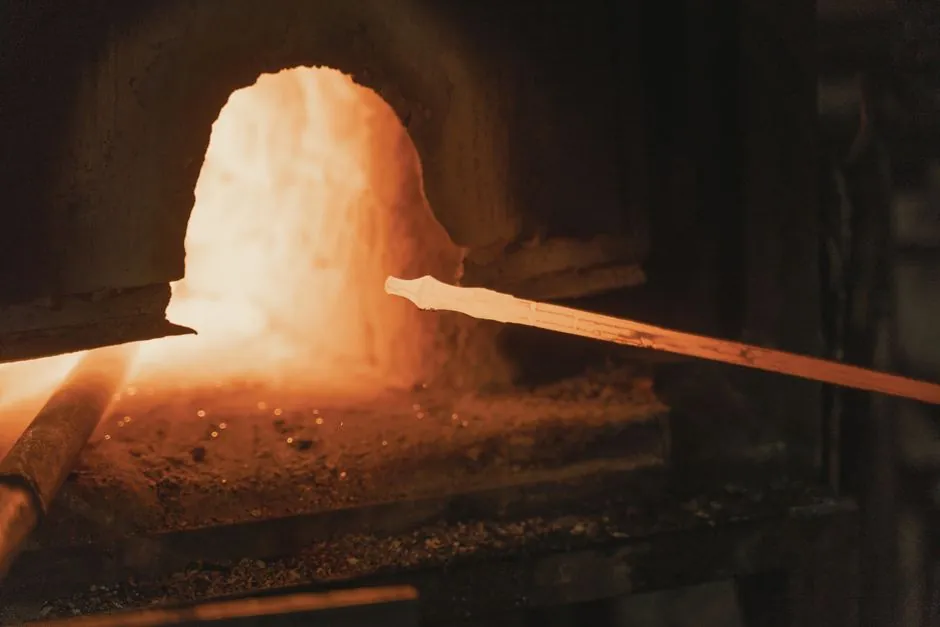
Hot-chamber gooseneck immersion depth controls how deeply the submerged plunger assembly enters the crucible melt, with no universal depth established by the cited material.
Hot-chamber systems are used mainly for zinc and other low-melting-point alloys, with magnesium also used in suitable applications [S6].
Immersion Depth Is a Coupled Machine Setting
A hot-chamber machine holds molten metal in an enclosed crucible, and a valve meters metal into a gooseneck that remains immersed in the melt [S4]. The plunger then sends that metered charge through the nozzle and into the die cavity, so immersion depth belongs to the complete dosing system rather than to the nozzle alone.
The gooseneck and plunger sit submerged with the molten metal, eliminating the separate ladling step used in a cold-chamber cycle [S2]. This arrangement suits small, high-volume parts and generally permits faster cycles than cold-chamber operation, although the selected process must still match the alloy and part geometry [S2].
Immersion depth should therefore be recorded with crucible diameter, gooseneck geometry, melt level, charge volume, plunger diameter, nozzle condition, and dosing-stroke position. The cited material provides no numeric depth, so a shop drawing or measured machine setting is more defensible than an industry-wide millimeter value.
Crucible and Gooseneck Arrangement
Hot-chamber die casting uses an integrated melt pot, a metered gooseneck, a plunger, and a heated nozzle rather than an externally filled shot sleeve [S2][S4]. The injection path in a hot chamber machine therefore starts inside the melt, where a controlled valve charge enters the submerged gooseneck.
Magnesium is held in an enclosed steel crucible under protective atmosphere, and the gooseneck is immersed in the molten metal [S4]. Keeping the nozzle full of molten magnesium between shots shortens cycle time, while gas, electric, or induction heating can prevent freezing in the nozzle [S4].
Crucible diameter, metal level, and gooseneck orientation interact directly with immersion depth.
Alloy and Thermal Limits
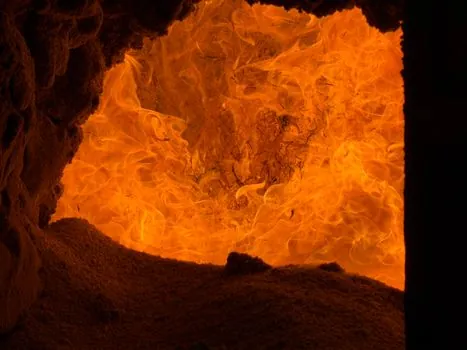
Hot-chamber processing is principally associated with zinc and other low-melting-point metals, with magnesium also used in suitable applications [S6]. Zinc, magnesium, lead, and tin are identified as materials commonly suited to the process because of their lower melting points [S2].
Magnesium furnaces require enclosure and atmosphere control because contact with air can promote oxidation and fire [S4]. Cover-gas systems include sulfur hexafluoride, less harmful substitute gases, diluted sulfur dioxide, and no-cover-gas solid-to-solid processing concepts [S4]. These controls affect the crucible surface, melt chemistry, and operating envelope around an immersed gooseneck.
For zinc-rich alloys containing substantial aluminum, cold-chamber handling may be preferable because molten aluminum can attack an immersed steel gooseneck [S2]. Molten aluminum can attack an immersed steel gooseneck through chemical dissolution and soldering.
Compare the Machine Architectures
Hot-chamber and cold-chamber systems differ in material handling, cycle time, part size, and machine tonnage, with hot chamber generally favoring small high-volume parts [S2]. For alloy containment, hot chamber uses an integrated melt pot and submerged gooseneck, while cold chamber ladles molten metal into a separate shot sleeve [S2][S4].
Hot chamber die casting is generally associated with smaller parts and supports specific materials, including zinc, magnesium, lead, and tin. Cold chamber die casting may be selected when aluminum handling or larger castings are the deciding factors.
Dosing, Cycling, and Failure Risks
The valve must deliver a repeatable charge because the submerged gooseneck, plunger, and heated nozzle form one continuous molten-metal path [S4].
Nozzle heating has three cited methods: gas, electricity, and induction [S4]. That heating should be reviewed together with immersion depth because a deeper gooseneck position does not eliminate the need to prevent freezing between shots. Conversely, heating does not justify an unnecessarily deep setting.
Inspection points should include the submerged gooseneck, plunger, nozzle, crucible interface, and valve-controlled charge. For magnesium, operators must also review cover-gas delivery and furnace sealing [S4]. For zinc and magnesium, a trend of rising shot time, unstable dose weight, nozzle freezing, or surface contamination is more useful than a standalone immersion-depth number.
Specify the Setting from Machine Data
A controlled commissioning sheet should record the nominal depth, tolerance, measuring points, melt level, and alloy, then compare those values with the machine builder's gooseneck drawing and the observed dose repeatability [S2][S4].
Cross-checks should include crucible dimensions, gooseneck outside diameter, plunger diameter, valve opening, dosing volume, nozzle restriction, and the minimum metal level required to keep the intake submerged. The gooseneck versus shot sleeve design comparison is relevant because the submerged gooseneck and the externally ladled sleeve solve different metering and thermal problems.
If the machine builder does not specify a depth, establish it by measurement rather than copying a generic figure. Record the depth with at least 3 consecutive shots, verify dose consistency, inspect the wetted components after thermal stabilization, and reduce the setting when heat load rises without a corresponding production benefit. For alloy selection, machine tonnage, or cycle-time trade-offs, the hot chamber versus cold chamber die casting tonnage guide provides the broader equipment-selection context.