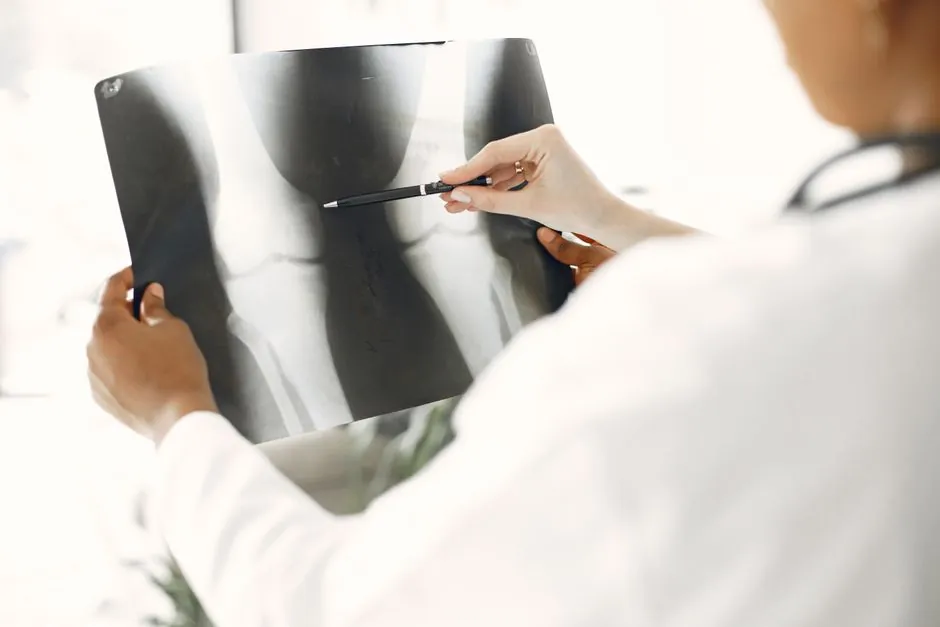
Select CR when rugged handling, low capital cost, and access to awkward geometry dominate; select DR when image speed, screen-based interpretation, and high-volume production justify the higher panel investment.
The comparison applies to field weld radiography crews using X-ray tubes or gamma sources, including pipeline girth welds, tie-ins, and confined-access components. A DR panel can produce an image within seconds, while CR requires a two-step exposure and plate-scanning workflow.
Choose CR or DR by workflow priority
Computed radiography uses a reusable phosphor imaging plate exposed like film and then scanned into a digital image. Direct radiography uses a flat-panel detector that acquires the image directly, making it the stronger option for automated or high-speed environments. A representative 24-inch weld took about 10 minutes to produce a usable digital image with DR, compared with approximately 57 minutes for film, including 12 minutes of exposure and 45 minutes of chemical development [S2].
For a field crew, the practical distinction is not simply image format. CR preserves a film-like cassette workflow and works with conventional radiography procedures, while DR removes darkroom processing and supports immediate review. DR therefore shortens the interval between exposure, defect evaluation, and a repair decision when the crew remains at the joint [S1][S2].
CR is the rational choice for a small crew, intermittent inspections, or remote work where a dropped plate is more acceptable than a dropped detector. It is also the lower-cost entry point when the assignment does not justify fleet-wide DR standardization. DR is the better choice for repeat weld inspections, production-line work, and contracts where image turnaround affects crew utilization or repair decisions [S1][S3].
Compare cost, speed, geometry, and field risk
Compare the two systems on capital cost, image cycle time, detector flexibility, damage exposure, and recording workflow. The cited equipment comparison places a phosphor plate at approximately €750 and a DR flat-panel detector at approximately €150,000, making the DR panel about 200 times more expensive [S3]. These figures are equipment examples rather than universal quotations, but they show the scale of the decision: workstation electronics are broadly comparable, while the detector and associated operating workflow create the major cost difference [S3].
DR supports faster workflow than CR because it delivers near-instant digital images, whereas CR requires a plate to be processed and scanned. That advantage is especially useful for automated, robotic, and production processes [S3]. For field radiography, however, the 200-fold detector-cost difference means speed alone does not justify DR without a workload calculation.
CR is more portable and cost-effective because its plates are lightweight and reusable, while DR systems are generally larger, more fragile, and more expensive.
Use this decision rule: choose CR for fewer exposures, restricted access, irregular geometry, and a constrained capital budget. Choose DR for 10-minute digital-image turnaround, higher relative image quality with correct exposure parameters, automated handling, and high-volume field work [S2][S3].
Match the detector to the inspection geometry
Conformable DR panels extend that geometry advantage because they can wrap around a curved pipe rather than stand off from it. This makes flexible DR a distinct option when the crew can justify the higher panel cost and where direct geometry materially improves the radiograph [S2].
The source and penetration requirement also affect detector selection. For gamma radiography, Iridium-192 covers approximately 2.5 inches of penetrated steel. Beyond that thickness, the assignment moves to cobalt-60 or a linear accelerator [S2]. The detector must therefore be specified around the exposure technique, material thickness, and source availability, not selected on image format alone.
For X-ray-tube work, a panel and tube can be carried on a crawler band around a pipeline joint, with exposure and image capture performed at the weld. Internal crawler systems are also used for automated radiography of mainline girth welds [S2]. This is the strongest DR case because the rigid detector remains in a controlled mechanical system instead of being repeatedly handled in open field conditions.
DR should be selected where a rigid panel can be positioned without losing contact, or where a conformable panel and crawler system justify the added mechanical integration [S2].
Use DR for high-volume interpretation and records
DR supports an image-review workflow that can shorten the interval between acquisition and acceptance. On-screen display allows density and contrast adjustment without automatically requiring a reshot image, while image-quality indicators and weld identification can be reviewed on the same image retained for the record [S2]. The resulting record is digital from acquisition, reducing film handling, physical filing, and later scanning.
CR also produces a digital record after scanning, but it does not provide the same immediate acquisition-to-review cycle. Its cassette-based handling remains closer to conventional film, and the plate must be transported to a compatible reader. For a remote crew without a nearby scanner, this logistical dependency can erase part of the capital saving.
DR is therefore preferable for crews interpreting multiple welds on the same shift, making accept-or-repair calls while the equipment remains on site, or supplying a shared digital file to the client. CR remains practical for a low-volume operation where one or two reusable plates can cover the workload and a scanner can be positioned close to the work area [S1][S2].
For a formal comparison of film, CR, and DR inspection workflows, see Film vs Digital Radiography for Weld Inspection.
Protect image quality and handle damage exposure
CR introduces risks that must be managed in the field: improper storage or handling can damage plates, while exposure and plate condition can contribute to image-quality problems, including overexposure [S1]. A crew should allocate inspection, cleaning, storage, and replacement procedures for phosphor plates instead of treating them as consumable film.
DR removes the plate-reading step but transfers risk to the detector and its handling. A wireless panel can be expensive to replace after a drop or impact, and a protective cover is recommended when the panel is removed from a bucky tray or table [S1]. Field specifications should therefore define the protective case, transport method, allowable handling, and contamination control separately from the imaging technique.
Image quality must be evaluated with the same weld acceptance criteria used for film. Digital review does not itself establish fitness for service; the radiograph still has to satisfy the governing inspection code and technique. Waygate states that DR can provide higher relative image quality than CR when correct exposure parameters are used, while CR can be more suitable for field use and difficult access because of its lower cost and greater flexibility [S3].
For high-volume DR work, establish a repeatable exposure test and acceptance baseline before production. For CR, establish plate condition checks and a replacement reserve. Do not compare the systems on display resolution alone, since field suitability also depends on source-to-detector geometry, material thickness, exposure control, and detector handling.
Set ownership, logistics, and acceptance criteria
Specify CR or DR against four measurable criteria: usable-image time, detector capital cost, acceptable physical geometry, and image-record workflow. A field example gives about 10 minutes to a usable DR image on a 24-inch weld, compared with approximately 57 minutes for film [S2]. For CR, include plate exposure, transport, scanning, and review time rather than comparing acquisition time alone.
CR requires a defined inventory of plates in multiple sizes, a compatible scanner, a controlled plate-storage environment, and a process for damaged or degraded plates. DR requires a panel inventory, protected transport cases, charging or power arrangements, image-transfer infrastructure, and a maintenance plan for detector damage. The source sets identify multiple plate sizes as a CR advantage and protection from drops or mishandling as a DR concern [S1][S2].
Do not rely on generalized claims about industrial-standard support without checking the applicable qualification and acceptance procedure for the exact assignment. The cited comparison notes established CR standards and less widespread DR standardization at the time of that publication, while also identifying the need for careful return-on-investment analysis [S3]. The procurement decision should therefore combine the applicable code, customer specification, technique qualification, detector specification, and workload assumptions.
Choose CR when the calculated cost per acceptable inspection remains favorable after including scanner logistics and plate replacement. Choose DR when exposure frequency, turnaround, automation, or on-site accept-or-repair decisions produce enough savings to offset the detector cost. For pipeline work, an internal crawler can strengthen the DR case because it combines a controlled detector position with digital capture [S2].
Track usable-image turnaround, rejected or repeated exposures, detector or plate damage, and total cost per accepted weld over the first 30 to 60 production days. Those four measurements will show whether the selected system matches the crew's actual access, throughput, and replacement risk.