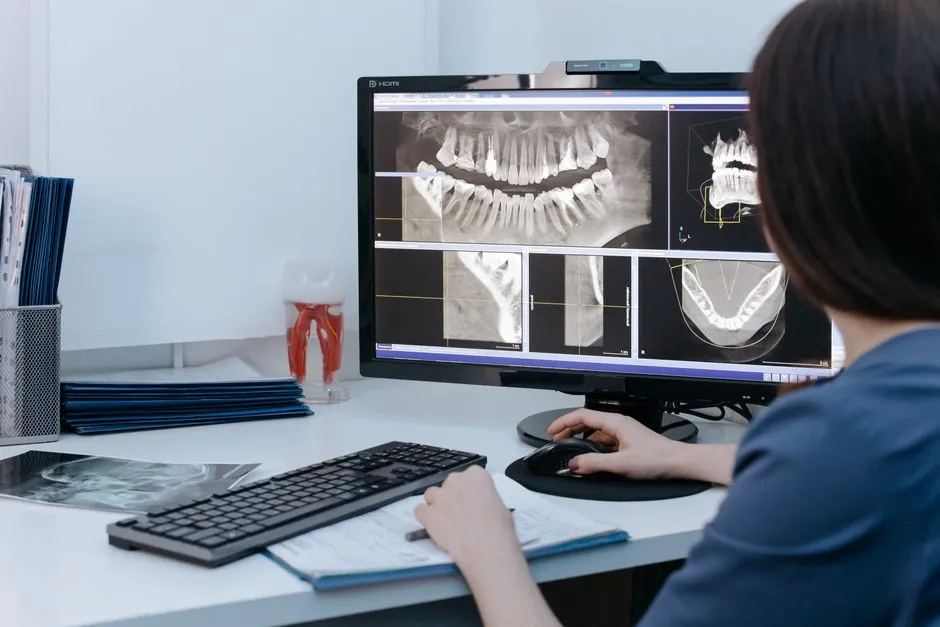
For pipe weld inspection in 2026, digital radiography (DR) cuts typical exposure times from minutes to seconds, enables instant image review, and removes darkroom chemical handling, while conventional film still wins on absolute spatial resolution and unmatched flexibility on curved pipe surfaces [S6][S2].
Both DR and computed radiography (CR) eliminate the recurring cost of radiographic film and the chemistry tied to it, and they integrate with modern QA archives; film remains a low-cost, high-resolution fallback where approved procedures and skill sets are already in place [S4][S3].
Definition and scope: film, CR, and DR are not interchangeable
Conventional film radiography records an attenuated X-ray or gamma-ray beam on a silver-halide emulsion layered onto a polyester base; the film is then chemically developed, fixed, washed, and viewed on a light box before any measurement or archiving [S5][S1]. Double-layer film mirrors the emulsion on both sides of the base, doubling sensitivity to X- and gamma-rays and roughly halving the exposure time required versus a single-emulsion film [S5].
Computed radiography (CR) replaces the film with a photostimulable phosphor plate inside a cassette similar in size to a film cassette; a high-intensity laser later releases trapped electrons as visible light that a photomultiplier tube digitizes onto a pixel matrix, after which the plate is erased with white light and reused [S2]. Direct digital radiography (DR) goes further, removing the intermediate read-out step: the detector panel converts the X-ray image directly to a digital signal and transfers it to a computer in seconds, with no cassette, no laser reader, and no mechanical handling between exposure and review [S2].
For a process engineer, the practical consequence is that CR is a drop-in upgrade for film workflows (same cassettes, same positioning hardware), while DR is a step-change in workflow and usually needs purpose-built detector holders, cables or wireless links, and panel-positioning fixtures to be reliable on real welds [S2][S3].
Decision criteria: where digital wins, where film still wins
The criteria that drive a film-vs-DR selection for weld RT are: exposure time, radiation dose, image review latency, dynamic range, spatial resolution, flexibility around curved surfaces, archive and traceability, consumable cost, and the procedure acceptance basis the inspector is working under [S1][S2][S4][S6].
On exposure time, a Baker Hughes / Waygate Technologies field comparison reports that digital radiography reduces weld inspection exposure times from minutes to seconds versus traditional film-based workflows, which is the single biggest productivity lever in high-volume shops and pipeline spreads [S6]. On radiation dose, Fujifilm's NDT team states that DR provides high-quality results while producing significantly less radiation than film, and that compared to CR, DR offers up to three times higher dose efficiency along with reduced noise and a wider usable dose range [S2]. On archive and traceability, Intertek notes that DR costs are not subject to fluctuating film prices and that the digital image is itself the archival record, removing the darkroom, the chemical replenishment schedule, and the film-storage cabinet from the QA loop [S4].
On the side of film: the AWS Inspection Trends feature on digital X-ray film (DXF) reminds readers that conventional radiographic film has been a cornerstone of weld NDE since 1896, and that modern double-emulsion film combines thinness with the flexibility to wrap around pipes, where rigid flat-panel DR detectors still need a dedicated panel holder to hold alignment on a curved surface [S5][S3]. The same article notes that larger silver-halide crystals capture images faster at the expense of resolution, while smaller crystals deliver higher resolution at the cost of longer exposure times, which is the same trade-off digital systems make with detector pixel pitch and added DDA noise [S5][S1].
Options compared side by side: film, CR, DR, and flexible DXF
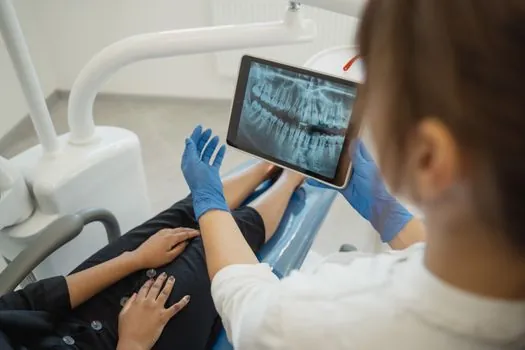
Stated by the research, the four practical options on a 2026 weld RT spec sheet compare as follows:
Conventional film: highest spatial resolution per line pair, mature procedure basis (ASME V Article 2, AWS D1.1 referenced radiographic procedures), excellent flexibility on curved pipe, but minutes-long exposure, full darkroom chemistry, recurring film and chemistry cost, and no instant review [S5][S4][S6].
Computed radiography (CR): photostimulable phosphor plates in standard cassettes, dose comparable to film, eliminates darkroom and recurring film cost, plate is reusable, but requires a CR reader and still has a multi-step workflow between exposure and digital image [S2][S8].
Direct digital radiography (DR): seconds-long exposure, up to ~3x higher dose efficiency than CR per Fujifilm, instant image review, no cassette handling, widest dynamic range and best post-processing headroom, but rigid flat panels that need a fixture (for example a chain scanner or panel holder) for repeatable positioning on pipe [S2][S3][S6].
Flexible digital X-ray film (DXF): a developing class of flexible gamma/X-ray detectors built on flexible pixelated backplanes (the same technology that drives foldable smartphone displays), intended to combine the wrap-around flexibility of film with the digital workflow of DR; the AWS feature frames DXF as promising but not yet a production replacement for film in 2026 [S5].
For NDT program owners reading a vendor quotation, the practical question is which of these three numbers actually moves on a real weld: exposure time (DR best, CR close to film), dose (DR best, ~3x over CR per [S2]), and procedure acceptance risk (film lowest, DR/CR acceptable as long as the qualified procedure is updated to the digital detector). On the first two, DR wins; on the third, film still wins where the QA program has not yet been re-qualified to a digital detector.
Use cases on real pipe welds
For new pipeline construction and high-volume shop fabrication, DR paired with a mechanical scanner (for example a chain scanner that wraps the pipe and indexes a DR panel around the circumference) gives the most repeatable, fastest inspection, with stable detector travel, consistent source-to-detector stand-off, and wireless exposure head options that remove the need to run a long high-voltage cable on the pipe rack [S3].
For in-service piping and refinery turnaround work, where access is limited, source-to-detector alignment is inconsistent, and crews may not be able to re-qualify the procedure to a digital detector on the spot, double-emulsion film still gives a defensible image with the smallest investment in new fixtures, and it remains the fallback when an inspector shows up with a procedure that has not been amended to allow CR or DR [S5][S3].
For small-to-medium NDT service companies transitioning off film, CR is usually the lowest-friction step: existing film cassettes, positioning jigs, and exposure techniques carry over, the phosphor plates drop into the same workflow, and the darkroom, chemistry, and silver-bearing film waste streams are removed, while the procedure qualification delta versus the existing film procedure is modest [S2][S8].
Limitations, failure modes, and standards to anchor the spec

Stated as engineering fact, all digital methods share a failure mode that film largely avoids: the detector introduces its own noise sources (CCD, imaging screen, flat-panel electronics, scintillator) that degrade identification of small, low-contrast defects, and the only way to recover those defects is digital image processing, which is a software step that the QA program has to validate just like any other part of the procedure [S1]. Film has no equivalent electronic noise floor, which is part of why the film-based procedure base in ASME V and AWS D1.1 has been so durable, and why a switch to DR or CR always needs a written detector qualification and a re-acceptance of the resulting IQI sensitivity against a known test piece [S1][S5].
Stated as engineering fact, conventional film darkroom work also carries a chemical-handling and silver-recovery burden that DR/CR removes entirely, but DR/CR introduce a different burden: data archiving, long-term storage format (DICONDE is the relevant NDE extension of DICOM for radiographic images), detector calibration interval, and panel handling on curved surfaces, each of which has to be written into the QA manual [S4]. On curved surfaces specifically, rigid DR panels drift and lose stand-off without a dedicated panel holder, which is why pipe-specific fixtures (chain scanners and panel holders) are now sold as part of the DR system rather than as accessories [S3].
Stated as engineering fact, the resolution trade-off is symmetric across all four options: smaller detection elements (silver-halide grain in film, phosphor grain in CR, detector pixel in DR, pixel pitch in DXF) give higher spatial resolution at the cost of either exposure time (film) or dose (CR, DR); selecting the option that meets the required IQI sensitivity at the lowest acceptable dose is the actual engineering question, not a marketing preference for "digital" [S5][S1][S2].
Selection rule of thumb for 2026 weld RT bids
If the procedure must be ASME V / AWS D1.1 film-based and the inspector cannot re-qualify to a digital detector on this scope, specify double-emulsion film with a chemical-recovery darkroom contract and accept minute-scale exposures as the cost of compliance [S5].
If the QA program already has a digital procedure qualified and the work is on shop floor or new-build pipe, specify DR with a panel holder or chain scanner matched to the pipe diameter range, and target the 3x dose-efficiency win over CR plus the seconds-scale exposure and instant review as the productivity case [S2][S3][S6].
If the work is mixed and the inspector needs one workflow that is film-shaped but digital inside, specify CR: drop-in cassettes, no darkroom, no film cost, and the smallest procedure-qualification delta versus an existing film procedure [S2][S8].
For pipe weld work specifically, the supporting article on pipe conveyor and curved-route conveying is a useful reminder that a curved pipe is also a curved inspection geometry, and the fixture choice (chain scanner, panel holder, or film wrap) matters as much as the detector choice; for any program that is wiring DR panels into a PLC or data-acquisition rack, the 4-20 mA current loop mapping in pressure transmitters explains the same 4-20 mA scaling logic that QA software uses to map a digital gray scale onto a "percent of full scale" defect dimension. For shop floor throughput planning, the elastomer jaw coupling sizing guide is unrelated and not used here; the digital radiography panel workflow overview is not on point and not used either.
Trackable signals to watch over the next two quarters: (1) any AWS / ASTM E07 / ISO 5579 revision that formalizes DICONDE archiving as the default for radiographic NDE records, (2) commercial availability of flexible DXF panels in sizes that wrap a 4 in / DN100 pipe without seam artefacts, and (3) any IAEA or ASME update that explicitly accepts DR with a chain-scanner fixture as equivalent to double-emulsion film for in-service pipe weld inspection.
For component-level specifications, see stretch film, digital multimeter, and digital panel meter.