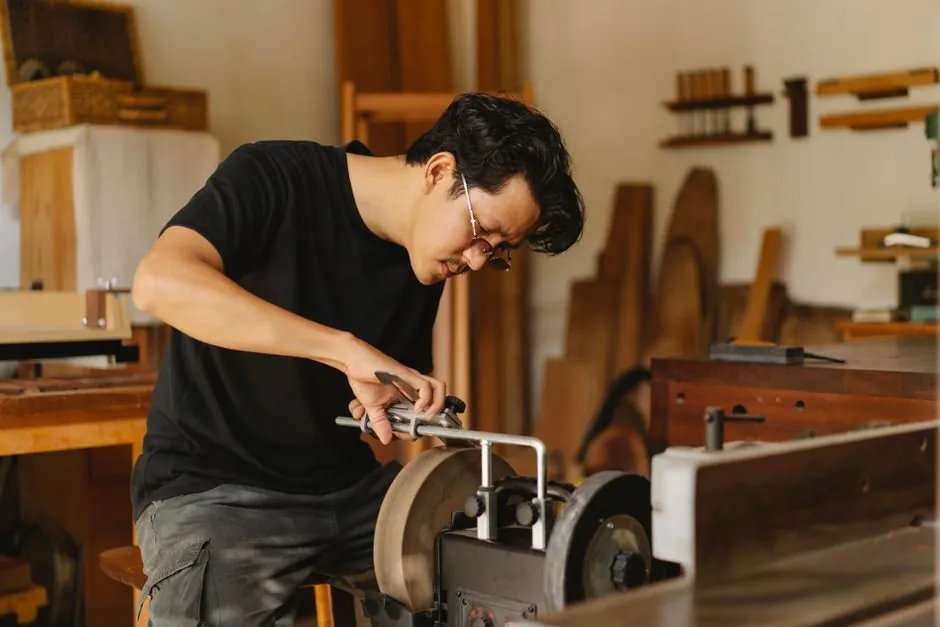
A 36–60 grit wheel normally provides the aggressive material removal needed for castings, while grit selection then narrows toward a finer grade as the required surface finish improves [S2][S8].
For grey cast iron and ductile cast iron, the abrasive grain, bond, hardness and wheel format must be matched to the casting skin, stock condition, production volume and grinder type [S1].
Define the fettling stage before choosing grit
Grinding-wheel grit is the particle-size class of the abrasive, and a larger grit number denotes smaller particles; grit size directly changes the balance between material removal and workpiece finish [S2].
Coarse grit is suited to roughing, especially when abrasive grains can penetrate the workpiece and dislodge substantial chips [S8]. Fine grit supports controlled finishing, while harder and finer wheels are used when a sharper internal corner is required [S6].
Foundry castings impose several simultaneous conditions: the surface may be uneven, the casting skin can contain abrasive sand inclusions, and the operation may occur under high contact pressure [S1]. A grit number selected in isolation therefore does not define a suitable wheel.
Use a coarse-to-fine fettling sequence
A practical starting point is 36 grit for heavy gate, riser and flash removal, 46–60 grit for general roughing, and 80–120 grit for progressively cleaner surface preparation, subject to the machine and abrasive specification [S2][S4][S8].
The lower end of that range favours fast stock removal, while the upper end reduces the abrasive grain size and supports a finer surface result [S2]. For cast iron, a 46 grit silicon carbide wheel is one documented starting point, with wheel hardness also needing to be selected for the job [S4].
Do not treat 120 grit as a universal stock-removal specification. A change to finer grit should follow a measurable improvement in the casting surface, because excessive fineness reduces cutting efficiency and can promote loading in heavy fettling work.
Compare grit options against removal, finish and loading
For hard, brittle workpieces, a relatively fine grit can work better, whereas coarse grit is more advantageous on soft and ductile material [S5]. This makes the material response more important than adopting one foundry-wide grit number.
The comparison makes the decision rule explicit: choose coarse grit for removal, fine grit for finish, and test a middle grade when both objectives are significant. Grain loading must be monitored because clogged abrasive removes less stock and generates additional heat [S3].
Match grit to cast iron and contaminated surfaces
Tyrolit recommends zirconia corundum or ceramic grit roughing discs for grey cast iron and ductile cast iron, with silicon carbide suited to cutting applications involving heavy sand coatings [S1].
For grey cast iron and ductile cast iron, Tyrolit recommends roughing discs with zirconia corundum or ceramic grit (CERABOND X) [S1].
The grit number and abrasive grain answer different questions. Grit controls the geometry of material removal, while ceramic, zirconia corundum and silicon carbide determine how the grain behaves against the workpiece. In automatic fettling of grey and ductile cast iron, diamond cutting discs achieve maximum service life and precision [S1].
Set the wheel speed and operator control
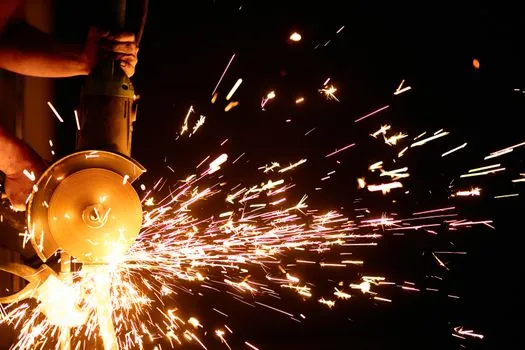
Grinding-wheel selection must account for the workpiece hardness, stock to be removed, required finish, wheel speed and grinder support method [S3]. Tyrolit’s patented VIBSTAR technology reduces vibration exposure during freehand grinding by up to 50 per cent [S1].
For freehand work, an angle grinder using Ø115–230 mm roughing or cutting discs accommodates small runs and changing casting geometry, while pedestal and pendulum grinding suit heavy, bulky components because the workpiece is presented manually or the wheel traverses it in synchronous and counter-rotating motion [S1].
The wheel specification should therefore name abrasive grain, grit, bond or wheel type, maximum operating speed, dimensions and permitted use. Without those details, “46 grit” alone is not a purchase specification. Machine power and wheel diameter should be evaluated together because grinder speed, work diameter and operator force determine whether the selected grit can remain aggressive [S1][S3].
Apply the method to common fettling tasks
Use a coarse, open cutting or roughing specification to remove gates and risers from grey or ductile iron, then use medium grit to blend the excavation and fine grit only where the drawing or casting-quality plan requires a cleaner surface [S1][S2].
For heavily sand-coated castings, silicon carbide is a relevant cutting-wheel abrasive because it is designed for that contamination condition [S1]. Silicon carbide is also used for cast iron and gummy coatings that would otherwise clog pores and reduce cutting performance, although its operating speed must be controlled by the abrasive manufacturer [S3].
Tyrolit offers tools for freehand grinding with an angle grinder, pedestal and pendulum grinding, and fully automatic fettling [S1]. A related comparison, Abrasive Belt vs Grinding Wheel for Large Castings, examines the process choice when component size and removal rate outweigh surface-resolution requirements.
Qualify the wheel on a representative casting
A controlled trial should record initial removal rate, elapsed grinding time, wheel loading, surface profile, power draw and operator feedback on the same casting grade and at the same sand-coating condition [S1][S3].
Choose the coarsest grit that meets the required removal rate without unacceptable loading or surface damage, then step to a finer grit for blending and finishing [S2][S8]. Record the wheel diameter, grain type, bond, hardness grade and operating speed alongside the result, because those variables can reverse the performance of the same grit number [S1][S6].
The verifiable procurement next step is to issue a trial specification covering casting material, stage, grit range, abrasive grain, wheel diameter, maximum speed and acceptance criteria. Replace only one variable during the trial, and retain the best-performing combination for production.