Hot chamber die casting is suited to high-volume zinc hardware because the injection system stays immersed in molten metal, removing manual ladling and enabling fast, repeatable shots.
For zinc hardware, the machine must be sized from the part family, alloy, projected area, shot weight, clamp force, and target output, then matched to automation and tooling requirements.
Define the hot chamber operating envelope
Hot chamber die casting uses a gooseneck immersed in the molten-metal bath. During intake, the hydraulic plunger retracts and the chamber fills from the furnace; during delivery, the plunger advances and forces metal through the gooseneck into the die cavity.
The method is suitable for zinc and other low-melting alloys, including magnesium [S2][S3]. Hot chamber machines are routinely used for small, intricate parts, and the process can produce thousands of components per hour when the die and process controls are properly engineered [S1][S4].
For a hardware buyer, the relevant scope is not simply “zinc.” It includes the specific alloy, part envelope, net shot weight, annual volume, and required dimensional repeatability. A hot chamber die casting machine should be treated as part of an integrated casting system comprising the furnace, gooseneck, injection unit, die, ejector, trim tooling, guarding, and downstream handling.
Compare process routes before sizing the machine
Hot chamber and cold chamber die casting differ most clearly in alloy compatibility, metal delivery, and production flow. The comparison below applies those criteria to high-volume zinc hardware and to hardware where the alloy may later change. [S2]
Cold chamber casting can deliver higher injection speed and pressure, but separate melting and ladling generally increase cycle time and operating complexity [S4]. For a stable high-volume zinc hardware line, those advantages rarely displace the hot chamber route unless the part or alloy requirement does.
Size output, shot weight, and clamp force together
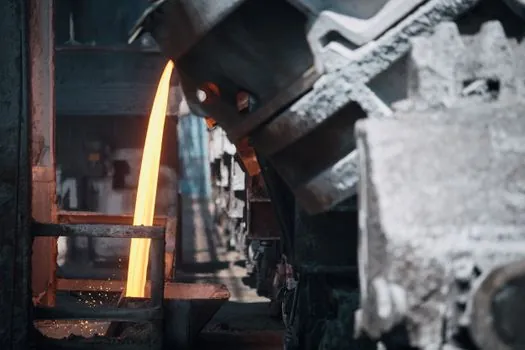
Machine selection begins with annual demand and required operating hours, not with an isolated tonnage figure. Convert annual good-part demand into hourly output, then add time for tool change, start-up, rejects, and planned maintenance. Hot chamber casting is capable of thousands of components per hour, but the achievable production rate depends on the complete cycle, handling sequence, and die performance [S4].
Published machine examples span small equipment to a 200-ton hydraulic unit with a rimrock extractor and spray system, illustrating that machine envelope must be tied to a defined hardware family rather than a single production label [S8]. Use the manufacturer’s current capacity table to verify maximum shot weight, minimum shot weight, platen dimensions, stroke, tie-bar spacing, and clamping-force limits for the proposed tooling.
Clamp force is determined by the cavity area, alloy, filling distance, and acceptable flash condition. Published high-pressure zinc guidance divides hot and cold chamber equipment into clamp-force classes, which supports comparing supplier quotations by tonnage rather than by cycle-time claims alone [S7]. The correct margin is the one that prevents flash at the maximum projected shot area while keeping the machine economical for the average load.
A practical shortlist should state net part weight, runner and gating allowance, maximum shot weight, projected area, die dimensions, injection pressure requirement, and target cycle in seconds. This prevents a fast machine with insufficient shot capacity or excessive clamp force from entering quotation as the low-cost option.
Use alloy and part geometry to control the tooling risk
Zinc hardware can include levers, handles, lock-related parts, quarter-turn components, electrical accessories, and compact mechanical fittings. The hot chamber process is used for such hardware families because short cycles and consistent repeatability support volume production [S2][S4].
Multiple cavities divide the clamping and thermal load across shots while increasing output per machine-hour, but excessive cavity count can magnify imbalance, flash, and dimensional variation. A zinc die casting machine should therefore be selected with the proposed cavity count, not with a generic “multi-cavity” label.
Uniform wall thickness, restrained parting geometry, adequate vents, and balanced gates reduce both filling defects and die-temperature variation. In hot chamber die casting, the gooseneck is submerged in the molten metal and enables automated, continuous metal feeding [S2][S3].
Essentra melts Zamak or aluminum ingots for hot chamber die casting [S4]. If the product family may migrate from zinc to aluminum, evaluate the process change during design review rather than treating the machine as alloy-neutral [S2][S3].
Match automation to the production system
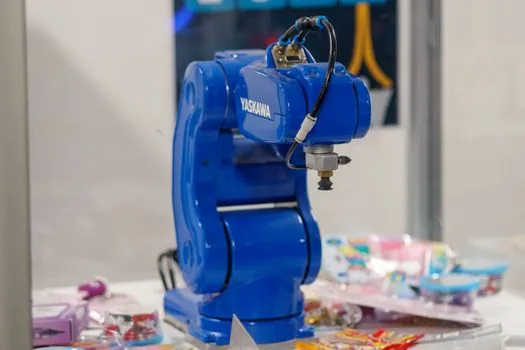
High-volume hardware production normally requires coordinated die opening, injection, cooling, ejection, trimming, sensing, and binning. Continuous metal flow makes automation easier to integrate because the shot sequence does not depend on manual ladling [S1][S3]. Machine and tooling quotations should still define the interfaces for mold cooling, compressed air, lubrication, extraction, trimming, and finished-part conveyance.
Cycle-time verification should use the complete part route, not the injection stroke alone. The gooseneck fills automatically and then delivers metal under pressure, but the production rate is constrained by the slowest required station [S3]. If cooling or trimming takes longer than injection, increasing injection speed will not increase output.
Die cooling deserves specific attention because zinc hardware with thin walls, bosses, and local mass can develop uneven temperatures. Define coolant connections, circuit count, flow monitoring, and drainage in the machine acceptance criteria. Also specify how sprues, runners, and flash are removed, since trim loss affects both economics and the apparent advantage of a fast casting cycle.
A die casting machine that handles the shot reliably but cannot cool and eject the tool consistently is not a high-volume solution. Acceptance should include cycle-time logging over a defined production run, dimensional results from multiple cavities, stable die temperature, and confirmed downstream handling.
Set acceptance tests before the order
High-volume zinc hardware can be produced with tight dimensional accuracy, good surface finish, and less need for grinding or polishing [S4]. These benefits are process outcomes, not a substitute for control limits. The purchase specification should define the critical dimensions, datums, sampling plan, surface criteria, and permitted defect classes for the finished hardware.
At commissioning, require cycle-time verification under the production alloy and full die, not an empty-machine demonstration. Record shot weight variation, fill consistency, flash condition, porosity checks, ejection behavior, and cavity-to-cavity dimensions. If the component is safety-critical, the buyer must define the application-specific quality plan rather than relying on a general die-casting certificate.
Spare-parts planning should cover the gooseneck, plunger-related wear items, furnace and holding components, heating and cooling elements, hydraulic elements, sensors, and die-specific spares. The gooseneck is a cast- or forged-steel component exposed continuously to thermal stress and molten metal, so its replacement and inspection conditions belong in lifecycle planning [S3].
For broader route decisions, Select Hot Chamber Die Casting for Zinc or Magnesium provides a focused comparison for the two principal low-melting alloy families. Machine acceptance should ultimately be based on validated output and quality data from the actual hardware tooling.
Build a shortlist from production evidence
Hot chamber die casting supports zinc and other low-melting alloy applications that require fast cycle times, repeatable casting quality, and efficient production [S2]. A machine with excess capacity but poor thermal control or unsupported tooling will not outperform a correctly sized installation. [S3]
Shortlist suppliers using the same input set: alloy designation, net part mass, hot-shot mass, projected area, die dimensions, annual demand, operating hours, target cycle, quality limits, automation scope, utilities, and acceptance-test method. Track two decisive signals after trials: stable cycle time across cavities and dimensional drift through a sustained production run. These measurements provide a defensible basis for comparing machine price with output, tooling life, scrap rate, and downstream labor.