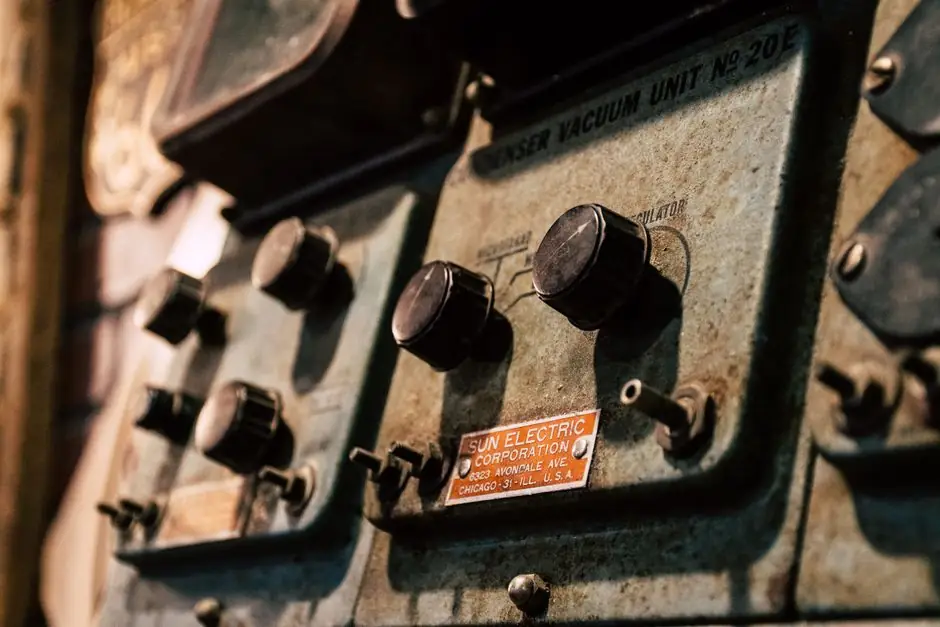
Low-voltage fuse selection starts with a physical compatibility check: Class L fuses cover 601–6000 A at 600 V and are not interchangeable with other UL fuse classes [S3].
The principal North American classes are R, L, J, CC, CD, T, G and K, with RK1 and RK5 forming the two Class R options and Class CC covering lower-current control and branch-circuit applications [S5].
Fuse classification and protection scope
Fuse classes divide products by dimensional system, current-limiting performance, voltage, current range and protection role rather than by shape alone. Eaton identifies RK1, RK5, G, L, T, J, H and CC as important low-voltage classes for equipment rated 600 V or less [S1].
A branch-circuit fuse protects distribution systems, wiring or equipment, whereas a supplemental fuse is intended only where branch-circuit protection is unnecessary. Examples of branch-circuit classes include R, J, L, T and CC, while Class M Midget and other small-dimension products are commonly used as supplemental protection for control loads [S2].
That distinction affects substitution. A fuse may share the physical outline of an acceptable product while lacking the required rejection feature, current limitation or interrupting capacity. Eaton states that two products classified as RK1 can have substantially different functions and performance, including fast-acting Limitron and dual-element time-delay designs, so a class code alone does not define the correct replacement [S1].
For readers building a broader protection hierarchy, the distinction between overcurrent devices and coordinated motor-control assemblies is covered in motor control center types and classification.
Current-limiting classes compared
Class R fuses have RK1 and RK5 classes, with time delay optional for Class R fuses. The comparison is meaningful for equipment withstand and downstream component protection, not merely for mechanical fit.
On voltage and current, Class J covers 0–600 A at 600 V AC, Class G covers 0–60 A at 480 V AC, and Class L spans 601–6000 A at 600 V AC and/or DC [S3]. Class L fuses are not interchangeable with any other UL fuse class.
Interrupting ratings add another decision layer. Class J is rated at 200,000 A rms symmetrical, Class G at 100,000 A rms symmetrical, and Class L at 200,000 A rms symmetrical on AC; Class L DC products may be rated at 50,000, 100,000 or 200,000 A [S3].
Classes R, L, J, CC, CD, T, G, and K are current-limiting fuse classes. The choice between CC and CD therefore becomes a current-range decision within the same broader midget family.
Time-delay and fast-acting behavior

A time-delay Class R fuse must hold 500% of its current rating for at least 10 seconds, which allows temporary motor starting or transformer inrush currents before the element opens [S3]. A fast-acting fuse instead interrupts overloads and short circuits quickly and is not designed to tolerate the temporary overloads associated with some loads [S4].
Class L products may carry a Time Delay marking even though UL does not investigate time-delay characteristics for that class; specific LDC products are listed at 4 seconds at 500% current, while KLPC and KLLU products are listed at 10 seconds at 500% [S3].
Time delay is optional for Class R fuses, which include RK1 and RK5, and Class L fuses may be marked “Time-Delay” even though UL does not investigate that characteristic. This matters because “Class RK1” or “Class CC” identifies a classification, not a complete time-current characteristic. Selection data must therefore cover ampere rating, voltage, interrupting rating, time response and holder or equipment requirements.
Motor circuits deserve a separate check. Some motor branch-circuit fuses provide short-circuit and ground-fault protection, while others also provide backup motor-running overload protection. A current-limiting fuse does not remove the need for correctly selected overload relays.
Voltage, interrupting rating, and replacement constraints
The voltage marking must match the application; a 600 V AC fuse is not automatically acceptable on a 600 V DC circuit unless the manufacturer provides a DC application rating [S4]. Class R products are rated at 250 V and 600 V AC, with certain DC versions at 125 V and 300 V DC, so AC and DC interchangeability cannot be assumed [S3].
This dimensional and electrical rejection is a safeguard, not an optional accessory.
Class R fuses are available in current ratings from 0.1–600 A and voltage ratings of 250 V and 600 V, and [S3] lists an interrupting rating of 200,000 A rms symmetrical. Class RK1 and RK5 are the two Class R performance groups, but the relevant UL standard is UL 248-12 [S3][S4].
For equipment protected through a distribution cabinet, the fuse link, holder, conductor and disconnect must be considered as a system. The fuse label should identify the manufacturer, current rating, AC or DC voltage rating, and applicable interrupting rating, with “Current Limiting” shown for products meeting that designation [S5].
Where each class fits
Class L fuses fit service switches, switchboard mains, feeders, large motor branch circuits, panelboards, load centers and transformer protection, with a listed current range of 601–6000 A and 600 V rating [S4]. They are bolt-in products for high-current power distribution rather than small control circuits.
Class T fuses are suited to fast-acting protection in applications including VFD and MVFD branch circuits, while Class L or J alternatives appear where higher current-limiting performance is required [S2][S4]. For a dry-type transformer, primary protection can use time-delay Class L, J, RK1, RK5 or CC products, while secondary protection depends on the required coordination and conductor arrangement [S2].
Class CC, Class M Midget and small-dimension fuses fit control transformers, PLC I/O, contactor and relay coils, indicator lights and other supplemental loads [S2]. They are also used where branch-circuit protection already exists or is not required, but their compact size does not convert a supplemental device into a branch-circuit fuse.
Class K covers 0–600 A at 250 V or 600 V AC with permitted interrupting ratings of 50,000, 100,000 or 200,000 A rms symmetrical [S3]. Class K5 has the same prescribed current-limiting degree as RK5 when tested at 50,000 or 100,000 A rms symmetrical, but Class K fuses lack the rejection feature required for current-limiting labeling under NEC Article 240-60(B) [S3].
Standards, marking and final acceptance checks
Relevant UL standards include UL 248-10 for Class L, UL 248-12 for Class R, UL 248-8 for Class J, UL 248-5 for Class G and UL 248-15 for Class T [S3]. The referenced selection guide also cites NFPA 70, 2026 Edition, UL 248-1, Fourth Edition, and UL 508A, Third Edition [S2].
For Class CC and CD, the standards are UL 248-4 and UL 248-18, with corresponding CSA C22.2 designations [S5]. These identifiers separate classes by tested construction and performance, while CSA classifications such as HRCI-L and HRCI-R accompany the applicable North American approvals [S3].
Before approving a replacement, verify six items: fuse class, current rating, AC or DC voltage, interrupting rating, time-delay behavior and holder compatibility. Confirm that the listed device is physically accepted by the holder and that its voltage and interrupting ratings cover the calculated available fault current. Do not infer interchangeability from diameter, length or terminal spacing alone.
Engineering records should also capture the fuse manufacturer, model or series, class, ampere rating, voltage basis, interrupting rating and time characteristic. The next trackable signal is the equipment’s replacement schedule and available-fault-current study, since either can invalidate a class substitution even when the physical fuse appears to fit.