Online double-conversion, line-interactive, and standby UPS systems differ mainly in how they transfer and condition power, making topology the first industrial selection criterion [S1][S2][S3].
Industrial applications require more than backup runtime: process control, manufacturing, oil and gas, water treatment, and security loads can face wide temperatures, contaminants, transients, overloads, and sustained voltage disturbances [S4][S7].
Three UPS Configurations and Their Power Paths
Standby, or offline, UPS systems pass utility power to the load while the utility is available and use a battery-backed inverter after an outage [S1][S3]. Their basic protection includes surge suppression, limited output-voltage regulation, and a transfer to battery power, but the load remains exposed to utility voltage irregularities during normal operation [S1][S4].
Line-interactive UPS systems also pass mains power directly to the load, but add filtering, spike suppression, and voltage regulation through an automatic voltage regulator [S4]. A standby or line-interactive unit therefore sits between a simple outage backup and a continuously conditioned supply, rather than treating every normal-mode disturbance as an outage event [S1][S3].
Online double-conversion UPS systems continuously convert incoming AC to DC and then DC back to regulated AC for the load, using the rectifier, inverter, battery, and bypass arrangement [S5]. The battery supports the DC bus during an interruption, so there is no changeover to an inverter branch in the same way as standby or line-interactive systems [S5].
IEC Classification Codes for UPS Topologies
Under IEC 62040-3, offline standby systems are classified as VFD, while line-interactive and online double-conversion systems are classified as VFI, based on output voltage and frequency and performance under transient loading [S5]. The VFD code identifies output whose voltage and frequency depend on the input, while the VFI code identifies output whose voltage and frequency are independent of the input [S5][S8].
The same three-code structure appears in technical classifications from Fuji Electric and Total Power Solutions, while the topology names standby, line-interactive, and double conversion are used consistently by Vertiv, Mitsubishi Electric, and Eaton [S1][S2][S3][S5][S8]. For specifications, the contract document should state both the topology name and the IEC classification code rather than relying on “industrial UPS” as a sufficient description [S5][S8].
Ferroresonant systems also appear as a distinct technical type in UPS guides, although the three principal classifications used by Vertiv, Mitsubishi Electric, Eaton, and Fuji Electric remain standby, line-interactive, and online double conversion [S1][S2][S3][S6]. A supplier quote that names a ferroresonant design should therefore be reviewed as a specific topology, not silently treated as one of those three categories [S6].
Selection Criteria for Industrial Process Loads
Online double conversion separates the load from the utility through two power conversions and continuously generates regulated output [S1][S5]. UPS units developed for home computers emphasized battery backup and prevention of data loss, while UPS systems designed for critical process control applications are known as industrial UPS systems [S4][S7].
Operating temperature and other environmental conditions are important considerations in UPS selection, with operating-temperature differences between standard and industrial systems [S4]. Standard computer-grade systems are associated with temperature-controlled environments, whereas industrial environments require attention to operating-temperature differences and other harsher conditions [S4]. Batteries, plastics, and electronics must all be rated for the specified environment because a temperature-rated inverter alone does not make the complete UPS suitable [S4].
Industrial sites also add localized power pollution from motors, pumps, and welders, along with airborne contaminants and outdoor or remote-installation requirements [S4]. These conditions favor a continuously regenerated waveform, appropriate surge and transient control, and equipment enclosures and batteries qualified for the actual installation rather than a generic office specification [S4][S7].
Standby, Line-Interactive, and Online Compared
On normal-mode conditioning, standby provides the least intervention because mains power reaches the load directly; line-interactive adds filtering and voltage regulation; online double conversion regenerates the load output continuously [S1][S4][S5]. On outage response, standby and line-interactive systems transfer to an inverter within a few milliseconds, while the double-conversion battery takes over the DC bus without a comparable changeover [S5].
For sustained voltage and frequency control, VFD output depends on the input, while VFI output is independent of both input voltage and frequency [S5][S8]. On equipment and site suitability, standard UPS families fit office and temperature-controlled loads, while industrial systems address operating-temperature differences, contaminants, and harsher electrical environments [S4].
Applications, Bypass, and Failure Modes
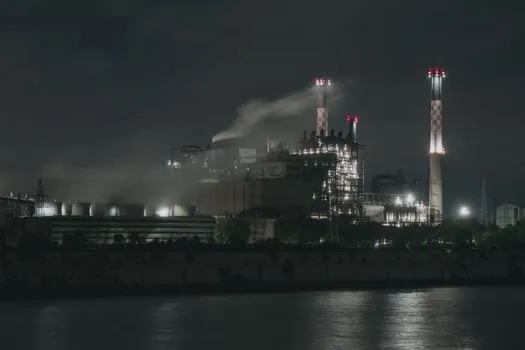
Online double-conversion systems are used where load continuity and power quality justify continuous conversion, while standby and line-interactive systems address less demanding backup functions [S1][S2][S4]. Manufacturing, oil and gas refineries, pipelines, toll roads, water treatment plants, and security systems are specifically identified as industrial UPS use cases [S4]. Mitsubishi Electric also lists manufacturing and light industrial, telecommunications, healthcare, data centers, and energy and utilities among UPS application markets [S2].
The bypass is not a failure mode by itself, but it changes which upstream quality reaches the load. Online systems synchronize the inverter with auxiliary mains to permit transfer during overcurrent or inverter shutdown, and automatic bypass can engage after sustained overload, an inverter voltage outside tolerance, or excessive internal temperature [S5]. Therefore, a complete design must include protection coordination and operating rules for bypass conditions, not just battery capacity [S5].
Temperature derating, battery aging, contaminant ingress, and an overload can prevent a nominally adequate UPS from delivering the expected autonomy. The battery is also only one element of the backup chain, while the rectifier, inverter, bypass, charger, fan, and thermal management contribute to sustained operation [S4][S5]. For an industrial power supply purchase, autonomy, overload behavior, thermal limits, maintenance access, and bypass strategy belong in the same specification review [S4][S5].
Procurement and Lifecycle Sourcing Checks
A traceable industrial UPS specification should state the topology, IEC 62040-3 code, phase arrangement, rated power, input and output ranges, battery chemistry, backup time, overload capability, and environmental limits [S4][S5]. Public manufacturer ranges show why one universal rating is not enough: Mitsubishi Electric lists three-phase products from 10 kVA to 2,000 kVA, including 10–80 kVA, 80–225 kVA, 300–750 kVA, 1,050 kVA, and 1,200–2,000 kVA families [S2].
The selected system must also match the load class, not only its kVA rating. Computer-grade standby, line-interactive, and standard online units are suitable for office and temperature-controlled applications, whereas process-control equipment can require sustained operation outside those limits [S4]. Commercial and industrial UPS designations describe different design demands, with industrial systems developed for critical process control [S7].
Lifecycle review should include battery replacement or test procedures, fan and filter maintenance, thermal design, firmware and monitoring support, and the consequences of bypass use [S4][S5]. A separate switching power supply may supply control electronics or DC subsystems, but it does not replace a facility-scale UPS for an AC load that requires controlled backup and transfer behavior [S1][S5].
For procurement teams, the next verifiable step is to compare each candidate quote against four controls: IEC topology code, installed environmental range, documented battery autonomy, and bypass protection. If the load includes networked controls or remote monitoring, assess the associated industrial PC, industrial router, and industrial modem for ride-through needs before assigning them to the same UPS branch.