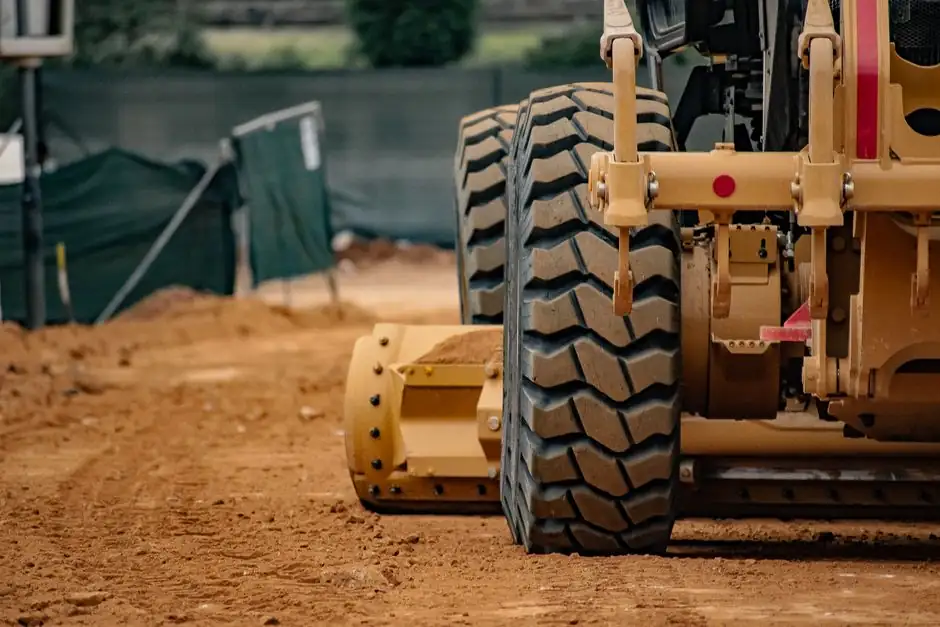
Motor grader moldboard lengths range from 12 to 24 ft, with 12 to 14 ft blades common for standard construction and larger units reaching 24 ft for mining work [S2][S8].
The correct length follows the required cut width, road geometry, material behavior, machine articulation, and whether the blade can use its full length; moldboard angle, side-shift, and wheel lean determine whether a nominal blade length becomes an effective working width [S1][S3][S5].
Moldboard Length Defines the Working Width
Available moldboards span 12–24 ft in length and 6–10 inches in height, so length and height must be specified separately [S2]. An operator reported that a 14 ft blade covered more width than the 12 ft blades used previously and considered how many passes would be needed to work from one side of the road to the other.
Mining-oriented moldboards can extend to 24 ft, compared with the 12–14 ft range typical of standard construction machines [S8]. A long blade does not automatically produce an equal 24 ft cut: the actual sweep depends on blade angle, side-shift travel, machine clearance, and the available frame length [S3][S5].
The motor grader should therefore be selected around the required production width, not around the largest moldboard offered for the model. A machine unable to traverse the full blade length wastes capacity and can leave an untreated strip at the edge of the cut [S5].
Match Length to Road and Material
The operator observed that the 14 ft grader's front end moved more readily and that adjusting toe or heel heights was less accurate when material was falling under the blade.
That operating difference is the key selection trade-off. A longer moldboard can reduce the number of passes, but it also places more material in front of the cutting edge and can make fine trim work less forgiving. For full-width base preparation, longer is generally productive; for shoulder matching, asphalt finishing, and narrow drainage work, maneuverability and edge control matter more [S4].
Material behavior changes the result. Caterpillar guidance gives 10–30 degree moldboard angles for light, free-flowing material, with angle calculated relative to the machine’s main frame [S3]. Long-blade productivity claims should therefore be checked against the material being moved, not transferred from an ideal paving condition to abrasive aggregate, cobbles, or compacted clay.
Compare 12, 14, and 24 Ft Options
The practical comparison is direct: 12 ft moldboards emphasize maneuverability and precision on confined or narrow work, 14 ft moldboards balance coverage and control for conventional road grading, and 24 ft moldboards maximize potential cut width for high-volume mining or large-site operations [S2][S4][S8].
The table compares design intent, not guaranteed output. Before specifying a 24 ft blade, verify that the grader’s moldboard frame, hydraulic side shift, travel range, and machine-control geometry can use the full blade length; fixed-position moldboard frames are a documented configuration constraint [S5].
Use Geometry and Controls to Protect Capacity
The moldboard angle is measured against the main frame, and common operating angles for light, free-flowing material are 10–30 degrees [S3]. Front wheels should begin vertical; leaning the wheels changes cut depth across the moldboard length without changing the set slope [S1]. Wheel lean therefore provides a controlled depth adjustment rather than additional width.
Most grading passes should begin with the moldboard top approximately 2 inches ahead of the cutting edge, while a different top-edge position can improve penetration [S7]. This setting interacts with blade angle and length because a longer moldboard carries a broader mass of material and can develop different roll characteristics as the front wheels are leaned.
Before accepting the nominal length, inspect the cutting edge and measure blade height at three points across the width. Uneven wear can indicate a bent moldboard or inconsistent blade angle, so worn or damaged edges can make an otherwise suitable 14 ft or 24 ft blade behave poorly [S6].
Apply Selection Limits by Work Type

Larger moldboards are for operators who can use that width without sacrificing control or leaving edge strips [S5][S8].
Length does not resolve poor setup. Incorrect angle, an unsuitable cutting-edge profile, uneven moldboard height, or limited side-shift can negate the capacity of a longer blade [S3][S5][S6]. Check the machine and blade as one system before making the purchase or rental decision.
Verify the Selection Before Dispatch
Specify the target working width first, then confirm that the grader can traverse the full moldboard length [S5]. Record the road or site width, material condition, required cut depth, number of lanes, edge-treatment method, and expected pass count, because these variables determine whether 12 ft, 14 ft, or a larger blade is economical.
Field verification should include a full moldboard inspection at three width locations, confirmation of the starting 2 inch top-edge offset, and checks of front-wheel lean, side-shift range, and moldboard angle [S1][S6][S7]. Track finished width, residual windrows, edge uniformity, and passes per section; those five measurements expose whether the selected length is delivering usable capacity rather than only nominal blade size.