Food-grade solenoid coils should match the valve's electrical supply, insulation class, enclosure, thermal limits, and cleaning chemicals.
The selection also covers product-contact and utility service, where water, steam, air, juice, syrup, oils, CIP chemicals, and washdown exposure impose different constraints [S1][S2].
Separate Product Contact From External Exposure
The coil and valve form one electromechanical package, but the wetted path and external environment require different compatibility checks. Coils convert electrical energy into the mechanical force used to shift valve components [S4].
Water, acidic juice, oils, and cleaning agents can attack valve internals, while washdown and cleaning chemicals can attack the coil, connector, housing, and exposed metalwork. Acidic or corrosive fluids can degrade untreated brass or bronze, whereas 316 stainless steel offers greater corrosion resistance [S1].
For direct food contact, specify a hygienic valve with smooth surfaces, minimal crevices, and no dead zones where particles can accumulate, and consider stainless steel, PTFE, and other food-safe polymers.
Do not assume that a material described as “food grade” covers every wetted part; food-grade solenoid valves are constructed from materials intended to be safe for contact with food and beverages.
Set Electrical and Thermal Limits Before Comparing Coils
Temperature is a system limit rather than a coil catalogue preference. Media temperature, ambient temperature, duty cycle, and enclosure cooling determine coil temperature. Extreme heat can degrade seals or burn out coils, and the coil must remain within its manufacturer's rated temperature range [S1].
Continuous-duty coils suit systems that hold a valve energized continuously, while intermittent-duty coils require adequate cooling during repeated cycles. Food lines can impose additional heat through steam, hot water, heated gases, or hot oil, so the valve datasheet and coil rating must cover the combined service [S1].
For proportional or switching valves, compare the required operating force, travel, response time, and permitted coil temperature rather than selecting by wattage alone. The solenoid coil must be electrically compatible with the valve core, stroke, and power supply [S4].
Compare the Main Coil Enclosure Options
For indoor dry service, a basic enclosure may be adequate, but washdown areas require protection against water and corrosion. The enclosure class should be matched to the installation, not copied from another valve in the line [S1].
This comparison identifies the protection architecture, not universal approval of any product.
Match Seals and Body Materials to the Actual Media
Acidic or corrosive fluids can degrade untreated brass or bronze, so consider the media when selecting valve materials.
Stainless steel and 316SS offer superior corrosion resistance, and stainless-steel solenoid valves are typically recommended for food and beverage use because of their chemical resistance and cleanability.
For process isolation, a 2/2-way solenoid valve is commonly used for basic open-close control, line isolation, and equipment start-stop duties. Sanitary designs are preferred where low dead space and cleanability matter [S2].
Match Valve Function to Process Duty
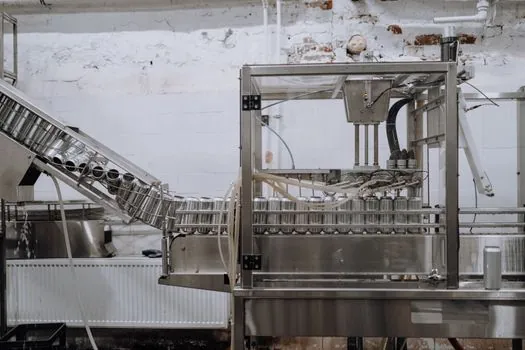
A 2/2-way solenoid valve is among the solenoid-valve types discussed for food and beverage processing, where valve selection should match the application’s media, pressure, flow rate, response speed, and sanitary requirements.
Sanitary solenoid valves are used in the food and beverage industry, where applications may involve water, steam, air, cleaning chemicals, syrup, milk, beer, juice, frequent washdown, and CIP or SIP processes.
Response time and other application requirements matter when selecting a solenoid valve for food and beverage processing.
Solenoids and coils convert electrical energy into the mechanical force used to shift valve components and control flow.
Apply Hygiene, Maintenance, and Certification Checks
Hygienic construction uses smooth surfaces, limited crevices, and minimal dead volume to support cleaning and sanitization. That geometry belongs to the valve, while the coil must still withstand repeated cleaning, condensation, humidity, and the chemical residues left after CIP or SIP cycles [S2][S3].
FDA material compliance, CE marking, and other approvals cover different questions and cannot be treated as interchangeable evidence of hygienic suitability. The purchasing specification should identify the exact product, materials, fluid, temperature, pressure, electrical supply, enclosure, and jurisdiction requiring approval [S3].
Maintenance planning should include disconnection without energizing, inspection of the connector and housing, and verification that seals remain cleanable and replaceable. Easy disassembly supports sanitation work, but only if the spare-part configuration matches the installed coil and valve [S3].
For broader actuator selection, compare the electric ball valve selection for food and beverage with the solenoid option when shutoff class, actuation speed, and cleanability differ materially between the two valve architectures.
Build a Specification That Prevents Mismatches
The minimum food and beverage coil datasheet should contain the valve function, port arrangement, wetted materials, seal materials, fluid, minimum and maximum working pressure, media and ambient temperature, supply voltage, frequency, electrical consumption, duty, enclosure, connector, ingress protection, and hazardous-area classification where applicable [S1][S2][S4].
Request three separate confirmations from the valve or coil manufacturer: electrical compatibility with the valve, thermal compatibility with the duty and ambient conditions, and material compatibility with product and cleaning chemicals. A NEMA 4X enclosure addresses external corrosion and water exposure but does not establish that EPDM is suitable for hot oil [S1].
Reject any submittal that gives only wattage and voltage. The same nominal coil can fail because of insulation temperature, duty-cycle limits, connector sealing, chemical attack, or a valve stroke that requires a different force [S4].
The final shortlist should retain stainless-steel sanitary assemblies for direct product or severe washdown service, NEMA 4 or 4X configurations for wet areas, and brass utility valves only where non-product contact and compatibility are acceptable [S1][S2].