Water-treatment solenoid coils commonly use 12 VDC, 24 VDC, or 230 VAC supplies, but the correct choice depends on coil duty, switching frequency, and thermal protection.
Water treatment includes clean water, wastewater, reverse-osmosis permeate, chemicals, backwash drainage, and compressed-air actuator control, each requiring different pressure and material limits [S3][S5].
Coil Selection Starts with Valve Duty
Direct-acting valves are suited to gravity service at 0 MPa, while pilot-operated valves are appropriate for pressurized potable-water lines with differential pressure of at least 0.05 MPa [S2].
Coil selection must follow the valve architecture, not the pipe size alone. In a direct-acting valve, the electromagnetic force must overcome the spring force plus the static and dynamic forces imposed by the medium [S1].
Direct-acting construction is practical for small orifices because pressure force rises with orifice diameter. For larger orifices at higher pressure, an internally piloted arrangement allows differential fluid pressure to perform most of the opening and closing work [S1].
Internally piloted valves need a minimum differential pressure to shut reliably and open fully. If that available pressure is missing, even an electrically correct coil may energize without producing a fully open main valve [S1].
Compare AC and DC Coil Options
DC coils are normally specified at 12 VDC or 24 VDC for control panels, while 230 VAC is a common industrial supply; DC inrush, AC inrush, holding current, and flyback requirements determine the electrical overload rating [S5][S6].
DC coils can draw a high inrush current while the magnetic field builds, then operate at a lower holding current. AC coils use an alternating magnetic field and normally require an AC-specific thermal and electrical design rather than a DC coil substituted by voltage alone [S6].
For broader valve and application comparison, see Select Solenoid Valves for Water Treatment Systems.
Match Coil Thermal Duty to Switching
Solenoid valves switch in approximately 10–1000 ms, but rapid opening can create pressure transients and water hammer in the connected water system [S8].
A water-treatment coil should be checked against energised duration, cycles per hour, ambient temperature, and the valve's energized or de-energized state. The electromagnetic coil converts electrical energy into mechanical motion through copper wire wound around a bobbin, and its thermal design governs whether that motion remains repeatable under sustained duty [S7].
Fast-acting valves are useful for filtration backwash, drainage, flushing, and pneumatic actuator sequencing, where the control chain is PLC, solenoid valve, compressed air, pneumatic actuator, and process valve [S3].
Do not select a coil from response time alone. A fast valve can impose water hammer, and a continuous-duty coil can overheat if left energized beyond its thermal rating. Both the coil and the hydraulic actuator must be evaluated as one duty cycle [S3][S8].
Verify Insulation, Enclosure, and Electrical Protection
Outdoor coils require an enclosure suitable for moisture and dust, and common coil voltage choices include 12 VDC, 24 VDC, and 230 VAC [S4][S5].
Coil insulation class must match the installation environment, while the enclosure rating should be selected from the exposure at the valve location. Control cabinets, pump rooms, and outdoor process areas should not share an enclosure assumption merely because the valve bodies are identical [S4].
Electrical protection requires the correct supply voltage, tolerance, inrush behavior, and protective device. For a DC coil, determine whether a flyback diode is required to suppress the inductive voltage generated when current is interrupted [S6].
For hazardous-area service, specify an appropriate certified assembly rather than applying a generic IP enclosure. Gas-duty valves may require gas-tight certification and applicable hazardous-location approvals, while air-duty valves are selected for pressure, flow capacity, fast response, moisture tolerance, and cycle life [S5].
Confirm Wetted Materials and Service Temperature
For potable water, specify lead-free brass with no more than 0.25% lead or Stainless Steel 316, with wetted components certified under NSF/ANSI 61 or applicable FDA requirements [S2].
Food-grade EPDM is listed for potable-water service up to 90°C, while FKM has a stated range of -10°C to 150°C for chemical washdown applications [S2].
Wastewater and treatment chemicals impose different constraints from potable water. Suspended solids, particles, corrosion, concentration, and chemical exposure can affect the plunger, seat, diaphragm, and body, so coil selection must be confirmed against the complete valve specification [S3].
Stainless steel is preferred for aggressive fluids or elevated-temperature service, brass is common for ordinary water service, and engineered plastics are suited to lower-pressure applications [S4]. The coil enclosure does not compensate for an incompatible wetted seal or body material.
Match Water, Air, and Chemical Valve Functions
Water-operated valves require corrosion-resistant bodies and seals, air-operated valves require pneumatic pressure and cycle-life capability, and chemical-duty valves require compatibility with concentration and temperature [S3][S5].
A compressed-air control valve in a treatment skid should not be specified from a water-valve table, even when the electrical coil is identical. Air valves must accommodate fast pressure changes and internal friction, while water valves must handle hydraulic pressure, water hammer, and corrosion [S5].
Chemical dosing, disinfection, cleaning, filtration backwash, reverse-osmosis flushing, drainage, and actuator control should each receive a separate line-item specification. The selected coil must match the valve's energized state, wattage, voltage, frequency, duty cycle, fluid path, and environmental exposure [S3][S7].
Water-Treatment Applications and Limits
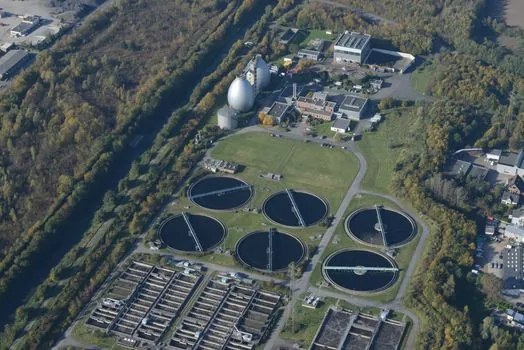
Water-treatment coils support automatic filtration, backwash, reverse-osmosis flushing, chemical dosing, wastewater drainage, and pneumatic-actuator switching, with typical sequence logic moving from filtration to backwash, drainage, rinse, and return to service [S3].
Typical solenoid operating times fall within the approximately 10–1000 ms range, but the response must be coordinated with pipe length, fluid velocity, and the pressure drop through the complete valve assembly [S8].
Mainstream direct-acting valves are a poor choice for high-flow potable lines with differential pressure above 0.05 MPa because pilot operation uses fluid pressure more efficiently. Conversely, pilot-operated construction is unsuitable for gravity service at 0 MPa because its operating principle depends on an available pressure differential [S2].
Maintenance inspection should cover coil damage, plunger and seat debris, body leakage, and electrical connections. Debris at the seat can increase pressure drop or prevent complete closure even when the coil draws nominal current [S4].
Procurement and Acceptance Checklist
A complete water-treatment coil purchase specification should state voltage, AC frequency or DC polarity, holding power, inrush current, duty cycle, cycles per hour, coil insulation class, enclosure rating, connector type, and the valve's energized or de-energized fail position [S4][S6][S7].
The acceptance test should verify that the complete valve assembly operates at minimum and maximum rated pressure, at the specified media temperature, and without exceeding the rated coil temperature. For potable service, material certification and chemical-migration requirements apply to the valve as a whole, not merely to the coil [S2].
The final procurement shortlist is simple: use direct-acting coils for zero-pressure or low-differential service, pilot-operated coils where ΔP is at least 0.05 MPa, AC or DC construction only after electrical duty is established, and wet-end materials only after the actual treatment medium is identified [S1][S2].