
Electric ball valves suit automated sanitary isolation where product-contact surfaces can be cleaned and the actuator can deliver the required torque within the specified pressure and temperature limits [S1][S4].
Food and beverage duties divide into hygienic product-contact valves and utility valves; product lines demand cleanable wetted parts, while steam, water, and other utilities do not require the same sanitary construction [S1][S2].
Sanitary product-contact construction
Sanitary electric ball valves are used for food and beverage transfer, mixing, filling, pasteurization, packaging, and storage lines, where all wetted components must remain cleanable and compatible with the product [S1][S5][S8].
Valtorc states that its food and beverage valves use corrosion-resistant components suited for food contact and are engineered for hygienic processing and easy cleaning [S5]. The product-contact specification should also identify the ball, stem, seats, gaskets, surface finish, and end connection rather than naming only the body material [S5].
These examples are product evidence, not universal limits. The procurement datasheet for the selected valve must govern its actual pressure, temperature, port configuration, and test conditions.
Selection criteria for each duty
An electric ball valve is a quarter-turn isolation device in which the actuator rotates the ball approximately 90 degrees between open and closed positions, with seat construction determining sealing performance [S4].
Define the duty in this order: product or utility service, line size, fluid, pressure, temperature, required closure, control mode, power supply, installation environment, and cleaning regime. The valve body and sealing configuration should be selected for the medium before the actuator is sized for torque, control mode, supply, and environmental conditions [S4].
For product-contact lines, include CIP or cleaning compatibility, drainability, crevice control, surface finish, and sanitary end connections in the specification [S1][S2]. For utilities, omit unnecessary hygienic construction and consider whether the application is steam, water, glycol, or another listed medium [S1][S6].
Electric operation removes the need for compressed air and supports remote switching, scheduled operation, centralized monitoring, and PLC or DCS integration, but it does not remove the need for a compatible valve body, seats, torque margin, or electrical protection [S4].
Two-piece, three-piece, and multi-port options
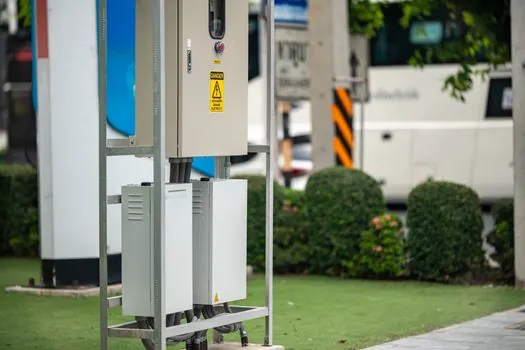
Two-piece sanitary ball valves are compact and commonly used on smaller lines where better shutoff is required than a butterfly valve can provide [S1]. Three-piece construction separates the valve body into serviceable pieces, which improves access to seats, ball, stem, and seals during maintenance [S4].
Sanitary selection should use the food-grade product family, not assume that the general industrial dimensional range is suitable for product contact.
Ball valve versus competing valve types
Ball valves provide strong shutoff and are suited to isolation duties, while butterfly valves occupy less space and are often selected for larger or lower-cost sanitary lines [S1][S2]. For dense particulate products, a diaphragm valve can be preferable because its elastomer isolation member suits viscous fluids and solids; a ball passage can foul or retain material if it is not designed for those contents [S2].
For throttling, a segmented ball valve can provide a wider control range than a butterfly valve, while a globe valve offers strong throttling capability but requires more flow resistance and operating effort [S3]. Angle-seat valves are a better fit where closure against a pressurized fluid is required and hydraulic-shock reduction during actuation matters [S1].
On/off control versus modulating operation
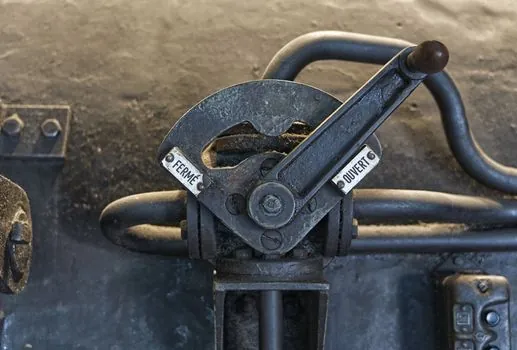
Most electric ball valves should be specified for open and close service unless the valve and actuator combination explicitly supports regulated positioning [S4]. A binary actuator receiving a switch, relay, control panel, PLC, or DCS command should have a defined open and closed sequence and a mechanical position indicator [S4].
Modulating service adds requirements for controlled travel, position feedback, a characterized flow relationship, and actuator torque across the full stroke. It should not be selected solely because an actuator accepts an analog command. The valve construction and actuator must both be rated for the intended regulation duty [S4].
Product-contact applications can include dosing, batching, filling, and temperature-control arrangements. Poor control can waste efficiency or make an entire batch unusable, while glass-lined batch reactors may use split-range hot and cold control arrangements to maintain jacket inlet temperature without damaging the lining [S3]. A separate valve with a compatible sanitary actuator should be evaluated when precise throttling is the controlling requirement.
Pressure, temperature, seats, and materials
Pressure rating, temperature rating, seat material, stem construction, body material, and actuator torque must be checked as one combination because changing any one element can invalidate the selected configuration [S4].
Documented industrial configurations include SS304, SS316, and WCB bodies, DN15 to DN300 sizes, and PN16 to PN40 ratings for flanged electric ball valves [S4]. Three-piece threaded examples cover DN8 to DN100 with 10 or 16 bar standard configurations and SS304 or SS316 body options [S4].
Sanitary examples provide different limits: 316 stainless steel is used for the documented butterfly and ball-valve families, with PTFE seats on the flanged ball valve and 316 stainless steel stem and ball construction [S5]. The flanged example is rated to 150 PSI WSP for the stem, and the multi-port example is air tested at 80 to 100 PSI [S5].
Do not infer that a general utility valve is food-contact compatible. Utility valves cover steam, water, glycol, and other services and need not be cleanable [S1][S6]. Product-contact valves need corrosion resistance, cleanability, and compatible seals [S2][S5].
Actuator and installation engineering
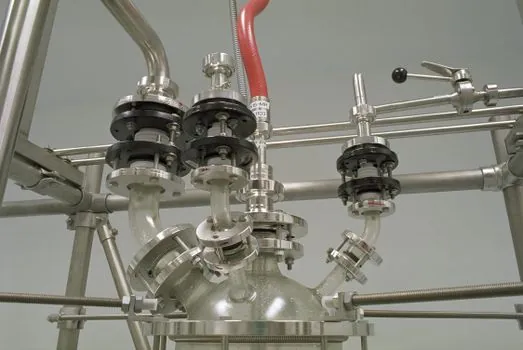
Electric actuators must be sized for the valve’s maximum break-to-open and break-to-close torque, including seat friction, line pressure, media effects, and the intended number of operating cycles [S4]. Torque is not a single published number because it changes with valve construction and operating conditions.
The actuator specification should include the supply voltage and frequency, control signal, fail position, travel or open-close timing, position feedback, enclosure protection, ambient temperature, and electrical classification for the installed area [S4]. These are application-specific fields rather than universal values, so the manufacturer’s actuator datasheet is the controlling document.
Installation orientation, pipe support, accessibility, washdown exposure, condensation, and cleaning-agent compatibility also affect reliability. A sanitary valve can still fail if the actuator is not suitable for the surrounding washdown or if the installation prevents full drain and cleanout. Compare the mechanical interface, such as ISO 5211 where applicable, before ordering an actuator [S5].
Compliance, documentation, and failure controls
A food and beverage purchase specification should distinguish product-contact compliance from mechanical valve certification. Documented sanitary families reference 3-A and FDA approval, ISO 5211 mounting approval, API 598 testing standards, ANSI B16.5 flange design, and 100% air testing for the multi-port model [S5]. These references apply to the cited products and must be verified for the exact purchased model.
Specify the certificate, material grade, surface finish, seal material, end connection, pressure-temperature curve, leakage test method, actuator torque, electrical rating, and available actuator options on the purchase order. The data sheet should also state whether the valve is intended for product contact or utility service.
Common failure modes are torque undersizing, unsuitable seats, mixed product contamination, dirt accumulation in crevices, excessive actuator heating, loss of feedback, and installation damage to the sanitary finish. Cross-contamination in shared product piping requires double block and bleed protection, which is properly handled by a mixproof valve rather than an ordinary single-ball isolation valve [S1].
Shortlist logic for procurement
Choose a two-piece sanitary electric ball valve for compact, automated product isolation; choose a three-piece version when frequent seal or seat maintenance is expected; choose a 3-way or 4-way multi-port model only when diversion or distribution requires it, with the port pattern confirmed by the piping arrangement [S4][S5].
Reject an ordinary utility electric ball valve for product contact, reject a modulating specification without valve characterization and feedback, and reject a butterfly valve substitute where high-pressure shutoff, particulate handling, or dairy-specific sanitary requirements govern [S1][S2][S3].
The final shortlist should contain the sanitary valve model, size range, end connection, body and seat materials, pressure and temperature limits, torque data, power supply, control mode, fail action, position feedback, certification documents, and cleaning compatibility. For a comparison with the reduced-footprint alternative, review sanitary butterfly valve selection for food and beverage. For utility applications, use the same selection logic but assess the valve under steam, water, or glycol service rather than sanitary product-contact criteria [S1][S6].