Quartzite offers marble-like veining with greater hardness and heat resistance, while granite is the most heat-resistant of the common natural-stone options [S4].
Stone surrounding the firebox must withstand thermal cycling, and engineered quartz should not be used for fireplace surrounds because its resin content can discolor or degrade under sustained heat exposure [S4][S5].
Radiant Heat Zones and Temperature Exposure
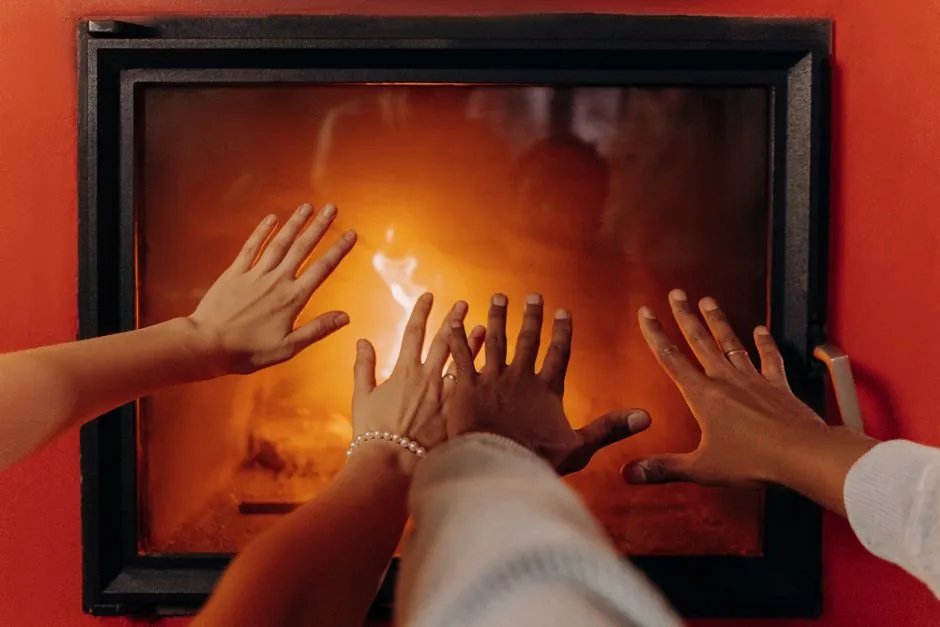
Radiant heat from a wood-burning fireplace can reach 200 to 400°F at the immediate firebox opening, while the hearth directly in front may reach 150 to 200°F during a roaring fire [S5]. Stone surrounding the firebox must withstand thermal cycling without cracking, spalling, or discoloring [S5].
Mantel and surround areas farther from the firebox opening experience much lower temperatures, typically 80 to 120°F maximum during use [S5]. The firebox opening and the hearth immediately surrounding it experience the highest temperatures and require stone that can withstand thermal cycling [S5].
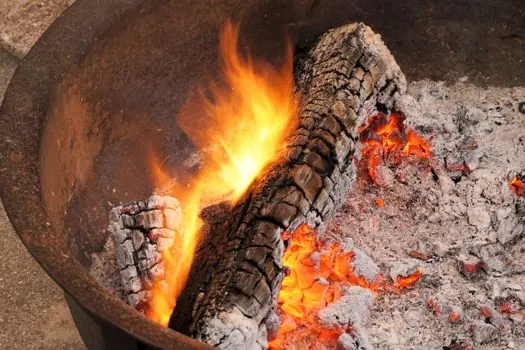
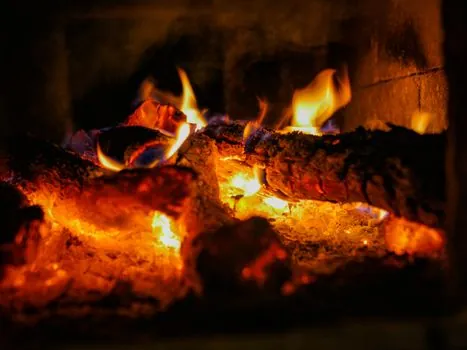
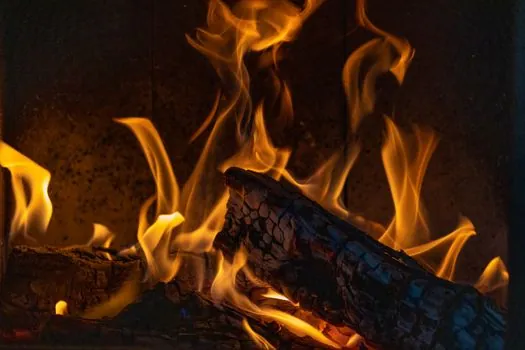
Radiant heat from burning wood or gas logs can reach 200 to 400°F at the immediate firebox opening [S5].
Granite, Quartzite, Slate, and Soapstone Compared
Granite is the leading choice for heat resistance and durability, with quartzite also identified as a top-performing option; manufactured stone veneer is positioned as the budget or retrofit alternative [S1]. Granite is the most heat-resistant of the common natural-stone options for fireplace surrounds [S4].
Quartzite offers marble-like veining with greater hardness and heat resistance, while granite is the most heat-resistant of the common natural-stone options [S4].
Where Marble, Travertine, and Dolomite Fit
Marble is the most traditional choice for formal and classical fireplace surrounds, and honed finishes perform better near a firebox than polished because they conceal minor surface wear more effectively [S4]. Honed finishes conceal minor surface wear more effectively than polished finishes near a firebox [S4].
Travertine has a porous surface that requires sealing [S4].
Natural stone is non-combustible and, when kept out of the firebox and away from sustained open-flame contact, does not ignite, warp, or release harmful compounds [S4]. The material label alone is not enough for a surround: placement, thermal cycling, finish, porosity, and cleaning regime determine service performance [S4][S5].
Engineered Stone and Veneer Are Different Cases
Engineered quartz contains resins that can discolor or degrade under prolonged heat exposure, making it unsuitable for surround applications near an active firebox [S4]. Manufactured stone veneer is listed as a practical choice for budget projects and retrofits, but the research does not establish it as equivalent to natural granite or quartzite in radiant-heat resistance [S1].
Natural stone fireplace surrounds use non-combustible materials that handle radiant heat without warping, discoloring, or releasing harmful compounds [S4].
The broader building stone category includes performance variation that cannot be reduced to appearance alone: granite, slate, marble, quartzite, travertine, dolomite, and soapstone differ in porosity, hardness, thermal mass, and maintenance needs [S1][S4][S5].
Thermal Mass Changes the Design Objective
A December 2004 discussion proposed tubing behind an approximately 16-foot-tall imitation-stone fireplace and turning it into a giant panel radiator using tightly spaced 5/16-inch tubing [S3].
For a conventional wood-burning surround, the practical priority is therefore to separate heat resistance from heat storage. Quartzite offers marble-like veining with greater hardness and heat resistance, while granite is the most heat-resistant of the common natural-stone options [S4].
Installation and Maintenance Controls
Every selected stone should be evaluated in full-slab form because color saturation, veining scale, and finish quality can differ from photographs and small samples [S4]. For large-format surrounds, the design trend favors monolithic slabs over fragmented tile layouts because a single slab allows natural veining to continue uninterrupted across the vertical face [S2].
Edge detailing also affects fabrication and appearance, and the available guide to building stone edge profiles covers bullnose, ogee, and eased profiles for project detailing. Material selection and edge design should be coordinated because a heat-resistant stone specification does not correct an unsuitable finish, backing, bonding detail, or installation defect [S2][S5].
Granite resists acidic etching and tolerates commercial fireplace cleaners more effectively than marble [S5]. Travertine and dolomite require sealing, marble requires acidic-cleaner avoidance, and soapstone needs no sealing [S4][S5]. The maintenance plan should match the chosen stone rather than treating the entire surround as one generic surface [S4][S5].
Specification Checklist for the Firebox Zone
The most defensible specification for a high-use wood-burning fireplace is dense, low-porosity granite or quartzite at the firebox-adjacent zone, with soapstone selected when thermal mass is an explicit design objective [S1][S4][S5]. Slate also appears among the heat-resistant natural-stone options, but it should be assessed by its individual physical structure and finish rather than accepted solely by rock name [S6].
Three controls can be verified before procurement: the distance from the firebox opening, the documented exposure and maintenance requirements of the selected stone, and the exclusion of engineered quartz from the active firebox zone [S4][S5]. For the edge closest to the opening, the 6-to-12-inch zone deserves denser and less porous material [S5].
For the rest of the surround, temperature exposure generally falls to 80 to 120°F, allowing natural marble, granite, and quartzite to perform well when finish and cleaning requirements are controlled [S5]. Trackable procurement signals are the supplier's declared stone type, sealer requirement, finish grade, slab dimensions, and installation details, because these variables determine whether the installed assembly matches the selected fire-rated material strategy.