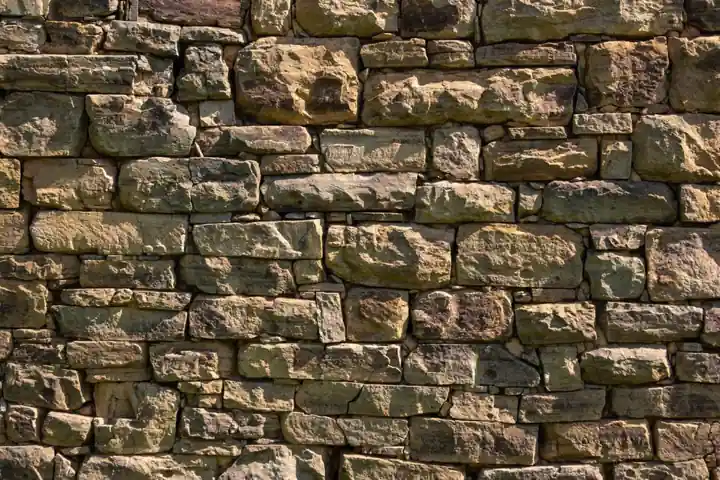
Freeze-thaw performance depends on the stone’s absorption, pore structure, flexural strength, and installed drainage details, so a freeze-zone exterior specification must combine material testing with wall-system design.
The scope covers solid building stone and manufactured stone veneer, with EN 14617-5:2012 providing a laboratory freeze-thaw test for agglomerated marble intended for external cladding [S8].
Thermal shock is a coupled moisture and temperature problem
Water that enters a stone’s pores freezes, expands, and generates internal stress; repeated cycles can then produce cracking, surface breakdown, and loss of strength.
Thermal shock is broader than winter freezing. Research on Portuguese limestones exposed to 200°C, 400°C, and 600°C followed by water cooling found color differences of 3–32%, uniaxial compressive strength reductions of 1–33%, and hardness reductions up to 12.2%. At 600°C, ultrasonic pulse velocity changed by as much as -49%, while microcrack propagation and pore enlargement altered the microstructure [S1].
Those fire-test values do not define an exterior freeze-thaw acceptance criterion, but they demonstrate the engineering principle clearly: rapid thermal change can damage the pore network and measurable mechanical properties. For facade work, project-specific thermal analysis should therefore examine solar heating, cold-air exposure, moisture retention, and the sequence of wetting and freezing rather than treating compressive strength as the only screening metric [S1] [S4].
Use measurable stone-selection criteria
The appropriate method depends on whether the design concern is broad flexural loading or concentrated loading at a particular point [S2].
Neither value alone establishes freeze-zone suitability. Absorption and bulk density should be reviewed together because they indicate the amount and volume of pore space capable of taking up water, while flexural strength describes the cladding panel’s ability to resist bending at supports [S2].
For the primary cladding material, the specification should state the petrographic or commercial stone designation, quarry and source where controlled matching matters, nominal thickness, finish, exposed face treatment, absorption, bulk specific gravity, compressive strength, flexural strength, and the applicable project test for freeze-thaw resistance. The selected panel dimensions also need to be coordinated with the anchorage system rather than accepted as a supplier-only decision [S6].
Compare solid stone, agglomerated stone, and manufactured veneer
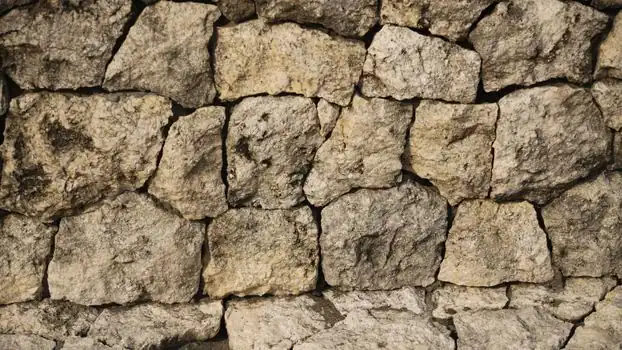
Solid natural stone offers long-established exterior use and the potential for project-specific traceability, but quarry variation, directional properties, absorption, and panel weight must be addressed. Manufactured stone veneer uses controlled concrete mixes, aggregates, cement, and durability-focused admixtures to regulate density, absorption, and pore structure, while its lighter installation weight is advantageous over framed walls [S3].
Aggreglomerated stone is a separate category because its binder and aggregate structure differ from quarried block stone. EN 14617-5:2012 specifies a laboratory method for assessing resistance to thermal and moisture cycling in marble intended for external cladding; the 2012 edition and its external-cladding scope should remain visible in procurement documents [S8].
The comparison should therefore use four decision criteria: water uptake and pore structure, verified bending and anchorage performance, consistency between production batches, and installed system weight. Manufactured stone veneer is engineered for freeze-thaw conditions, with controlled absorption rates, consistent material density, and moisture-management details supporting stability through seasonal temperature shifts [S3].
Freeze-zone suitability depends on the wall assembly
Freeze-thaw durability cannot be separated from drainage. Manufactured veneer relies on controlled absorption and material consistency, but proper drainage planes and moisture-management details remain necessary to limit water behind the visible surface [S3].
The assembly should include a continuous drainage path, compatible flashings, sealed or drained joints, a ventilated cavity where the design uses one, and an air-and-water barrier that drains toward the exterior. Wall penetrations, parapets, transitions, and sill details need the same continuity because a sound stone panel can still direct water into the wall behind it [S3] [S6].
Stone and aluminum veneer panel systems differ in substrate behavior, weight, fixing design, and joint movement, so material durability cannot substitute for anchor and cavity design. Anchorage selection must account for the stone type, panel geometry, support system, differential movement, and the consequences of localized failure [S6].
Thermal mass should not be confused with thermal-shock resistance. Thermal mass, also known as volumetric heat capacity, is calculated by multiplying a material's specific heat capacity by its density, while concrete, bricks, and tiles are described as having high thermal mass [S5]. These values describe heat storage, not resistance to rapid temperature change, cracking, or moisture-driven freeze-thaw damage [S5].
Anchor, thickness, and opening size determine failure consequences
An exterior stone panel that loses flexural capacity or develops a crack may remain visually attractive while becoming hazardous, so panel geometry and support conditions belong in the thermal-shock assessment. The building stone thickness comparison provides a useful distinction between vertical cladding panels and horizontal floor slabs, where load direction and exposure conditions differ. [S3]
Thicker stone is not an automatic solution to a high-absorption stone. It adds dead load and may require larger anchors, but it does not prevent absorbed water from freezing in connected pores. Anchorage details must provide restraint while accommodating movement, and the substrate must remain stable through seasonal wetting, freezing, heating, and drying [S6].
Thermal-shock testing should be considered alongside the mechanical tests because a panel may pass a flexural-strength requirement yet remain vulnerable to cyclic temperature and moisture exposure. Conversely, a freeze-thaw test result should not be treated as permission to reduce thickness, anchorage, drainage, or safety factors. Material selection, structural design, and envelope control are separate controls that work together.
Apply a traceable procurement and acceptance process
Request test reports that identify the exact stone, production source, and relevant property values, then confirm that the reported specimens and preparation method correspond to the specified cladding product. For agglomerated marble, require evidence against EN 14617-5:2012 for external-cladding thermal and moisture cycling, with the test scope and specimen identity recorded [S8].
For natural dimension stone, record the results under ASTM C97 for absorption and bulk specific gravity, ASTM C170 for compressive strength, and ASTM C880 for flexural strength. ASTM C99 can supplement localized modulus-of-rupture evaluation where the loading condition warrants it [S2].
Track two project signals through installation: the percentage of joints, penetrations, and transitions with verified continuous drainage, and the number of panels whose delivered thickness, finish, absorption, and lot consistency match the approved submittal. Track durability findings from panel-level inspections for cracking, spalling, scaling, joint movement, and dampness behind the cladding. These controls are more actionable than relying on a generic label such as “freeze-thaw resistant.”
The defensible specification is the combination of low water uptake, verified flexural performance, suitable thermal-moisture cycling evidence, controlled panel geometry, reliable anchorage, and a drained wall assembly.