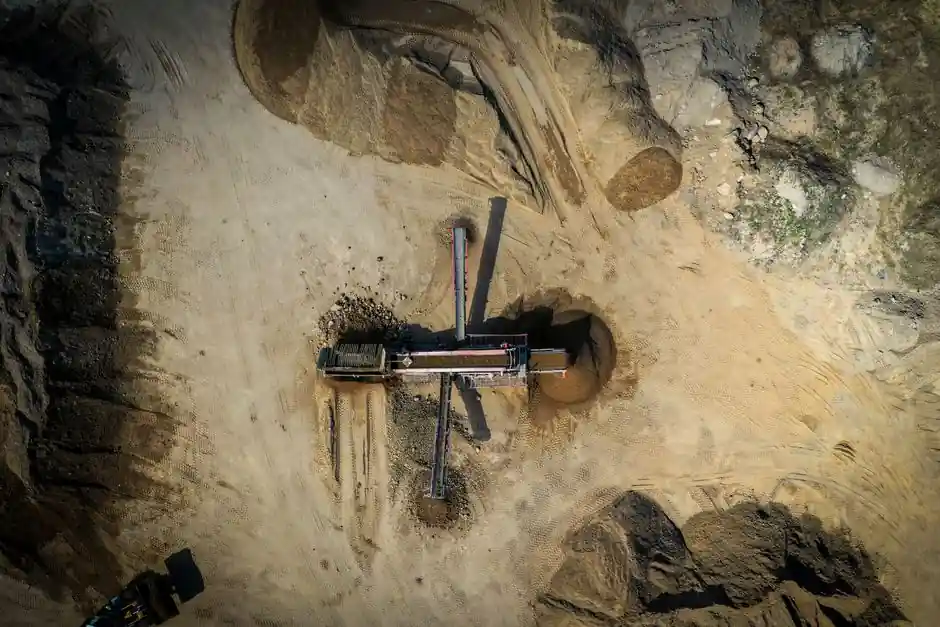
For open-pit and quarry duty in 2026, a crawler crane is selected less on brand and more on five hard spec gates: maximum lift class, ground-bearing pressure versus pit-floor bearing capacity, pick-and-carry duty cycle, ambient derating for altitude and dust, and the local supply chain for undercarriage wear parts [S4][S5].
Mining lifts differ from construction lifts in three ways that drive the spec: longer sustained pick durations (60-80% of shift on the hook), continuous repositioning over ungraded haul-road surfaces, and 24/7 exposure to abrasive dust that accelerates track-shoe, roller, and sprocket wear. A crawler crane selected for a 250 t open-pit shovel-service role therefore needs a different ground-pressure and parts strategy than a 75 t unit used on a concrete batch plant.
Lift Class, Pick Radius, and the Load-Chart Reality
Mine planners should size the crane on the worst-case load chart, not the headline maximum capacity, because mining picks almost never occur at the minimum radius. A 250 t nominal-class machine typically delivers only 60-70% of its chart maximum at 12-18 m working radius, the envelope most pit-service lifts sit inside [S3].
Two related gates flow from that chart: outrigger or outrigger-free pick (crawlers are outrigger-free by design, which is why they dominate mine pads and haul-road crossings), and reeving configuration. Fixed-jib versus luffing-jib versus telescopic-boom selection changes the chart geometry: telescopic boom favours short-radius, fast-reposition work (mill reline, crusher maintenance), while lattice luffing-jib favours long-radius shovel-service and dragline erection. PALFINGER's crawler-crane product line, for example, is positioned as an all-rounder for complex jobs where radius-to-capacity ratio is the binding constraint [S3].
Ground-Bearing Pressure: The Gate That Kills the Wrong Spec
Ground-bearing pressure (kPa or psi) under the tracks is the single most-cited reason crawler cranes get refused on a mine site, because the pit floor, ROM pad, or tailings dam surface frequently has a lower allowable bearing capacity than the crane's footprint implies [S5].
Engineers should request the OEM ground-pressure figure at working mass with the heaviest pick on the chart, and compare it against the in-situ CBR or equivalent bearing value of the operating surface. A typical 100-150 t class crawler running on standard 760-900 mm track shoes sits in the 80-120 kPa range, which is acceptable on prepared ROM pads but marginal on freshly-stripped overburden. Track-shoe width is the cheapest lever: optional 1.0-1.2 m shoes can cut ground pressure 20-30% on the same chassis, which is the same engineering logic that drives mining dump truck wide-base tyre and gantry crane outrigger-pad design.
Duty Cycle, Ambient Derating, and Engine Tier
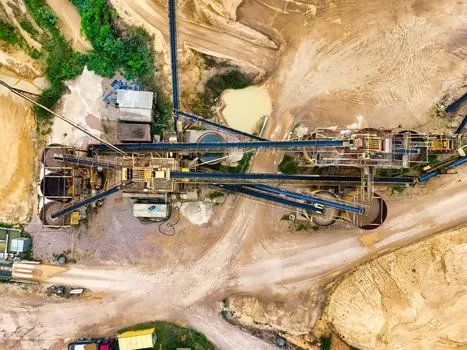
EU and most of the Americas now default to EU Stage V / EPA Tier 4 Final emissions on new units; APAC and African mine fleets still accept Tier 3 / Stage IIIA for non-road mobile machinery when local fuel quality does not support Tier 4 after-treatment. For diesel-electric drive, the same derating logic that applies to a mobile crane driveline applies here, with the extra caveat that dust ingress into generator windings is the dominant failure mode.
Undercarriage Wear Parts: The Hidden 30-Year Spec
Undercarriage wear parts typically account for 30-50% of a crawler crane's lifetime operating cost in a mine, which is why brand-agnostic parts supply is itself a selection criterion [S1][S2].
The five wear components that drive cost are track shoes (the structural link with the ground), bottom track rollers (carry chassis weight onto the shoes), top rollers (mounted on top of the undercarriage to keep the chain aligned), front idlers (guide and tension the chain at the nose), and drive sprockets (transmit engine power into the chain). Material grade matters: top rollers in 40Mn2 and sprockets in 35SiMn are standard wear-spec alloys in current production [S1]. Sprockets come in two mounting styles, bolt-on and spline-on, and the choice affects field-replace time. ISO 9001-certified aftermarket makers routinely ship from stock on 7-14 day lead times, which compares with 30-90 days for OEM-branded equivalents and is the dominant reason mixed-brand undercarriage programmes are common on multi-fleet mine sites [S1][S2]. A comparable logistics pattern shows up in stacker crane spares programmes and is treated as a known risk in the EPC contract.
Selection Criteria Compared: Telescopic vs Lattice vs Luffing-Jib
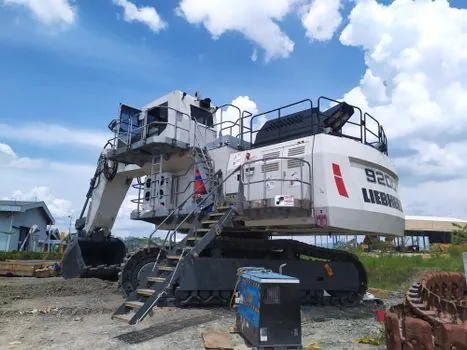
For a mine, the type choice is a function of three trade-offs: pick radius envelope, mobilisation cost, and pick-cycle time.
A telescopic-boom crawler (typical 60-150 t class) wins on mobilisation (one piece, road-able, no assist crane needed) and short-radius pick-and-carry, but loses on long-radius chart and continuous-cycle fuel burn. A lattice-boom crawler (typical 150-600 t class) wins on raw lift-to-weight ratio and is the standard for shovel-service and mill reline, but loses on mobilisation footprint and assembly time. A luffing-jib crawler occupies the middle, useful on congested plant sites where the jib geometry must clear obstructions, similar to the role a crane scale plays in confined-lift monitoring.
Who a Crawler Crane is FOR, and Who it is NOT For
Crawler cranes are FOR mine operators who need outrigger-free lifts on low-bearing surfaces, sustained pick durations above 4 hours, and a machine that can reposition under load across short distances. They are FOR fleets that already stock or have rapid access to undercarriage wear parts, because a single split-track-shoe failure in a remote pit can idle a 250 t unit for weeks [S1][S2].
They are NOT FOR operations that need to reposition more than once per shift between widely separated sites, where a mobile crane on a truck chassis will out-cycle them. They are NOT FOR ultra-light pick work below 30 t, where a hydraulic loader crane on a service truck is cheaper per lift-hour. They are also not the right call for a single, one-off heavy lift, where rental of a larger lattice unit plus an assist crane is more economic than a capital purchase.
Limits, Failure Modes, and Sourcing Discipline
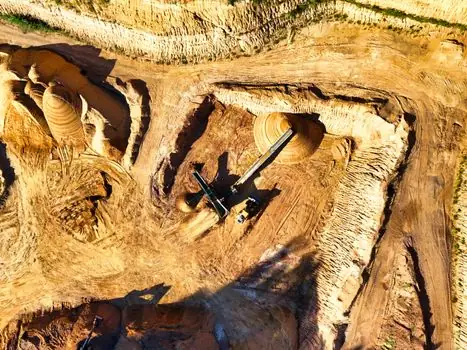
Three failure modes dominate crawler crane service on a mine site: track-chain elongation from abrasive wear, hydraulic-system overheating during sustained picks, and structural-fatigue cracking at the boom-foot pin in machines that have logged 20,000+ hours without pin rotation. None of these are surprises, and all three are addressable in the spec phase by selecting wider shoes, larger hydraulic reservoirs with independent oil coolers, and pin-rotation-friendly boom designs [S1].
Sourcing discipline is the last gate and the one most often skipped. Buyers who treat the undercarriage as a single-OEM line item are exposed to the longest lead time in the bill of materials; buyers who pre-qualify at least two ISO 9001 wear-parts vendors before purchase compress the parts tail from 90 days to 7-14 days and reset the operating-cost curve. PALFINGER, Manitowoc, Liebherr, Sany, and other OEM crawler-crane brands remain visible in industry trade coverage through 2026 [S3][S4]. The next signal worth tracking is bauma 2026 OEM announcements on hybrid and diesel-electric drive for the 100-200 t class, and any move by aftermarket wear-parts makers to release 3D-print-ready track-shoe patterns for low-volume legacy models.
Background reading: AMR selection for chemical shipping: classified-area spec map.