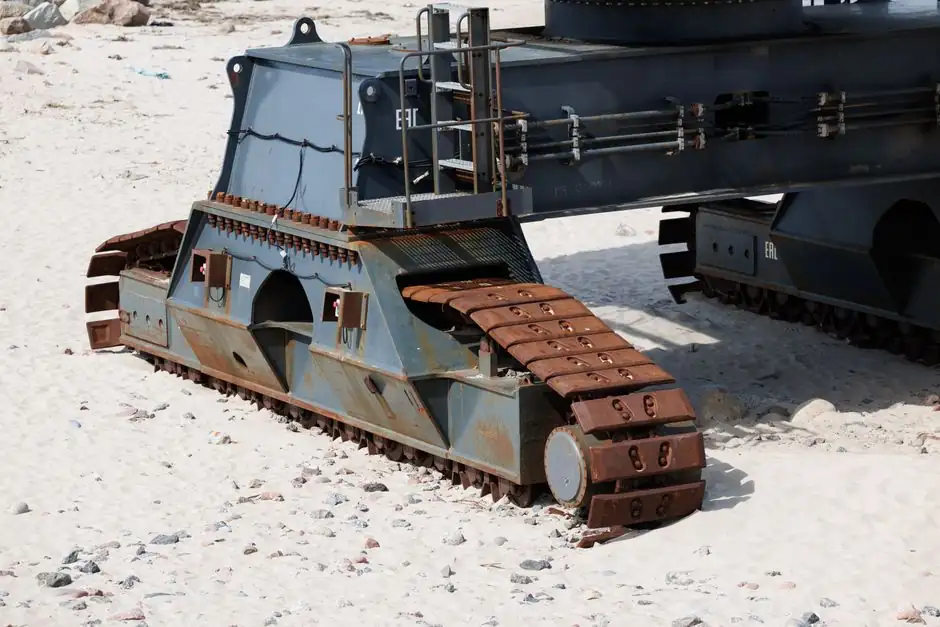
For road-building projects, crawler crane selection starts with two numbers: the heaviest single lift on the critical path and the maximum bearing pressure the prepared subgrade can sustain, with road-paving packages typically peaking at 10-80 t single lifts.
The fleet decision then pivots on boom length versus reach radius, ground-bearing pressure of the track pad, and whether the unit can self-erect without outriggers on a narrowed embankment, all of which filter the candidate list down to 2-3 classes before brand is considered.
Size the Lift, Not the Machine
The first gate is peak lift capacity at working radius, not rated maximum, because a 200 t crawler crane lifting 20 t at 12 m behaves very differently from a 50 t unit lifting the same 20 t at 3 m. Load charts from active listings on 2026-08-09 list 100 t class units with 64 m main booms and 396 t·m load moment, 200 t class with 85 m booms and 1152 t·m moment, and 320 t class with 86 m booms and 1820 t·m moment, giving road contractors a clean three-step escalation for bridge-beam, pier-segment, and overpass-truss picks [S4].
For sub-30 t duties such as formwork clusters, rebar cages, and genset moves, a 20 t class crawler crane with 25.5 m main boom, 6 m jib, 31.6 m max hoist height, and 35.8 t operating weight is the typical base spec, and the same configuration travels with load at 4.6 km/h on tracks set 2300-3500 mm wide [S2]. Smaller spider-crane variants in the 12 t class are sold for glazing and tight-radius work at roughly US$ 8,000-8,500 per set from OEM/ODM factories [S3], but those are niche picks and do not cover general road work.
Ground Pressure and Subgrade
Track shoe length and track-gauge range, not just machine mass, set the ground-bearing pressure that determines whether a crane can sit on a partially completed embankment. The 20 t class spec sheet shows 4943 mm shoe length paired with 2300-3500 mm extendable track gauge and a 4012 mm transport width, letting the operator drop ground pressure by widening the tracks before a critical lift [S2].
On weak subgrade, contractors typically lay bog mats or steel plates beneath the tracks; the wider the shoe and the lower the machine's center of gravity, the smaller the mat area needed. The same 20 t class unit climbs 40% grades without outriggers and can travel under load, which is a hard requirement when the work face is a half-widened embankment with no shoulder pad for stabilizers [S2].
Boom Geometry vs Road Geometry
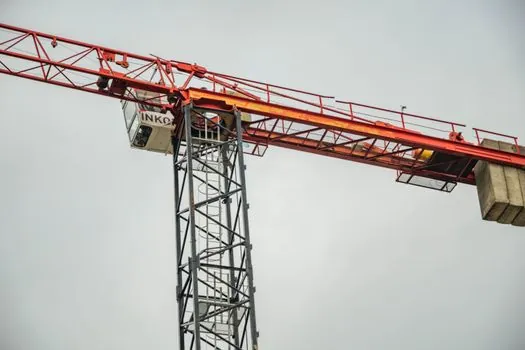
Boom length is the second gate and it has to clear the obstacle, not just reach the load. Underpasses, tunnel portals, and existing bridge soffits cap the jib height, and on these sites a telescopic boom that retracts to 8.5 m for travel and extends to 25.5 m for work avoids the dismantling labor that lattice-boom cranes demand [S2].
For highway overpass work where the crane stands on finished grade and lifts girders from delivery trucks below, a fixed lattice boom at 64-86 m on a 100-320 t base is the normal pick, and the jib offset angles of 0° and 20° on smaller units let the same machine work around a pier without re-spotting [S2][S4]. Reach and hoist speed trade off directly: the 20 t class runs the main hook at 16.75-67 m/min depending on reeve (N=2 through N=8), so a contractor pulling many short-cycle lifts picks the higher line speed, while a single heavy lift picks the lower speed for finer spotting [S2].
Power, Hydraulics, and Telematics
Engine and hydraulic architecture matter once the machine is on site for six months. The 20 t reference unit runs a Mitsubishi 114 kW @ 2050 rpm power pack with imported hydraulic and pilot-control systems, and a larger fuel tank extends the refuel interval on remote stretches of road [S2]. For road contractors running mixed diesel inventories, single-engine platforms with common rail simplify cold-start at altitude.
Telematics and load-moment indicators (LMI) are non-negotiable on public-road projects, and the same 20 t spec lists a "high reliable moment limiter" as a standard feature, with the cab giving the operator a wide sightline through silicone-oil vibration-isolated mounts [S2]. Independent of brand, an LMI that logs every pick, overload event, and radius excursion is what the client's safety officer audits, so confirming the data-export format and on-board storage before delivery saves weeks of paperwork.
Operator Certification and Site Rules
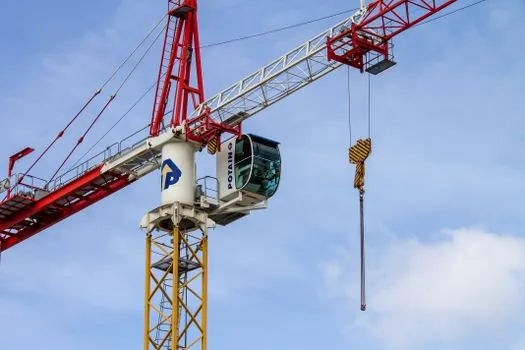
Crawler crane operation on a road site is a certified-activity gate. Operators must hold the local crane-operator certificate, prove familiarity with the specific machine's load chart, and run pre-operational checks on engine, brakes, hydraulic systems, and tracks every shift [S1]. Load capacity is not the only limit: the working radius has to be planned against the load weight, and a heavier load demands a smaller radius to keep the moment inside the chart, which is the most common tip-over path on road jobs [S1].
Communication is a separate gate. Operators work with a dedicated signal person using standardized hand signals or radio on every pick, because miscommunication on a narrowing worksite is a frequent precursor to side-loading the boom [S1]. For road projects next to live traffic, this signal-person rule is also what lets the crane work inside a partial carriageway closure without conflicting with banksmen on the public side.
Weather, Mats, and Site Geometry
Wind, rain, and ground condition rule out lifts that would otherwise be routine. Operators are expected to monitor conditions continuously and to use ground mats, stabilizers, or track-width extension when the prepared surface is wet, frozen, or recently filled [S1]. On a road project, that decision is tied to the construction sequence: the same crane that lifts girders off delivery trucks on day one may be sitting on a concrete deck slab on day ninety, with very different ground-pressure limits, so the operator's daily ground assessment is the live gate.
For tunneling, underpass, and bridge-soffit lifts, the telescopic crawler that retracts to a low transport height and works without outriggers inside a confined envelope is the only practical pick, while open highway work with long reach calls for lattice-boom heavy units [S2]. Matching the crane to the geometry of the work face, not just the weight on the hook, is what separates a working road-site crane from one that spends half the shift re-rigging.
Comparing the Three Road-Site Classes

For a side-by-side decision on a typical road package, three classes cover most bids. The 20 t telescopic class with 25.5 m boom, 35.8 t mass, 4.6 km/h travel speed, and 40% gradeability handles formwork, rebar, and small precast on tight sites [S2]. The 100 t class with 64 m boom and 396 t·m moment is the standard pick for bridge beams up to about 30 m span [S4]. The 200-320 t classes with 85-86 m booms and 1152-1820 t·m moments are reserved for long-span girders, segmental erection, and heavy pier-head lifts [S4]. Across all three, the same operating gates apply: track-gauge extension for low ground pressure, LMI on every pick, certified operator, and a signal person for every lift [S1][S2].
Cost position differs sharply by class: small OEM spider cranes list in the US$ 8,000-8,500 per-unit range for export [S3], mid-range telescopic crawlers sit in the US$ 60,000-120,000 zone for similar compact construction hardware [S7], and 100-320 t used crawler cranes from established fleets typically price on application through specialized dealers [S4][S6]. Used 100-320 t units dated 2020-2021 are the supply pool for road contractors who need lattice-boom reach without the capex of a new build [S4].
When a Crawler Crane Is the Wrong Pick
For jobs that are pure vertical lift in a fixed footprint, with no travel between picks and a hard standing pad already in place, a mobile crane on outriggers is usually cheaper to mobilize and faster to rig, and a tower crane becomes competitive when the work is a tall pier with many repeated picks over months. Crawler cranes earn their keep when the crane has to move under load between picks, sit on weak or unprepared ground, or work a long linear site such as a road corridor where outrigger mats would block traffic. [S2]
For inner-city road jobs with tight night-shift windows, the same logic pushes the choice toward a smaller telescopic crawler that can self-erect and travel under load inside the closure, rather than a heavy lattice-boom unit that needs a full day to assemble. Construction-tools packages such as rebar benders, plate compactors, and small pavers feed material to the crane, and matching their cycle time to the crane's hoist speed is what keeps a paving train productive.
Track the next two signals: OEM disclosure of 2026-spec LMI data-export formats for road-project compliance audits, and any tightening of operator-certification requirements on public-funded highway work in the EU and US, both of which will reset the selection gates within the next 12-18 months. For deeper reading on adjacent specification work, see this steel plate selection gate map for prefabricated construction.