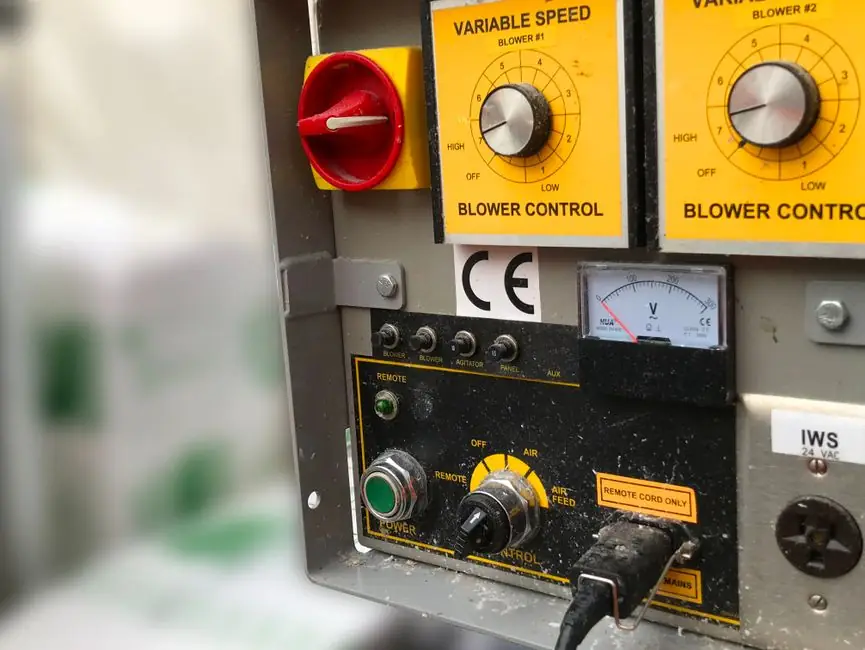
A selector switch can control several electrical circuits from one panel-mounted operator point, with maintained versions providing 2 to 7 selectable positions [S4].
These manual pilot devices suit motor control, HVAC, manufacturing machinery, packaging lines, and process systems where operators must select modes such as Auto, Manual, Local, Remote, or Off [S1].
Selector Switch Function and Panel Value
A selector switch opens and closes contacts to select one of several circuit states, including on-off, forward-reverse, and multi-step operating modes [S1]. Mechanically maintained switches remain in the selected position until the operator changes them, making the active mode continuously visible rather than dependent on an indicator alone [S2].
That construction compresses several functions into one actuator. Three-position maintained switches can combine Off, Manual, and Auto, while a three-position momentary design returns to its original position after release and can provide a temporary command or enabling action [S2]. The broader mechanical classifications and contact arrangements are covered in Selector Switch Types and Classifications.
The operator interface may also include a knob, lever, or key, with contact modules defining the maintained positions and circuits [S2]. Multiposition selector switches provide multiple defined maintained positions and can combine multiple functions in one element [S2].
Main Advantages for Machine and Panel Builders
Selector switches offer visible operating status, compact construction, and consolidation of multiple functions in one control element [S2].
Maintained rotary switches fit fixed modes such as On, Off, and Auto, while multiposition rotary versions can combine three, four, or more maintained functions in one control [S2]. Key-operated selectors add a physical access restriction, allowing only a person holding the key to change a critical mode during maintenance or another safety-related function [S2].
Selector switches can use a key actuator and contact modules to activate circuits [S2]. In practice, the pushbutton and pilot light remains better for one momentary command with a separate status lamp, while the selector switch is stronger when the operator must choose and retain a machine mode.
Main Disadvantages and Failure Modes
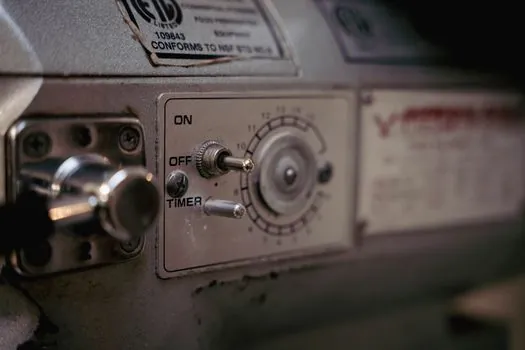
The primary disadvantages are mechanical complexity, restricted electrical capacity, and the risk of unintended mode selection. A manually operated cam switch cannot be controlled remotely and is unsuitable for switching extremely high currents [S6]. Selector switches also expose their actuator and contact mechanism to mechanical wear, contamination, and accidental movement.
Mode ambiguity can be more serious than operating inconvenience.
Momentary selectors also have a different risk profile from maintained devices. Releasing the actuator removes the command, so a worn spring, obstructed return, or incorrect contact block can interrupt the intended operation [S2]. Safeguard functions must therefore be implemented in the control architecture rather than inferred from switch position alone.
Toggle Versus Rotary Selection
Toggle mechanisms suit straightforward control because they combine fast actuation, simple construction, and visible position confirmation at basic-control cost [S1]. Rotary selectors are the stronger choice when an operator must distinguish several retained states, because three-, four-, or higher-position versions consolidate functions and wiring in one actuator [S2].
Neither family should be treated as a universal power switch. Current rating, AC and DC voltage rating, number of poles and throws, and the required switching function must match the load; exceeding the rated current can damage the device or connected equipment [S4].
Selection Criteria for Industrial Panels
Specify the operating requirement before selecting the mechanism: fixed mode, temporary command, or restricted key access. A maintained selector suits continuously selected states, while a momentary selector suits start-stop, reset, enabling, and other short-impulse functions [S2]. Combination hardware can support both maintained modes and temporary commands within the same assembly [S2].
Electrical selection requires at least 4 checks: contact function, poles and throws, AC voltage, and DC voltage [S4]. The actuator family adds mechanical checks, including 2 to 7 stopping positions, mounting type, termination style, panel cutout, and whether illumination is required [S4].
For panel architecture, the selector switch should be coordinated with a nearby emergency stop button without presenting an emergency-stop function that its contact arrangement does not provide.
Correct Application and Sourcing Checks
Selector switches are appropriate for compact operator interfaces requiring selectable, durable, and visible machine states. They are less suitable for remote-only operation, very high-current switching, unrestricted temporary commands, or applications where the electrical interlock can be defeated by a simple one-input inference scheme [S5][S6].
For a two-position Auto/Manual function, the robust engineering choice is to use separate, monitored inputs and define the controller response for both invalid states. This avoids treating absence of an Auto signal as positive proof of Manual mode. For three-position designs, the center position can provide Off, but that arrangement still needs a defined circuit and program response [S5].
When reviewing supplier data, compare number of positions, switch function, current rating, AC voltage, DC voltage, illumination voltage, mounting, termination, panel cutout, and IP rating rather than selecting only by actuator appearance [S4]. This procurement sequence converts a panel requirement into a mechanically and electrically verifiable specification.
The next engineering checkpoint is a failed-state test: verify that each physical position produces exactly one valid electrical state, that an open input is detected, and that every maintained or momentary behavior matches the designed circuit.