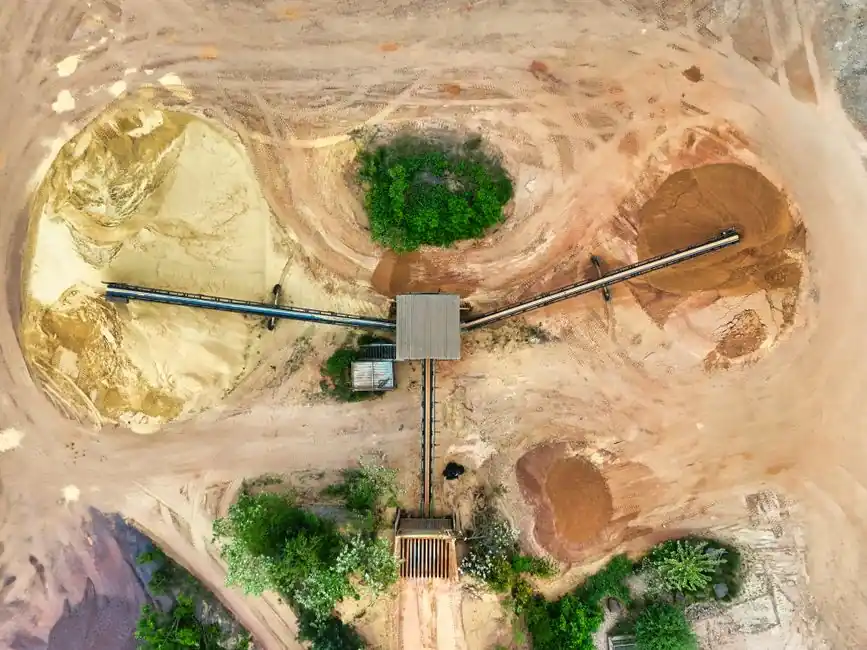
Self-aligning ball bearings with 1200, 1300, 2200, and 2300 series designations, plus spherical roller bearings in the 22220CA to 22226CA size range, are the two bearing families that carry the bulk of material-handling conveyor, feeder, and pulley shafts in 2026 [S1][S6].
For typical conveyor idlers running at 600 rpm to 1500 rpm, a 1200 or 2200 series self-aligning ball bearing with pressed-steel or brass cage, P0 to P6 precision, and C0 to C3 internal clearance covers most belt-conveyor and bucket-elevator jobs [S1]. For heavy-duty pulley shafts, vibrating feeders, and mining conveyors, the 22220CA-22226CA spherical roller series in double-row CC/W33 configuration is the workhorse, with bore sizes of 15 mm to 300 mm, P0 to P2 precision, and C0 to C4 clearance, supplied in bearing-steel (GCr15/GCr15SiMn) [S6].
Why Self-Aligning, and What Misalignment They Actually Absorb
Self-aligning ball bearings tolerate initial angular misalignment of roughly 1.5 degrees to 3 degrees, achieved through a two-row ball set running in a spherical outer raceway whose center of curvature coincides with the bearing axis [S5]. This geometry lets the inner ring, balls, and cage swivel around the bearing center, compensating for shaft deflection, mounting error, or housing skew on long conveyor frames [S1].
Spherical roller bearings accept lower misalignment, typically 0.5 degrees to 1.5 degrees, but compensate with much higher radial load capacity through line contact between crowned rollers and the outer race [S6][S8]. In a typical material-handling line, a 22320 spherical roller bearing on a head-pulley shaft can carry several times the radial load of a same-bore 2220 ball bearing before fatigue becomes a concern, which is why the change-out point in heavy conveyor specs sits at the 100 kN radial load band.
Material-handling applications covered by self-aligning bearing catalogs include rolling mills, mining conveyors, paper machines, cement kilns, and sugar-mill cane carriers, all of which generate measurable shaft deflection between the drive and tail ends [S1]. On vibratory feeders, the spring mount itself uses self-aligning bearings to support the feeder spring at adjustable angles, since the flip ratio vB/vA is held below 2 by varying the rear-spring inclination [S4].
Ball vs Roller: When to Pick Each in a Material-Handling Spec
Use self-aligning ball bearings when the shaft is light, the speed is moderate to high (above 1000 rpm), contamination risk is low, and the dominant failure mode is misalignment rather than overload. The 1200 and 2200 series in chrome steel with a steel or nylon cage are the default for motor-end pulley shafts, small-diameter idlers, and packaging conveyors, with P0-P6 precision, C0-C5 clearance, and Z1-Z3 vibration grades covering the common case [S1]. Pressed-steel cages are standard, and friction is the lowest of any rolling-bearing type, which keeps the housing cooler at the high end of the speed range [S5].
Use spherical roller bearings when radial load exceeds roughly 100 kN, shaft speed drops below 1000 rpm, and contamination from dust, slurry, or process water is unavoidable. The 22220CA-22226CA unseparated double-row series, with CC or CA tapered-bore designs and W33 lubrication grooves, is the workhorse for steel-mill coil conveyors, cement-plant bucket elevators, and port-loading belt conveyors [S6]. Where heavy shock loads appear, a 22300 series with brass cage extends the grease-relube interval to 5000 hours under standard re-greasing conditions.
The table below lines the two families up against the four selection criteria that drive a material-handling spec:
Self-aligning ball bearings win on speed (up to roughly 3600 rpm depending on series) and friction; lose on load and contamination tolerance. Spherical roller bearings win on load and contamination tolerance; lose on speed limit and minimum friction. A 2200-series ball bearing typically weighs 40% to 60% less than a 22220-series roller of the same bore, which matters for suspended idler frames where bearing mass adds to the rotating group imbalance.
Series, Materials, and Precision Grades Sourced From the 2026 Supply Base
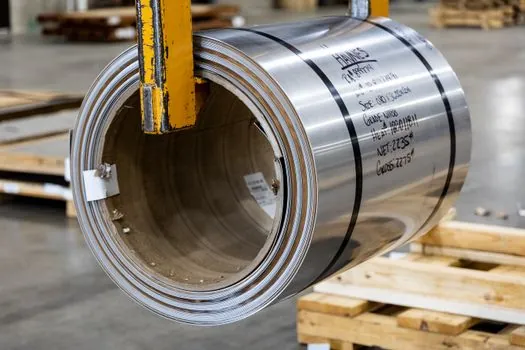
The 1200, 1300, 2200, and 2300 series remain the four self-aligning ball-bearing bore families most commonly quoted for material-handling OEM use, with chrome steel, GCr15, and GCr15SiMn as the standard ring-and-ball materials, and steel, nylon, or brass cage options depending on temperature and noise targets [S1]. Precision grades P0 through P6 cover the conveyor and feeder scope, while P5 and P4 are reserved for the gearbox end of a feeder drive where higher rigidity matters.
For spherical roller bearings, the 22220CA through 22226CA size block and the wider 21300 to 22300 envelope cover bore sizes from 15 mm to 300 mm, with CC (symmetrical rollers, no flange), CA (one-piece machined brass cage, guided on inner ring), and E (steel-plate reinforced cage) design variants supplied by manufacturers clustered around Xingtai and Shijiazhuang, with bearing-steel as the standard material [S6]. One verified Chinese supplier data sheet shows 456 active self-aligning roller bearing suppliers on the major B2B platforms, with top export markets in Southeast Asia (15%), South America (12%), and the Middle East (11%) [S3].
For aerospace-adjacent or high-temperature feeder drives, plain self-aligning bearings to SAE AS81936/2-1998 (Be-Cu ball, CRES race, -65 F to +350 F window) and SAE AS21154B-2011 (plain self-aligning, grooved outer ring, with cadmium plating per AMS-QQ-P-416 or zinc-nickel per AMS2417) are available for vibratory feeder pivots and small-pivot points [S7][S9]. These are not typically the conveyor workhorses but show up in feeder suspension and shaker-pan linkages.
Integration with Material-Handling Systems and Related Equipment
Self-aligning bearings are usually specified in two distinct positions on a material-handling line: as the head-pulley and tail-pulley supports, and as the snub and bend-pulley supports behind the take-up. The head pulley almost always runs a spherical roller bearing on a sleeve adapter; the tail pulley can take a 2200-series ball bearing on a setscrew mount, which is one of the cost-vs-life decisions that defines the line spec. For vibratory feeder designs, the self-aligning spring mount described in US4913281A uses two bearings with spring-abutting surfaces, and the flip ratio vB/vA is held to less than 2 by adjusting the rear-spring inclination, which is a useful field-tuning target when commissioning a feeder [S4].
For packaging and light-belt conveyors running below 1500 rpm, the 1200-series self-aligning ball bearing with C3 clearance is typically adequate and weighs roughly half of the equivalent spherical roller bearing, which simplifies the take-up frame design.
Selection logic for the full material-handling system builds on a few cross-domain rules: keep speeds below the cage limit, hold radial loads under 0.5 times the dynamic load rating C for a 50000-hour L10 life target, and pick the bearing family that matches the worst contamination exposure rather than the average. Where the conveyor feeds into a screening or crushing stage, follow the upstream equipment's bearing class, otherwise plan for one bearing generation of misalignment in the line and budget the maintenance accordingly.
Limits, Failure Modes, and Sourcing Signals for the Next Quarter
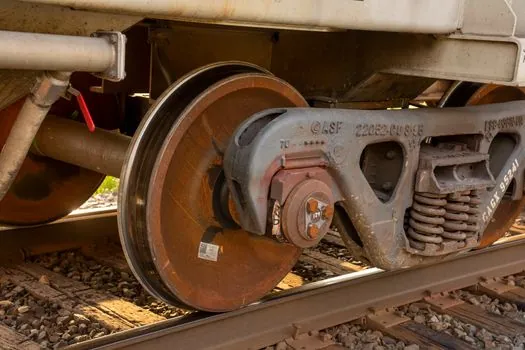
Self-aligning bearings are not a cure for parallel misalignment greater than 3 degrees for ball types or 1.5 degrees for roller types, and exceeding those numbers drives inner-ring stress and rapid cage wear [S5][S8]. They also do not eliminate the need for a properly machined pillow block; a self-aligning bearing on a warped mounting face still fails by brinelling the outer race. The 5000-hour grease limit on a 22220CA in normal industrial conditions is the practical relube boundary, and exceeding it without re-greasing pushes the failure mode from spalling to cage fracture.
Sourcing signals worth tracking through late 2026: bearing-steel pricing on the LME nickel index, which feeds the GCr15SiMn cost line; 2026 lead times from Xingtai-area mills, which sit at 30 to 45 days for the 22220-22226 size block; and any update to ISO 15:2017 single-row self-aligning ball bearing boundary dimensions or ISO 104:2015 single-row spherical roller bearing dimensions, which both govern the series designations called out above. self-aligning bearing selection for mining duty tracks the related heavy-duty envelope, and angular contact bearing selection for pulp and paper covers the high-rigidity end of the same spec map. For general context on the broader equipment class, see the self-aligning bearing reference and the ball bearing encyclopedia entry.
Spec-level background on the components involved: material handling.