
That ratio is the whole reason TCO analysis exists for self-cleaning filter selection, and it is the lens this piece uses to compare reverse-pulse, reverse-air, and suction-scraper designs.
Across the eight reference sources, the recurring verdict is that a properly specified self-cleaning unit pays back its premium through extended media life (a 3–5× service-life extension per the EPA 2023 benchmark cited in 2026 industry writing [S4]), avoided unplanned downtime, and a flatter differential-pressure curve that holds fan energy in check. Purchase price ranks far below energy, labor, and disposal once the system is in service.
Lifecycle cost split: the 8/80/12 rule applied to self-cleaning filters
Camfil's published split, 8% filter, 80% energy, 12% system and operations, was framed for general clean-air solutions but maps cleanly onto self-cleaning liquid and gas units [S2]. The energy bucket is not the heater or pump's nameplate; it is the work the system does to overcome the filter's differential pressure, which is a direct function of how clean the media stays between cycles. A self-cleaning filter that holds ΔP at 0.05 bar instead of letting it climb to 0.20 bar cuts fan power roughly in proportion, which is why reverse-pulse and reverse-air designs show up in most TCO comparisons [S1][S2].
For a bag filter retrofit, the same 8/80/12 logic flips the decision: a higher-MERV primary with on-demand cleaning can drop annual energy cost enough that the filter-budget increase is recovered more than ten times over in electricity savings, per Filtration Group's Connecticut-vs-Nevada comparison (energy at $0.1721/kWh vs. $0.07465/kWh, TCO roughly 2× higher in Connecticut at the same filter spec) [S3]. Geography, energy tariff, and ambient loading move the answer more than the model number does.
Cost drivers ranked: what moves the price tag
Filtration Group's primary TCO line items, purchase price, installation labor, energy, lifespan, repairs, maintenance, and disposal, are the same seven buckets Camfil uses for dust-collector TCO, with one self-cleaning-specific addition: cleaning-air supply [S1][S5]. Reverse-pulse units add compressed-air cost (typically 0.5–0.6 MPa plant air at 6–10 m³/h per filter, sized to element count and dust load), reverse-air units add low-pressure blower draw, and suction-scraper designs add a small vacuum pump or eductor. Each cleaning-energy term should be metered or estimated before bid, not folded into "miscellaneous utilities."
A criteria-based comparison for the three dominant self-cleaning topologies:
Reverse-pulse (jet) cleaning: highest capital cost (manifold, valves, timer/DSC controller), lowest cleaning-air consumption per cycle, suited to 0.5–10 µm dust on duty cycles above 80%. Typical element count 8–400, working pressure 0.5–0.7 MPa, pulse duration 60–200 ms. Best fit when plant air is already clean, dry, and pressurised.
Reverse-air cleaning: moderate capital cost, higher instantaneous cleaning-air volume but at low pressure (typically 2–8 kPa from a dedicated blower), preferred for high-temperature gas streams above 200°C and for fibrous or hygroscopic dust that would cake under a hard pulse. Service intervals are longer because media stress is low, which is where the EPA-cited 3–5× life gain shows up most clearly [S4].
Suction-scraper (brush/scraper) cleaning: lowest capital cost, used mostly on viscous liquid service or polymer-laden water; cleaning energy is mechanical, not pneumatic. Limited to low-pressure drop, low-flow, low-temperature duty, and is the topology most often specified where "self-cleaning" really means automated strainer rotation rather than filter media regeneration.
Downtime and labor: the line items facilities forget to count
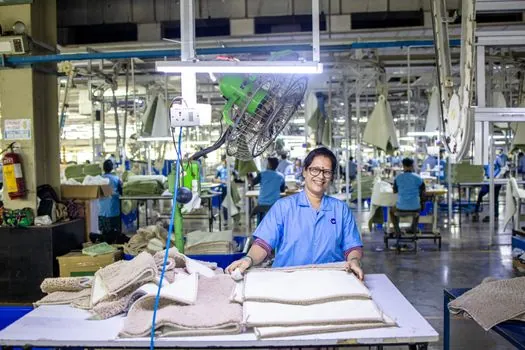
Industry writing published September 14, 2026 puts hourly downtime cost in continuous-process plants "often exceeding $5,000," with annual direct labor and lost-output spend in the $40,000–$90,000 range for facilities still running manual bag cleaning [S4]. That figure is the single most leveraged variable in any self-cleaning retrofit TCO, because every avoided cleaning event eliminates the production pause, the crew dispatch, the consumables draw, and the pressure-recovery lag. Reverse-pulse and reverse-air units clean one section while others stay online, so the system never has to stop, which is the structural reason their TCO beats manual cleaning even at higher sticker prices [S1][S4].
Maintenance labor, not filter media, is where most plants underestimate spend. A cartridge change-out typically runs 15–45 minutes per element with two technicians; a bag change in a large baghouse can take a full shift with a four-person crew and a lift. Multiply that by 3–5× more frequent change-outs on a non-self-cleaning unit, and the labor delta alone covers a self-cleaning retrofit in 12–24 months at most chemical, food, and cement sites. For a complementary look at how labor and material choices play out on a different piece of equipment, see this pipe-clamp lifecycle spend breakdown.
Selection criteria: who benefits, who does not
A self-cleaning filter is a strong fit when the duty cycle is continuous (above 6,000 h/yr), the dust or solids load is steady rather than slug-fed, the operator crew is small, and downtime carries a real production penalty. It is a weak fit when batch runs are short, product changeover happens weekly, the fluid is sanitary and cannot tolerate a dirty-side bleed, or when the unit sits on a low-pressure water service where a simple self-priming pump and a disposable bag filter cartridge swap does the same job at a fraction of the installed cost. Over-specifying self-cleaning on intermittent duty is the most common TCO mistake in food, beverage, and pharma skid packages. [S4]
For utility-scale air intake on turbines and compressors, the equation shifts again. Inlet air is hot, dirty, and the energy cost of pushing it through a fouled bag filter array dominates everything else; a self-cleaning inlet saves 3–8% of compressor specific power in field studies, which on a 10 MW gas turbine is hundreds of thousands of dollars per year. For those applications, the question is no longer whether to self-clean, but which self-cleaning mechanism the turbine OEM will warranty.
Standards, sourcing, and what to put in a TCO model
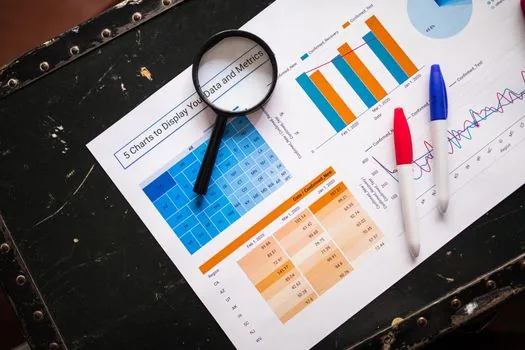
Most spec sheets cite ISO 16889 for hydraulic filter performance, EN 779 / ISO 16890 for air, and ASME B31.3 for piping; an ATEX/IECEx zone rating applies wherever combustible dust or vapor is present, and it adds a measurable line item for housing, controls, and grounding. A defensible TCO model needs: nameplate kW of the fan or pump and its annual operating hours; cleaning-air consumption in m³/h at operating pressure; expected ΔP at clean, mid-life, and change-out states; media replacement interval in cycles or hours; labor hours per change-out; and a downtime cost in $/h agreed with operations. Without those six numbers, any TCO sheet is a marketing slide [S3][S5][S7].
For the 2026 sourcing environment, expect media cost (polyester, aramid, PTFE membrane) to track energy and freight more than resin index, and expect lead times on reverse-pulse valve manifolds to remain 10–16 weeks as suppliers right-size. The reliable next-node signals to track: EPA and EU revisions to dust-collection best-practice guidance, OEM warranty language around pulse-cycle counts above 1 million, and any update to ISO 16890 efficiency classes for fine-fraction media. When the spec question pivots from air to liquids, the same TCO discipline applies to tank cleaning machine selection and to CIP loop design, where energy and water reuse dominate the lifecycle ledger.