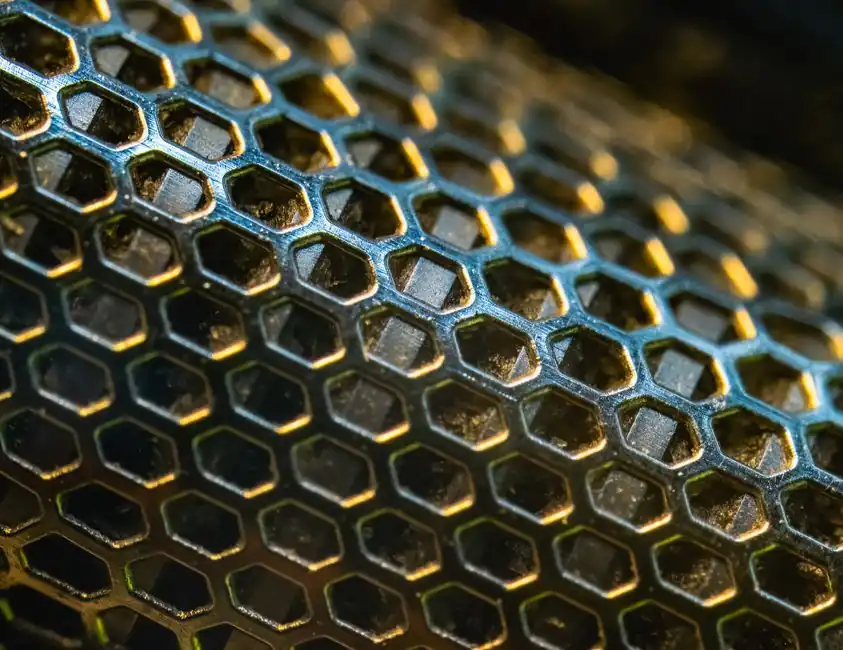
Self-cleaning pump suction screens available in 2026 span 50 microns to 6 mm in particle retention across major OEM lines, with irrigation-class units clustered in the 10 to 30 mesh band and industrial pump intake filters extending finer for cooling-tower make-up water [S1][S5].
The category overlaps coarse pre-screening, fine sediment capture, and fish-friendly intake protection, so the same product family can be specified for agricultural irrigation pumps, raw-water lift stations, and industrial cooling-water make-up with very different mesh choices [S2][S6].
Screen Micron and Mesh Range Across Product Lines
Rotorflush RF300 pump suction hose filters cover 50 microns to 6 mm on a single platform, giving a self-priming pump intake or surface-mounted pump a continuous debris removal envelope that bridges sand, silt, and coarse organic matter in one specification [S1]. The wider envelope reflects an industrial orientation, since fine cooling-tower make-up and raw river-water intake sit on opposite ends of the same duty cycle.
Forsta's technical guide on automatic self-cleaning water filters identifies 100 to 500 micron particles, including fine sand, silt, organic debris, and certain biological contaminants, as the most problematic band for cooling water and industrial process systems, and reports 98% removal efficiency at the rated micron size when screens are built as multi-layer diffusion-bonded sintered mesh on a perforated support plate [S4]. That efficiency figure is tied to the bonded-mesh construction, not to any arbitrary screen weave, so it should be treated as a fabrication-method claim rather than a generic mesh rating [S4].
Mesh Size Bands for Pump Suction Service
LAKOS PC self-cleaning intake screens are offered in 9, 10, 18, and 30 mesh options, with the 30 mesh variant being the finest in the standard catalog and 9 mesh the coarsest, and the screen rotates at a minimum of 15 RPM during backwash to keep the apertures clear [S2]. The maximum flow ranges from 350 US GPM (9/10/18 mesh) down to 195 US GPM (30 mesh) on the smallest PC 915 frame, so finer mesh comes with a real headloss and flow penalty that must be carried into the pump curve selection [S2].
Rain Bird's PSS series self-cleaning pump suction screen is specified at 12 mesh as the baseline product datum, with line inlets from 4 inch (PSS200) to 10 inch (PSS800 and PSS1000), targeting golf course and large landscape irrigation pump stations where surface water carries leaf litter and algae mats [S3]. The 12 mesh value corresponds to roughly 1.7 mm aperture, which is intentionally coarse to keep NPSH loss minimal on centrifugal irrigation pumps [S3].
Surface Water and Irrigation Self-Cleaning Suction Screens

University of California ANR guidance on microirrigation maintenance places suction screen filters in the 10 to 30 mesh coarse pre-screen band, fed by rotating water jets that use discharge-side pump pressure to backwash debris off the inside of the screen, and recommends them where suspended organic loading is moderate but not heavy [S5]. This is the canonical specification for surface-water-fed drip and micro-sprinkler systems, and it tracks closely with the LAKOS and Rain Bird catalog positions [S3][S5].
Xylem VAF self-cleaning intake suction screens ship with 12, 18, or 24 mesh stainless steel screen, with the continuous backwash cycle specifically sized to defend pump efficiency against trash and debris loading at the wet well face [S6]. Munro's equivalent product uses a heavy 10, 18, or 30 mesh stainless element in a galvanized or epoxy-coated body, again demonstrating that the 10 to 30 mesh band has converged as the de-facto industrial default for surface-water pump suction [S7].
Construction Materials, Backwash Pressure, and Headloss
LAKOS PC screens use 304L stainless steel or algae-resistant phosphor-bronze screen media inside a reinforced fiberglass frame with stainless end caps, and the backwash return line requires 55 to 100 psi (3.8 to 6.9 bar) depending on the frame size to keep the rotation and debris purge active [S2]. The 1 inch NPT backwash tapping is sized so that, at the required pressure, backwash flow on the largest PC 3424 frame is roughly 50 US GPM (11.5 m³/hr), which is a non-trivial auxiliary load that has to be accounted for in the pump station hydraulic budget [S2].
Forsta specifies the construction stack as multi-layer sintered mesh diffusion-bonded to a perforated plate, with the perforated layer providing structural support against high differential pressure and the smooth outer surface limiting particle embedding so the suction-cleaning cycle can actually lift captured debris [S4]. The perforated plate is the outermost layer, which is the opposite of how a plain woven mesh screen behaves, and that geometry is what allows the 98% retention claim to survive repeated backwash cycles [S4].
Selection Criteria: Coarse Pre-Screen vs Fine Sediment Screen
Three decision criteria normally drive a pump suction screen specification: debris profile, NPSH margin, and whether the screen sits in an open water body or a pressurized intake line. [S2]
A coarse 10 to 12 mesh (about 1.7 to 2.0 mm) screen such as the Rain Bird PSS, Xylem VAF, or Munro 10 mesh element is the right answer when leaf litter, twigs, and algae mats dominate, and where the pump is a centrifugal irrigation unit that cannot afford to lose suction head [S3][S6][S7]. An 18 to 30 mesh (about 0.5 to 1.0 mm) screen such as the LAKOS PC 18 or 30 mesh, or the Munro 30 mesh element, is appropriate when the debris profile shifts to fine sand, small organic fragments, and the pump is fed from a wet well or side-channel intake where the velocity at the screen face is already controlled [S2][S7]. A 50 micron to 500 micron bonded-mesh element such as the Rotorflush RF300 fine end or a Forsta-style diffusion-bonded stack is correct when the application is industrial cooling-tower make-up or process water where the 100 to 500 micron fine-sand band is the documented failure mode for downstream heat exchangers and nozzles [S1][S4]. A general-purpose self-priming pump intake that sees variable debris will typically land on a 12 to 18 mesh stainless element because that band gives the best balance between NPSH loss, fish-safe intake velocity, and backwash water consumption [S1][S2][S5].
Failure Modes and Operating Constraints
Self-cleaning suction screens are not maintenance-free. Forsta's guide notes that poor aperture control, particle embedding in rough surfaces, and weak layer bonding all reduce the effective retention below the rated micron size and force more frequent backwash cycles, which in turn raises pump energy cost [S4]. The same bonded-mesh/perforated-plate construction that delivers 98% retention also relies on the perforated support plate staying intact, so a torn or corroded outer plate turns a fine screen into a coarse one without any change in the model number [S4].
Backwash-driven screens need a minimum continuous supply pressure to rotate or spray the debris off the screen face: LAKOS specifies 55 to 100 psi at the screen connection, and if that pressure is not available the screen stops self-cleaning and reverts to a stationary strainer with all the headloss and cavitation risk that implies [S2]. A self-cleaning filter downstream of the pump or in a return loop does not have the same pressure-supply constraint because it is fed by pump discharge, but a suction-side screen must be designed so that the pump itself can supply the purge pressure without starving [S2][S5].
Mesh, Micron, and Aperture Conversion Reference
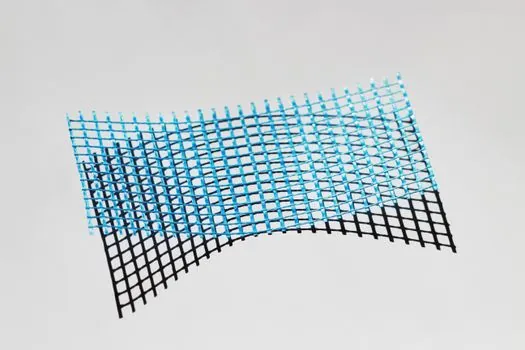
The most commonly ordered self-cleaning pump suction screen meshes and their approximate aperture sizes are: 9 mesh around 2.0 mm, 10 mesh around 2.0 mm, 12 mesh around 1.7 mm, 18 mesh around 1.0 mm, 24 mesh around 0.7 mm, and 30 mesh around 0.5 mm, with finer ratings down to 50 microns (roughly 270 mesh) reserved for the Rotorflush RF300 fine configuration and equivalent industrial-class units [S1][S2][S3][S6][S7]. The micron-to-mesh conversion is not linear and depends on wire diameter, so the values above are nominal reference points rather than a spec sheet [S4].
Specifying engineers should anchor the selection to a measurable debris metric (for example, the 100 to 500 micron band Forsta calls out for cooling water), pick the coarsest mesh that still protects the downstream component, then verify NPSH margin and backwash pressure supply before locking the model number [S1][S2][S4]. Material selection for the screen and frame follows water chemistry: 304L stainless is the default for clean surface water, phosphor-bronze is preferred where algae biofouling is a known issue, and galvanized or epoxy-coated carbon steel frames are acceptable where the screen itself is stainless and only the structural cage sees the water [S2][S6][S7]. For pump station layouts that pair the suction screen with downstream screening or wash-down conveyors, the mesh selection logic used in industrial mesh belt conveyors follows similar weave and aperture rules, although the duty cycle and cleaning mechanism are different. Engineers weighing welded mesh panels against other protective enclosures for the pump house can compare options such as welded mesh versus steel safety fence panels for site security, but that is a separate decision from the intake screen itself.