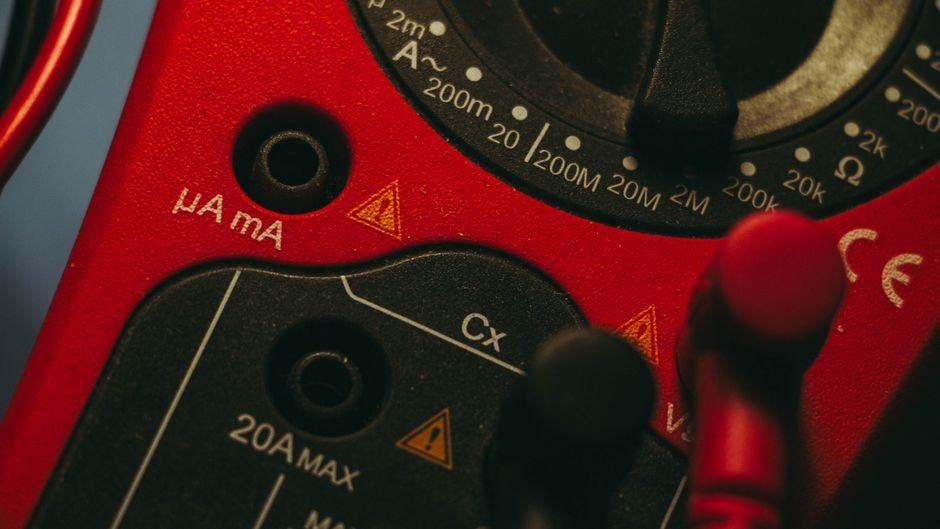
A correctly specified servo motor in 2026 is the product of four locked decisions — continuous/peak torque, rotor inertia ratio to load, encoder resolution and the servo drive bus protocol — backed by a cable and EMC package that holds signal integrity over the actual run length [S3].
The selection chain runs load profile → duty cycle → torque/thermal margin → inertia match → speed/RPM envelope → feedback device → brake and shaft options → cable and connector approvals [S1][S5][S6]. Skipping any link in that chain is the most common reason a machine-vendor build is rejected at FAT.
Load Profile and Duty Cycle: The Numbers That Set Motor Frame Size
The rated torque output of a general-purpose servo is gated by the manufacturer-defined continuous current at a given thermal mount, while peak torque typically runs 2.5–3× continuous for short acceleration windows [S1]. A 60–130 mm flange general-purpose unit (e.g. the VEICHI V9E low-inertia family) is engineered for semiconductor, robotics and auto-line cycles where the RMS load sits well below the peak acceleration demand.
For a horizontal axis the equivalent torque T_eq is calculated from the load inertia J_L, the angular acceleration α, the friction torque T_f and the gravity term T_g, then compared to the motor's continuous rating with a service factor f_B of 1.0–1.5 depending on hours/day and ambient temperature. The "use factor f_B" approach is the same algebraic gate the geared-motor catalogue applies, and it is what determines whether a candidate motor is a 100 W, 400 W or 750 W frame [S5].
Inertia Ratio, Bandwidth and the Rule-of-Thumb Match
Most OEMs specify a load-to-motor inertia ratio of ≤ 10× for point-to-point duty, and ≤ 5× (often ≤ 3×) for high-dynamic contouring such as CNC feed axes and packaging cam profiles [S1]. Exceeding those ratios does not fail the motor — it fails the controller's ability to follow the trajectory without overshoot or settling-time creep, which on a CNC is observed as surface-marks on the workpiece.
Servo gearmotors from SEW-EURODRIVE's DriveConfigurator expose motor torque, base/maximum dynamic torque (M_0 / M_amax) and gear ratio i as the four data fields the user must populate before the catalogue will return a match [S4]. This is the same gating logic that a standalone servo motor selection must satisfy; the catalogue simply enforces it for you and rejects the search if the criteria are inconsistent [S4].
Encoder, Feedback and Position Resolution

Modern servo packages carry 23-bit absolute encoders (≈ 8.4 million counts/rev) as the 2026 baseline on general-purpose lines, with 24-bit and 26-bit optical or magnetic variants reserved for high-end CNC and semiconductor stages [S1]. Resolution, commutation accuracy and serial protocol (BISS-C, EnDat 2.2, Tamagawa, FANUC Serial Servo) are the three encoder-level decisions that bind motor to drive — mixing protocols between brands is the most common integration error.
Encoder feedback is delivered to the drive over a twisted, shielded pair that must meet a maximum capacitance per unit length to preserve rise time at 4–8 MHz line rates; the cable datasheet gates the run length to 25–50 m depending on protocol and EMC class [S3]. servo drive selection is therefore inseparable from the cable spec — picking a drive with 16 MHz bus capability and a 75 m cable is a guaranteed comms-fault at commissioning.
Power, Voltage and Bus Architecture Pairing
Servo motors for factory automation are predominantly 200 V class (single- or three-phase 200–240 V) for the 50 W – 1.5 kW range, and 400 V class (380–480 V) for 2 kW and above, with DC-bus variants for battery-powered robotics [S5]. Tamagawa's online configurator exposes power source as one of the five hard filters alongside rated output (W), flange size (mm), rated torque (N·m) and max speed (min⁻¹), confirming the four corners of the search envelope [S5].
The drive side must match the bus architecture: pulse-train and analogue ±10 V interfaces are being displaced by EtherCAT, PROFINET IRT and CC-Link IE TSN on 2026 production equipment, while PULSE-WIDTH hobby servos (1–2 ms pulse mapping to 0–180° angle) remain a separate small-signal class for embedded prototyping rather than industrial motion [S2]. Treating the two as interchangeable will burn the output stage of an industrial drive in seconds.
Cable, Connector and Approvals: The Often-Skipped Gate
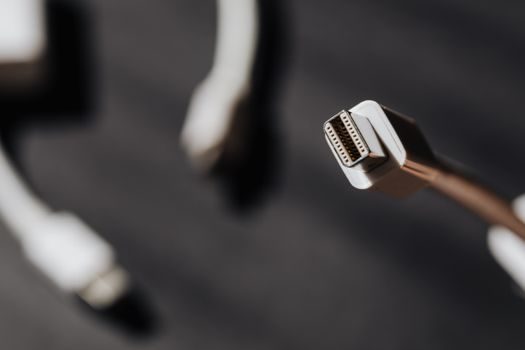
Servo motor power and feedback cables must be specified against four approval regimes in parallel: voltage rating (typically 600 V or 1000 V), flame resistance (UL AWM styles, VW-1, FT1), oil/chemical resistance for the plant environment, and low capacitance for EMC [S3]. The cross-reference table published by SAB is the kind of selection matrix procurement should be auditing against, because the wrong jacket compound is the dominant cause of premature cable failure on machine tools where cutting oil and coolant aerosol are present.
Connector and harness assemblies must also satisfy the same UL/CSA approvals as the cable, and for European builds the CE / EMC Directive gate is enforced at the system level — the motor and cable cannot be sourced independently if the cabinet is to carry a single declaration of conformity [S3]. Panasonic's MINAS A7/A6 selection software is one of the few OEM tools that ties the motor sizing output to options, CAD data and a same-frame replacement path for legacy units, which is the audit trail most end-users lack on retrofits [S6].
Brake, Shaft, IP Rating and Mechanical Integration
Electromagnetic holding brakes (24 V DC, 0.2–2.0 N·m static torque depending on frame) are standard on vertical-axis and Z-axis builds; oil-seal and IP65/IP67 options are required for food, washdown and outdoor cabinet installations [S1]. Shaft options — keyed, smooth, tapped or with a locking ring — are gated by the coupling method on the load side and are usually the last item selected, but they are the first item a mechanical designer will reject at drawing review.
For machines requiring absolute position retention after power loss (vertical lift, rotary table index) the brake release time and backlash must be checked against the safety function; for cobot and collaborative cells the brake must release within the controller's STO (safe torque off) reaction window, otherwise the cell cannot be PL d / Cat 3 rated. This is also the point where the build crosses from a servo motor datasheet into a functional-safety file.
Comparison: General-Purpose, High-Inertia and Geared Servo on Four Decision Criteria
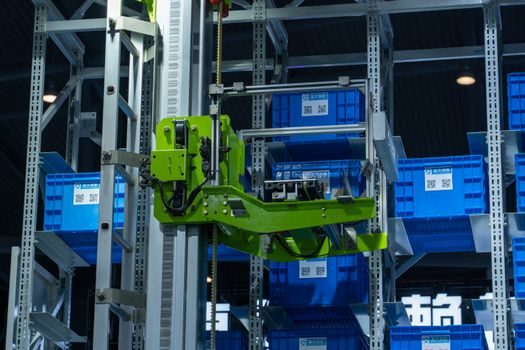
On a four-criterion gate — continuous torque density, peak torque ratio, inertia match tolerance and price/frame — a general-purpose low-inertia unit (e.g. VEICHI V9E 60–130 mm flange) wins on dynamic response and price; a high-inertia variant wins on direct-drive load matching without a gearbox; a servo gearmotor (SEW-EURODRIVE family) wins on output torque per frame at the cost of added backlash and lower bandwidth [S4]. The right answer is set by whether the application is a feed axis (low-inertia), a direct-driven conveyor (high-inertia) or a high-torque indexing axis (geared).
For a broader contrast against induction alternatives and a side-by-side of the dynamic-response penalty when an AC motor is substituted into a positioning axis, the dedicated cut at Servo Drive vs AC Motor: 2026 Selection Cut walks the same four-criterion grid. Treat the two reads as a single selection pack when the cabinet budget is being argued.
Validation, Software Tools and Trackable 2026 Signals
The MINAS A7/A6 web-based sizing tool, FANUC's Servo i Series catalogue, Tamagawa's parametric search and SEW's DriveConfigurator all enforce the same gating inputs (torque, speed, inertia, voltage) before returning a candidate list [S1][S4][S5][S6]. Running the load profile through two of these tools independently is the cheapest cross-check a project engineer can do before issuing the PO; the matched candidates almost always agree on frame size and disagree only on encoder option.
Two trackable signals to watch into H2 2026: (1) extension of 24-bit encoder options into sub-750 W frames, which would let low-end packaging machines drop the gearbox, and (2) tighter EMC ceilings on 1000 V cable capacitance for cabinets over 50 m, which is the gate at which drive bus speed will be limited regardless of the servo drive spec sheet [S3].