
CIJ systems apply batch codes, lot numbers, expiration dates, serial numbers, barcodes, and traceability data across packaging and production lines, but they do not share a universal cartridge-life figure [S2].
Separate printer life from consumable life
Continuous inkjet printers commonly provide 7 to 8 years of reliable service with proper care, while the wider industrial inkjet-printer range is 5 to 10 years and can extend to 15 years under favorable conditions [S4]. These figures describe the coding system, not the service life of an ink cartridge or printhead.
The coding machine should therefore be evaluated as a system with several independent life cycles: printer electronics, printhead, solvent or make-up fluid, ink container, filters, and seals. A CIJ printer recirculates unused ink and deflects charged droplets to form characters, logos, and barcodes, which means both printed and unprinted material can affect consumption [S1].
For planning purposes, divide total annual production hours into active coding hours, then separate hours requiring full ink flow from intermittent hours. Record coded units per hour, average character count, coverage, ink chemistry, and changeover cleaning losses. Those values provide a better cartridge forecast than an unqualified months-on-shelf claim.
Calculate consumption from production demand
The cartridge life calculation must therefore distinguish usable printed ink from ink sent to recirculation or waste and from solvent consumed during priming and flushing.
A defensible calculation uses four inputs: coded units per production hour, average ink deposited per unit, cartridge net volume, and measured waste percentage. Divide coded units per hour by 3,600 to convert hourly demand to units per second, then multiply by measured ink consumption per unit. Add the measured loss per hour before comparing total demand with cartridge capacity.
For example, a line producing 3,600 units per hour for one 8-hour shift consumes the equivalent of one hour of demonstrated hourly consumption each day. If measured waste is 12%, usable hourly demand is 88% of theoretical draw, so the cartridge forecast must use 88% while the remaining 12% must be covered by makeup fluid or replacement inventory. These percentages are calculation examples, not published CIJ performance claims.
Compare cartridge and TIJ handling requirements
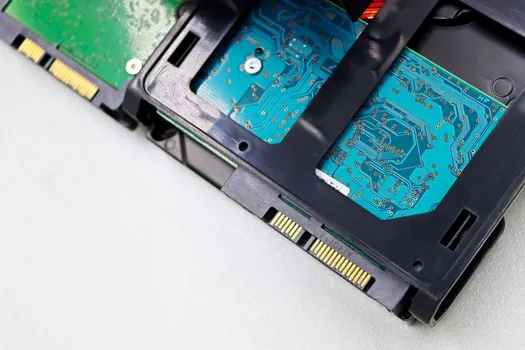
The capping and sealing machine is relevant only where automatic printhead protection is part of the coded line. It should not be confused with a case packing machine, which handles secondary packaging rather than determining ink consumption.
Storage age can invalidate an unused cartridge
Many thermal inkjet inks have a shelf life of one year or less, and expired ink should be discarded because degraded ink can damage the cartridge or printhead [S6]. That published limit concerns TIJ inks, so it must not be transferred directly to CIJ solvent inks without product-specific evidence.
For CIJ, verify the supplier’s lot-specific storage window, sealed-container temperature range, and post-opening period. Store containers in cool, dry conditions, away from direct sunlight and extreme temperatures, because heat and light can alter ink composition and contribute to nozzle blockage [S5]. Date every incoming container and rotate stock according to the supplier’s documented first-expiry, first-out procedure.
An unused cartridge has no meaningful life until its ink has been validated for the exact coder, solvent family, printhead, substrate, and environmental conditions. Compatibility is more important than purchasing convenience: incompatible or substandard ink can cause blocked nozzles, blurred characters, or printhead damage [S5].
Prevent drying before setting a replacement interval
Daily external cleaning removes dust and residue, while nozzle cleaning should use solutions or wipes approved for the specific printer. Maintenance frequency must follow actual duty: high-volume lines may need daily or multiple cleanings per day, whereas lower-use equipment may require weekly attention [S5]. Check cartridges for correct seating and leaks, and inspect filters, capping components, and air-handling parts on the manufacturer’s schedule.
Establish the cartridge replacement trigger from measured evidence: rising makeup-fluid consumption, declining code contrast, nozzle-level defects, or unstable droplet formation. Waiting for a visible failure converts a controllable consumable decision into a line stoppage, particularly where codes support expiration dates, lot traceability, and recall records [S2].
Use supplier data for the final cartridge interval
No reviewed source establishes a universal CIJ cartridge service life. The defensible specification is the period during which the approved ink maintains required print quality and fluid performance under the stated hours, temperature, humidity, substrate, and cleaning regime [S5].
Require the ink supplier and printer manufacturer to provide a compatibility statement, lot-specific storage limit, expected life after opening, available container sizes, safety data sheet, and ink specification sheet. Videojet publishes access to ink specification sheets, safety data sheets, parts, and technical support, demonstrating the documentation level that procurement should require [S2].
Run a controlled line trial before setting the replacement interval. Record cartridge start date and time, coded units, production hours, makeup-fluid additions, cleaning events, nozzle condition, and visible code quality. Compare the cartridge with the established baseline, and include local details from the CIJ versus laser coding cost comparison only where energy and consumable assumptions match the installation.
Track cartridge change date, coded units, production hours, waste percentage, and code-quality exceptions monthly. Replace the planning interval if any of those values changes materially, and retain at least one production-ready reserve cartridge under its documented storage conditions.