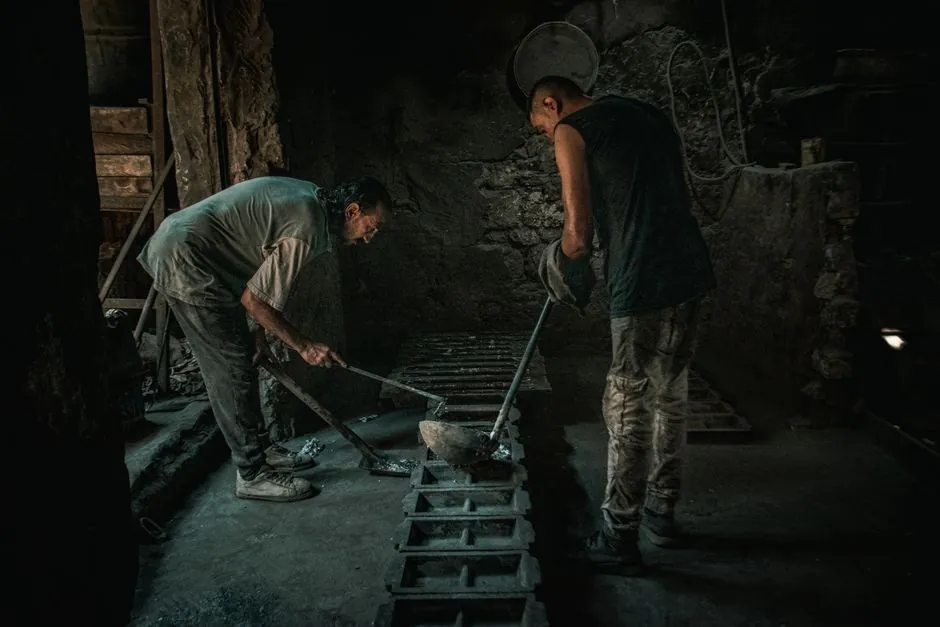
A properly operated 30,000 lb aluminium reverberatory furnace reached its first complete refractory reline after 6 years, while an identical unit required one after only 6 months [S2].
For production planning, account for the documented 6-month and 6-year aluminium reverberatory-furnace cases and the statement that service lives of 10 years or more are attainable [S2][S4].
What Refractory Life Means in Production Days
The holding furnace contains no single universal replacement interval because service duration depends on the actual firing rate and thermal cycle, not merely furnace age.
The documented 6-month failure in a 30,000 lb, 3,000 lb/hr aluminium furnace contrasts with the 6-year service achieved after yearly patching of high-wear areas by an owner following the operating and maintenance procedures [S2]. In a separate industrial-furnace context, service lives of 10 years or more are described as attainable when material selection, lining geometry, stress distribution, and flow angles are engineered together [S4].
Plants should maintain separate life targets for the working liner, backup insulation, hearth, walls, roof, and door zones because wear is rarely uniform.
Use Production Days, Not Calendar Years
Convert each proposed replacement interval into operating days by multiplying daily scheduled operating hours by operating days per week and by the number of weeks planned before the planned outage.
The same elapsed period therefore produces two different refractory loads, making campaign time and metal throughput necessary variables alongside scheduled hours.
Track tonnes processed and heat cycles in parallel with operating days. Alumina melting furnaces face severe conditions involving metal temperature, charged stock, oxidation, and dross or corundum buildup [S2]. A lining that survives the same number of calendar days can see different wear when campaign length, melt rate, or flux chemistry changes.
Compare Lining-Service Evidence Against Decision Criteria
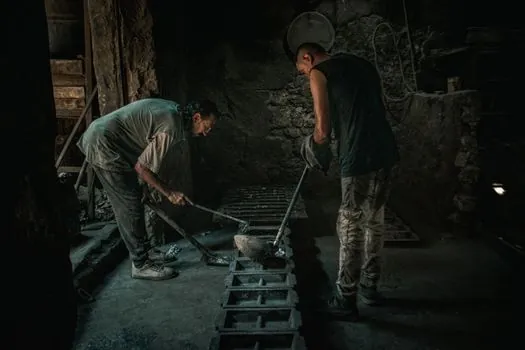
The evidence supports three decision criteria: documented life, operating discipline, and the consequences of failure. The comparison below is not a universal product rating; it is a planning model for evaluating holding-furnace relines against alternatives such as patching or full replacement. [S4]
Option | Documented service evidence | Main advantage | Main limitation | Planning use
Preventive patch program | 6 years before first complete reline in one 30,000 lb furnace [S2] | Extends useful life while limiting outage scope | The manufacturer-recommended procedures included cleaning and fluxing, together with yearly patching of high-wear areas [S2]. | Preferred where local wear is measurable and shell protection remains intact
Full reline without disciplined procedures | Complete reline after 6 months in an identical furnace [S2] | Restores the complete lining | Does not correct operating or maintenance causes | Use as a symptom of lining design, process control, or workmanship failure
Engineered reline with material and geometry planning | Service lives of 10 years or more are described as attainable [S4] | Combines stress zoning, flow optimization, and validated performance | Requires disciplined execution, training, drying, and commissioning | Strong option for sustained production where downtime carries high cost
Thermal treatment or process upgrade | Gas consumption fell from 102 to 61.2 m³ per tonne after relining and targeted operator training [S4] | Can improve energy performance rather than merely restore containment | Requires baseline and post-work field validation | Evaluate using measured fuel use and validated post-reline output
Prevent the Failure Modes That Consume Lining Life
Five practical failure mechanisms govern replacement timing: deterioration from service exposure, incompatible lining materials, loss of support, mechanical stress, and operating or installation errors [S3]. The documented preventive-maintenance approach included the manufacturer's recommended cleaning and fluxing procedures and yearly patching of high-wear areas [S2].
Thermal exposure changes refractory binders and microstructure, reducing surface or internal strength; In aluminium holding service, flux frequency, flux selection, cleaning, and removal of dross and corundum buildup are controlled maintenance variables rather than optional housekeeping [S2].
Loss of support turns a local lining defect into a cascading failure. This supports scheduled shell-temperature surveys, anchor and weld inspections, and repair of compromised support before refractory falls away.
Do Not Use an Unverified Warranty as the Life Plan
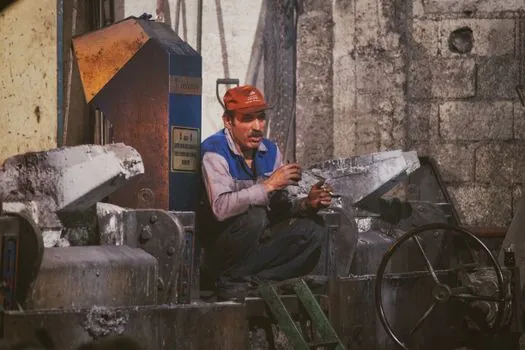
The appropriate holding-furnace option depends on duty cycle, melt chemistry, thermal uniformity, and the operator's ability to execute preventive maintenance. A gas aluminum melting furnace may be evaluated against electric resistance equipment, but the decisive issue is how the lining resists corrosion, flame impingement, and thermal cycling under that plant's actual campaign pattern. [S2]
For small foundries or intermittent users, a 3–5 year general furnace-reline range can support initial budgeting, with replacement brought forward when wear inspection shows erosion, cracking, shell hot spots, or loss of support [S5]. For continuous operations, vendor reports of 10-plus-year service lives provide an engineering aspiration, but they require material planning, geometry optimization, trained maintenance, and controlled commissioning [S4].
Potential service lives must also be converted into production days for commercial comparison. The broader crucible furnace refractory lining life analysis covers melt counts and material choices for a different furnace architecture, but the same decision discipline applies: define the duty cycle, specify measurable failure criteria, and distinguish planned wear from installation or process defects.
Build the Reline Plan Around Measurable Triggers
Set the planning life from operating days and tonnes processed, then define inspection gates at a percentage of that estimate. Reserve budget and refractory materials for the planned campaign, but authorize interim repair when inspection shows local erosion, cracking, loss of anchorage, or rising shell temperature. A lining that performs correctly should be replaced because its condition reaches the defined limit, not because a generic calendar interval expires. [S3]
For every campaign, record daily operating hours, production days, melt throughput, metal temperature, charge type, flux additions, cleaning intervals, door openings, burner or element performance, repairs, and shell hot spots. These records distinguish normal wear from accelerated deterioration and create the production-day history needed for the next forecast.
The next verifiable decision point is the line-by-line review of furnace records: calculate actual operating days since installation, divide them by tonnes processed, and compare both values with the planned campaign. If early erosion or thermal damage appears, investigate cleaning, fluxing, support, material compatibility, and thermal cycling before purchasing a larger replacement package.