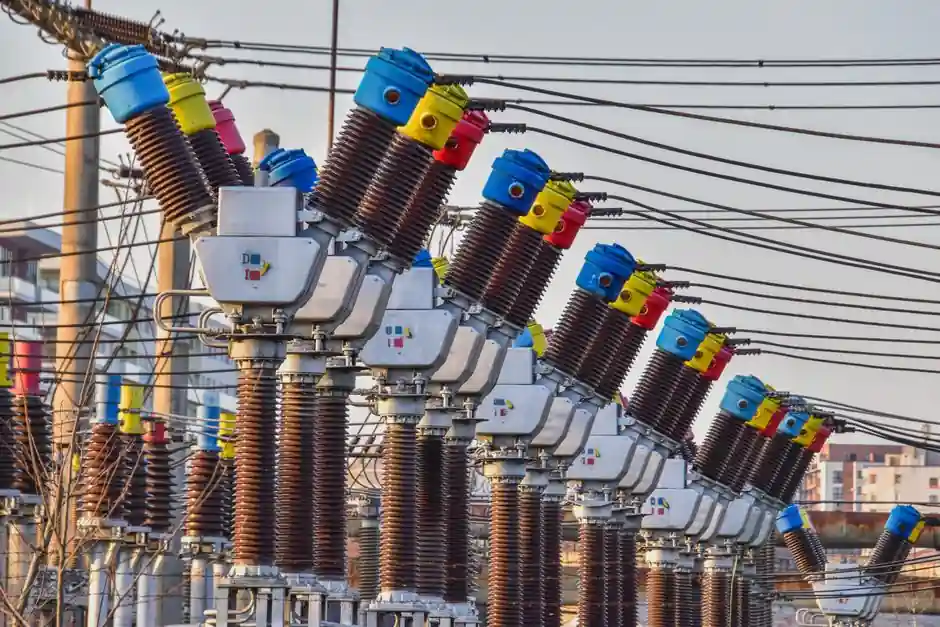
HVDC converter station procurement in 2026 is constrained by long-lead valves, converter transformers, HVDC cables, and accumulated supplier backlogs, which can delay project execution [S5].
The planning unit is the complete converter station, not the converter cabinet: equipment, control and protection, civil interfaces, cable routes, testing, commissioning, and grid-connection activities must be coordinated across multiple suppliers.
What determines HVDC converter station lead time
The critical path commonly runs through converter valves, converter transformers, and HVDC cables, with converter-transformer and cable factories also competing for manufacturing and test capacity [S5]. A valve package includes power semiconductors, cooling equipment, valve towers, controls, and associated auxiliaries, so a nominal semiconductor delivery date does not represent the date that a complete converter can leave the factory.
Market conditions reinforce the equipment constraint. The HVDC converter station market was estimated at USD 7.73 billion in 2026 and projected to reach USD 10.85 billion by 2031, a 7.01% compound annual growth rate [S1]. Asia-Pacific was identified as the largest and fastest-growing HVDC converter station market in the 2026–2031 forecast period [S1].
The project type changes the sequencing. An HVDC link normally uses converter stations at both ends, while back-to-back and multi-terminal arrangements distribute conversion equipment differently across the network [S2][S6]. Procurement must therefore start with the electrical architecture, not a generic equipment schedule copied from a point-to-point scheme.
LCC versus VSC procurement profiles
Line-commutated converter systems remain the established choice for high-capacity bulk transfer because ±800 kV LCC corridors have proven operating performance, while voltage-source converter systems are gaining share in offshore, weak-grid, and multi-terminal applications [S1]. Line-commutated converters remained the default for ultra-high-voltage corridors, while voltage-source converters were winning offshore and multi-terminal applications [S1].
Hybrids combine equipment and control characteristics, but they require a project-specific interface review. The HVDC transmission market also includes point-to-point, back-to-back, multi-terminal, and offshore-hub configurations, each with different station counts, cable arrangements, and commissioning sequences [S5].
How to build a defensible schedule
A defensible schedule should track at least 4 procurement horizons: long-lead equipment, design release, factory integration, and site energization.
Use interface dates rather than isolated delivery dates. The minimum dataset for each major package should include technical specification, design approval, manufacturing start, factory test, shipment, site arrival, erection, commissioning, and energization. The converter station package also needs links to AC filters, transformers, cooling, auxiliary power, control and protection, communications, grounding, and fire-protection interfaces [S2][S5].
Separate design responsibility from manufacturing responsibility. Changes to converter settings, protection philosophy, or control interfaces after manufacturing release can create rework across both hardware and software. High-voltage equipment involves physical interfaces, but the control architecture remains a system-level dependency, so schedule integration must cover both disciplines.
Where procurement pressure is concentrated
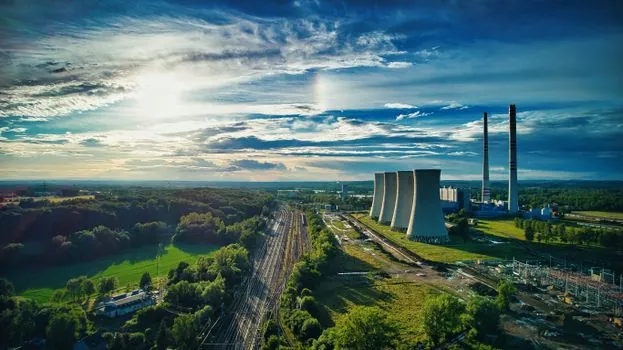
Asia-Pacific is the largest demand region for both converter stations and HVDC transmission. Asia-Pacific held the largest share of the global HVDC converter station market in 2025, at 51.4% [S4]. China leads the converter station market by country, and the region is forecast to remain a major growth engine through 2035 [S4][S5].
Three factors drive the concentration. Asia-Pacific’s HVDC build-out includes China’s ultra-high-voltage corridors, while India, Japan, and South Korea provide additional regional growth drivers [S5]. The overall HVDC converter station market was forecast to expand at a 7.01% CAGR from 2026 through 2031 [S1]. Third, offshore wind, remote renewable evacuation, and interconnector programs require converter stations, cables, and controls to be procured as coordinated packages [S5].
Supplier capacity should not be assessed from project announcements alone. Each converter project can require two terminal stations, multiple converter transformers, substantial cable systems, and separate control, protection, and auxiliary packages [S5][S6]. A supplier with open valve capacity can still constrain the project if its transformer, cable, or test schedule is unavailable.
Failure modes that shift the energization date
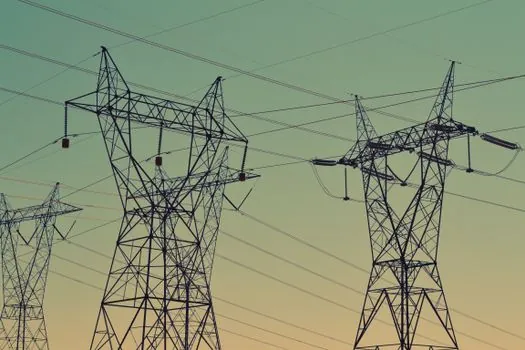
Late design release, incomplete factory testing, and unresolved grid-interface requirements can move a project beyond the delivery date promised for the converter equipment. Offshore links add cable-route, platform, and installation interfaces, while back-to-back projects concentrate more conversion equipment into a compact site and make protection and control coordination more sensitive [S2][S5].
Market growth adds a second failure mode: parallel projects consume the same specialist suppliers and test facilities. The global HVDC transmission market reached USD 16.15 billion in 2025 and is projected to reach USD 37.24 billion by 2035 at a 9.7% compound annual rate [S5]. The broader converter station market estimates differ by provider, ranging from USD 16.00 billion for 2026 to USD 44.2 billion for 2026, illustrating inconsistent market definitions rather than a dependable delivery forecast [S3][S4].
For material planning, converter valves should be linked conceptually with high-voltage semiconductor packages rather than treated like ordinary electronic assemblies. Press-pack thyristors and IGBT modules are cited as reliability-critical valve components, while press-pack thyristor availability directly affects valve selection and manufacturing commitments [S1].
Sourcing and standards for critical packages
Converter-station sourcing should require traceable technical references for valve semiconductors, converter transformers, cooling systems, bushings, control and protection equipment, and DC cables. Supplier qualification must include manufacturing-site capacity, sub-supplier visibility, test-facility availability, and a contractual process for design changes. These measures are more useful for schedule control than a vendor ranking based only on market presence [S1][S2].
Project-specific requirements must be separated from generic framework claims. Grid codes, equipment specifications, protection settings, insulation levels, fire safety, electromagnetic compatibility, and site conditions determine acceptance, but the research does not establish a single universal lead-time figure or one standard that fixes converter-station delivery.
Factory and site acceptance should be planned as linked milestones, with witness inspection, test procedures, documentation, and punch-list closure defined before equipment release. Documentation packages for large multi-party infrastructure programs also require clear ownership across utilities, converter suppliers, cable manufacturers, EPC contractors, and commissioning teams [S5].
Planning actions for a 2026 project
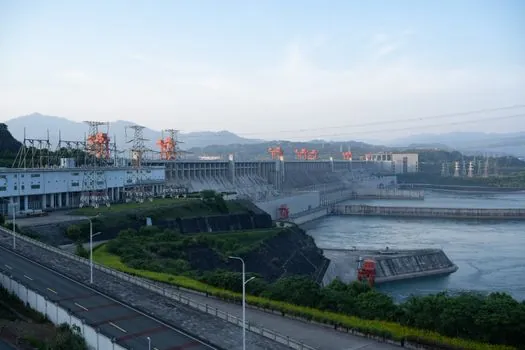
Projects should secure valve and converter-transformer allocations before the full station design is frozen, confirm cable capacity and route readiness, and maintain a separate critical-path register for control and protection integration. These actions address the specific bottlenecks identified in the HVDC transmission market: long lead times for converter transformers, valves, and cables, plus converter-supplier backlog [S5].
Procurement teams should track 3 measurable signals for each package: manufacturing start, factory-test readiness, and shipment authorization. Escalation should occur when any of these dates slips beyond the contract baseline, since factory congestion can propagate through erection and commissioning even when the physical delivery date remains unchanged.
Compare quotations using a complete schedule, not price alone. The decision matrix should include committed manufacturing slot, approved-vendor status, factory-test capacity, interface completeness, delivery slot, and contractual consequences for delay. The same comparison should cover LCC, VSC, and hybrid architectures only after their system functions and station layouts have been defined [S1][S5].
The next procurement checkpoint should therefore be the date on which the converter technology, station configuration, transformer allocation, cable strategy, and factory test plan are mutually confirmed, because those five outputs determine the credible 2026 energization schedule.