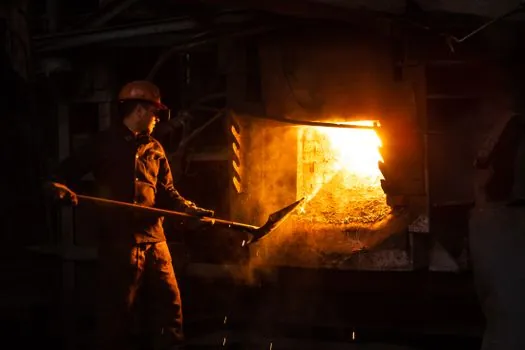
Shakeout machines in foundry duty sit inside the same low-frequency vibration band as heavy presses and grinding equipment, with energy capable of travelling considerable distances through building structures and surrounding ground [S1]. For energy-equipment buyers, that single fact reframes selection: it is not a standalone production-machine question, it is a structural-load, foundation-design, and neighbours-compliance question first, with throughput second.
Two distinct product classes now carry the "shakeout" label. The foundry type separates castings from sand moulds in metal-casting lines that include core making, molding, melting, pouring, shakeout, finishing, and inspection [S2]. The construction type automates the layout of 400-pound solar piles at GPS waypoints on utility-scale photovoltaic sites, replacing the manual "shakeout" of bundles by skid steer and telehandler crews [S3]. The spec paths for each diverge sharply, and conflating them is the most common 2026 procurement error.
Foundry shakeout machines: where the vibration energy actually goes
Foundry shakeouts are classed as heavy manufacturing machinery alongside presses, grinding machines and forging equipment, all of which generate significant dynamic forces during normal operation [S1]. Vibration from this class couples into steel structures, concrete floors, equipment supports, and foundations, so the perceived source at a remote accelerometer can be many metres from the actual rotating or reciprocating driver [S1]. Specifying on rated tonnage alone is therefore insufficient; a competent 2026 RFQ includes a structural-load map, a defined separation duty, and a maintenance-side vibration baseline before the order is released.
Operations leadership at medium-sized multi-shift foundries tracks the shakeout step as part of an end-to-end KPI chain covering safety, yield, scrap, schedule attainment, throughput, downtime, labor, energy, and cost [S2]. Continuous-improvement programmes on this KPI chain routinely target energy use, cycle time and variation, and a poorly specified shakeout consistently erodes every one of those metrics because it propagates vibration into downstream finishing and inspection stations [S2]. Shakeout Machine Selection for Pump and Valve Production covers the same dynamic-force problem for a different casting mix, and the vibration-control lessons transfer directly.
Solar-pile "shakeout" transporters: a separate equipment class
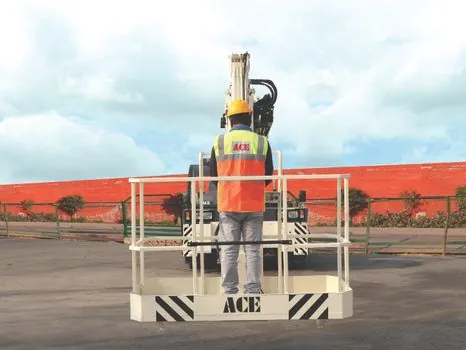
The Vermeer MT500 material transporter, publicised on 2026-07-14, automates pile layout on utility-scale solar jobsites by combining GPS, automation, and a hydraulic gripper that places W-beam piles weighing up to 400 lb at designated waypoints, with one operator loading the machine in place of the conventional skid-steer or telehandler shuttle [S3]. The MT500 reduces the operator work cycle to a single button press in place of up to 12 manual inputs, and places each pile inside a 6-inch diameter of the GPS waypoint [S3]. Vermeer built the MT500 on components reused from its PD25 solar pile driver, which is a useful reliability proxy for buyers who already run the PD-series fleet [S3].
Selection criteria here are entirely different from foundry duty: payload mass per cycle, GPS placement accuracy, single-operator productivity, ground-pressure / track loading, and compatibility with the existing pile-driver fleet matter; vibration-coupling into building structures is not in scope because there is no building. As Ed Savage, product manager at Vermeer, frames the prior art, "some people have made attempts at it, mainly European manufacturers … they have tried it but just have not commercialized it yet," which is the market context a 2026 solar-EPC buyer is working against [S3].
Selection criteria compared: foundry shakeout vs solar-pile transporter
For a 2026 buyer running both an energy-equipment foundry and a solar-EPC division, the two equipment classes should be evaluated against different criteria. Foundry shakeout: dynamic-force profile, separation duty (cast mass and sand throughput), structural-load impact on adjacent machines, foundation-design class, and maintenance access for wear parts [S1][S2]. Solar-pile transporter: payload per cycle (up to 400 lb per pile on the MT500), placement accuracy (6-inch diameter at the waypoint), operator count per cycle (1), GPS/automation stack maturity, and parts commonality with the existing PD-series pile driver [S3].
Buyers who lump the two under a single "shakeout" line item typically over-spec the solar machine on structural foundations and under-spec the foundry machine on vibration isolation, with the predictable result that the foundry installation triggers bearing failures, shaft misalignment, structural fatigue, and noise complaints in surrounding plant areas [S1]. Shakeout Machine Spec Path for Electronics Housings gives a useful contrast case where the casting mass is much smaller and the tolerance stack is much tighter than energy-equipment castings.
Use cases, limits, and failure modes
Foundry shakeout is appropriate wherever a metal-casting process needs to separate cast product from sand mould, with downstream finishing, inspection, and material handoff to next operations [S2]. It is not appropriate as a stand-alone vibration source to be added to an existing structural floor without an isolation review, because low-frequency energy from this class of machine has been documented to travel considerable distances through building structures and surrounding ground [S1]. Solar-pile transporters are appropriate on utility-scale photovoltaic sites with repeatable GPS waypoints, W-beam or comparable piles up to 400 lb, and an existing pile-driver fleet to integrate with [S3]. They are not a substitute for a pile driver, and the MT500 in particular does not drive piles, it lays them out for the PD-series that follows.
Common failure modes seen in 2026 field reports: premature bearing failures and shaft misalignment in plants where shakeout vibration is being mis-attributed to adjacent rotating equipment [S1]; misplaced solar piles in sites where the GPS automation stack was specified without a ground-truth RTK correction; and throughput losses in foundry lines where the shakeout bottleneck was not the machine itself but the material-flow handoff to finishing [S2]. The reliability-engineering response in each case is measurement before replacement, which is the same posture Metromatics documents for general industrial-vibration programmes [S1].
Standards, sourcing, and what to track next
No single ISO or IEC standard governs "shakeout machine" as a product type; the governing documents are the general machinery-safety and vibration-exposure standards that apply to the host facility, plus the OEM structural-load and foundation-design specifications. Caterpillar's open Foundry Operations Manager role (R0000390623), listed within the past week, confirms that 2026 foundry-operations practice still treats shakeout as a defined process step inside a multi-shift metal-casting facility, with safety, quality, and equipment-reliability KPIs owned at the operations-manager level rather than siloed in a maintenance team [S2].
Trackable signals for the rest of 2026: (1) any commercial launch by a European manufacturer of a competitor to the Vermeer MT500, which Savage flagged as the open market gap on 2026-07-14 [S3]; (2) field vibration data from foundry sites that have retrofitted isolation mounts to existing shakeouts, which would let reliability engineers benchmark the low-frequency coupling into steel structures and concrete floors [S1]; (3) any expansion of the Vermeer PD-series pile driver line that broadens the parts commonality envelope for the MT500 transporter [S3]. The shakeout machine reference page consolidates the equipment-class definition, while buyers sourcing structural-isolation and monitoring hardware will find the adjacent energy management and NDT equipment categories useful for the vibration-baseline and inspection side of the same project.