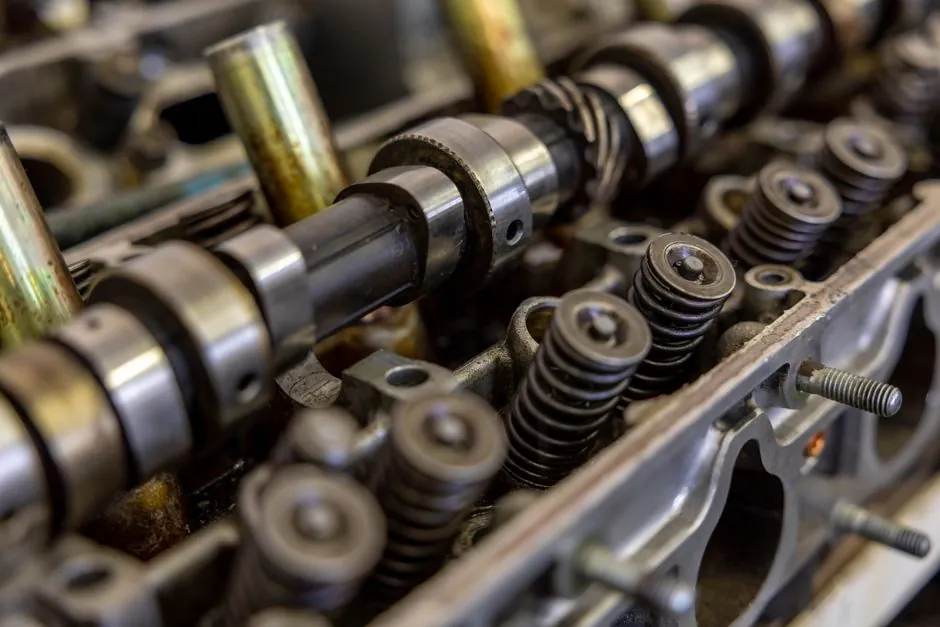
Pump and valve foundries pour a narrow but punishing range of workpieces: volute casings up to several hundred kilograms, multi-branch valve bodies, duplex and stainless impeller blanks, and thin-wall stainless trim pieces, all of which must leave the sand mold intact and dimensionally stable. Shakeout is the station that determines whether that casting reaches fettling as a clean, crack-free part or as a rework, and the right unit is sized first by flask-plus-casting mass, second by sand system, and third by drive topology [S3].
Across pump and valve plants, three classes dominate: heavy cast iron and duplex stainless on green-sand mechanical inertia decks (typically 15-45 kW mid-size units); medium-weight no-bake valve bodies on slower vibratory or barrel-horse decks matched to a thermal or attrition reclamation line; and thin-wall stainless or brass trim on rotary drum shakers where percussive impact would crack the part [S3][S4]. Selection is downstream of the molding line only in the sense that shakeout feeds the rest of the sand loop, since once a casting is knocked out, used sand moves to a reclaimer and the casting moves to a cutting and fettling cell.
Flask and Casting Mass: The First Sizing Gate
Payload drives deck size, beam stiffness, and exciter sizing on a pump or valve line, and the practical entry point is flask plus casting mass in kilograms per cycle [S3]. A mid-range pump-housing line handling 200-400 kg flasks at 30-60 molds per hour lands in the heart of the mechanical inertia envelope, while a small bronze valve-body cell pouring 20-60 kg flasks can be served by a lighter vibratory deck with smaller exciter motors. The published sizing rule is to sum sand-plus-metal mold weight times molds per hour, apply a 1.3 to 1.5 peak factor, and confirm the result against the machine's rated tons per hour, commonly 30 to 400 tph for drum units [S5].
Vibration class then layers on top of payload: low-frequency high-amplitude decks are the right answer for robust iron and steel pump casings where the priority is breaking a green-sand mold cleanly, while high-frequency low-amplitude decks are the right answer for thin-wall stainless valve trim and ductile-iron work where the priority is not cracking the casting [S3]. This trade-off is one of the most common misspecifications on pump and valve lines, and it shows up as either low throughput (under-driven deck on heavy iron casings) or rising scrap (over-driven deck on stainless or brass trim).
Sand System Match: Green Sand vs No-Bake vs Shell
Sand type is the second selection axis and is the one most often overlooked on pump and valve lines [S3]. Green sand collapses readily and tolerates aggressive continuous shakeout, which is why most iron pump-housing and large valve-body lines default to mechanical inertia decks with grizzly grates sized to the casting envelope. No-bake and resin-bonded sands form rigid lumps, and need higher impact plus a matched reclamation route, commonly thermal reclamation for furan-bound systems or dry attrition for phenolic-urethane lines, so the shakeout cannot be specified in isolation from the reclaimer [S5].
The foundry shakeout encyclopedia entry frames the gating rule clearly: identify the sand system first, size the capacity second, then match the drive. For a no-bake pump-housing cell, this typically means a slower vibratory or barrel-horse deck sized to the flask footprint, with overhead drives and integrated dust or fume hoods as configurable items, and a downstream lump-breaker or attrition mill when the sand-to-metal ratio envelope runs above roughly 30:1 [S4]. Dust loading at the discharge is severe when green sand is handled dry, and cyclones or wet scrubbers downstream are standard rather than optional on pump and valve cells where OSHA respirable crystalline silica standard 29 CFR 1910.1053 governs [S5].
Drive Topology and Deck Geometry Comparison
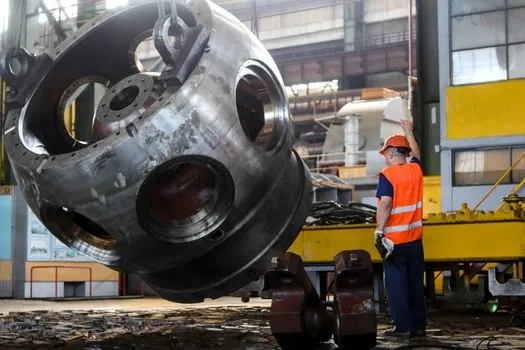
Mechanical inertia, pneumatic impact, and electromagnetic drives each carry a different cost and operating profile, and the three common options line up against pump and valve duty as follows [S3]. Mechanical inertia shakeout: high capacity, lower unit cost, highest noise and vibration transmitted to building steel, and the standard choice for high-tonnage iron pump casings. Pneumatic impact shakeout: lower continuous-vibration load on structure, higher compressed-air operating cost, suited to large discrete castings and to plants with strict structural noise limits. Electromagnetic shakeout: precise amplitude control, lower mechanical wear, smaller throughput per unit, and the right answer for thin-wall stainless valve trim where amplitude has to be dialled in part by part.
Deck geometry follows drive choice. Below-deck drive layouts (prefix RVSO-800-1.2 / RVSO-800-1.5 in the Sinfonia foundry line) keep the eccentric weights isolated from falling sand and tramp metal, which dominates in high-tonnage iron and steel pump-casing shakeouts where the casting can arrive at the deck above 200 degrees Celsius [S4]. Above-deck drives simplify belt or chain adjustment but raise headroom, and tend to appear on smaller flask-handling or no-bake valve-body decks where cleaning access outweighs the extra height. Aluminum and brass pump and valve lines move to 2-inch-thick steel-back rubber decks to dampen impact and prevent brittle fracture, while iron lines stay on heavy-duty steel grizzlies [S4].
Operating Limits, Failure Modes and Maintenance Triggers
Bearings, exciter lubrication, and spring or rubber-element fatigue are the three mechanical failure points a pump and valve shakeout spec has to absorb, and vibration amplitudes above the rated envelope accelerate all three [S3]. Power draw on a mid-size unit typically falls in the 15-45 kW band, dominated by the exciter motors during loaded starting, and a plant running multiple decks should size the supply feeder for that starting peak rather than the running average.
Noise and dust are the two environmental limits that drive enclosure and ventilation design. Industrial shakeout cells run 85-110 dB(A) at the operator station without attenuation, which is why high-end decoring modules are now offered in fully soundproofed cabins with a noise level below 85 dBA at 1 metre, and the modular module can be removed from the cabin in minutes for maintenance [S2][S7]. In parallel, retrofitting older shakeouts with vibration sensors, dust filter monitoring, and predictive diagnostics is now standard vendor practice, and many plants carry inspection routines on wear liners and dust filters rather than waiting for unplanned downtime [S1].
Procurement and Sourcing Gates for Pump and Valve Plants
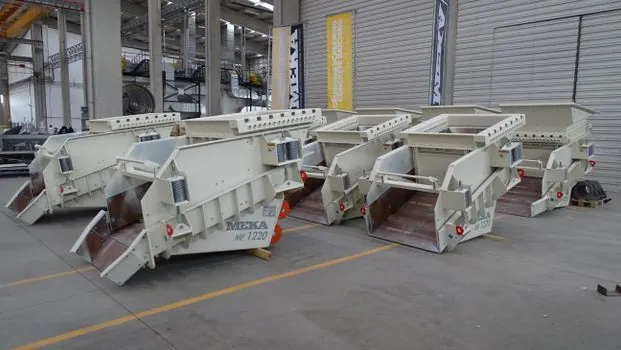
Foundries specifying a new shakeout for a pump or valve line should run a fixed gate sequence rather than price-shopping: confirm flask and casting mass envelope, confirm sand system and downstream reclaimer type, confirm drive topology and deck material, then confirm noise, dust, and power envelopes against local regulation. The structural isolation question is part of the same gate, since building-foundation isolation and acoustic enclosures are common retrofits on existing iron-foundry decks that are being pushed past their original rating [S3].
For pump and valve plants in particular, the aerospace thin-wall shakeout selection map and the automotive-parts shakeout spec path both cover adjacent thin-wall and high-mix cases that overlap with stainless valve trim and small bronze valve-body cells. The sand reclamation unit 2026 selection map is the natural next node downstream of any pump and valve shakeout decision, since the reclaimer choice constrains the shakeout's allowable sand lump size and discharge moisture, and vice versa.
For component-level specifications, see construction machinery and equipment, and lamps and light fittings.