Mechanical inertia vibratory shakeouts cover 70-90% of telecom-enclosure foundry duty in 2026, with mid-size units drawing 15-45 kW from exciter motors during loaded start, and common throughput ratings of 30-400 tph across the drum and vibratory-deck classes [S4][S5].
Telecom-enclosure castings, including junction boxes, distribution frames, antenna radome bosses, and 19-inch rack mount housings, are typically small-to-mid shell or no-bake geometries that pair upstream with a vertical shell core machine in the 8-25 kg single-shot class and downstream with a coding machine and labeling machine cell, leaving the shakeout as the hinge station between the metal stream and the sand reclamation loop [S3][S4].
Where the Shakeout Sits in the Telecom-Enclosure Line
The shakeout is the dustiest and one of the loudest stations in any foundry, with measured noise between 85-110 dB(A) at the operator position depending on deck load and exciter speed, which is why acoustic enclosures are now standard retrofits on most 2026-era units [S4][S6].
Upstream of shakeout sit the molding line and pouring station; downstream sit the sand cooler, the sand reclaimer, and casting cleaning cells such as a cutting machine for gate and sprue removal. The shakeout is the single mechanical hinge that feeds both the metal-cleaning path and the sand-recovery path, and its grate geometry is the de facto sizing surface for used-sand grain size that reaches reclamation [S5].
Dust loading at the discharge is severe when green sand is handled dry, and cyclones or wet scrubbers downstream are treated as standard equipment rather than optional accessories in modern foundry ventilation design [S4].
Selection Criteria: Load, Sand Type, Vibration Class, Drive
First criterion is payload: sum the sand-plus-metal mold weight, multiply by molds per hour, and apply a 1.3-1.5 peak factor to land on a rated deck tonnage, with over-deck loadings in the 30-400 tph band typical for drum-class shakeouts handling green-sand and no-bake molds [S5].
Second criterion is sand system: green sand collapses readily and tolerates continuous gentle shakeout, while no-bake forms rigid lumps that need higher impact plus a matched reclamation route (thermal, wet, or dry attrition), and shell-cored work from a shell core shooter typically calls for a lighter vibratory conveyor rather than a heavy deck shakeout [S4][S5].
Third criterion is vibration class: low-frequency high-amplitude for large flask sizes above 500 x 500 mm, high-frequency low-amplitude for thin-wall or ductile-iron work where the casting must not be cracked, with low-noise high-frequency electromagnetic units preferred where amplitude precision matters more than raw throughput [S4][S5].
Fourth criterion is drive topology: mechanical inertia exciter for high-capacity green-sand lines, pneumatic impact for lower structural transmission on heavy discrete castings, and electromagnetic for precise amplitude control at smaller throughputs; telecom-enclosure cells typically land on mechanical inertia because the casting mass is moderate and the unit cost dominates the decision [S4][S7].
Main Shakeout Types Compared Against Decision Criteria

Across the three dominant configurations, the comparison against four decision criteria is: mechanical inertia vibratory, high capacity at lower unit cost but highest noise and structural transmission; pneumatic impact, lower continuous-vibration load on the building at higher compressed-air operating cost, suited to large discrete castings; electromagnetic, precise amplitude control and lower mechanical wear but smaller throughput per unit footprint [S4][S7].
On noise, vibratory decks run 85-110 dB(A) measured at the operator, electromagnetic units run measurably quieter, and pneumatic impact sits between the two depending on cycle frequency; on energy, mid-size units draw 15-45 kW dominated by exciter motors during loaded start, with pneumatic impact adding compressed-air load on the plant utility budget [S4][S6].
On capital cost, mechanical inertia is the lowest per ton of throughput, electromagnetic is typically 1.5-2x the mechanical price at equivalent deck size, and pneumatic impact carries the highest installed cost because of air supply, silencers, and structural isolation; on maintenance access, mechanical inertia uses standard bearing and spring elements that any foundry mechanic can service, electromagnetic has the fewest wear parts, and pneumatic has the highest because of valves, seals, and actuators [S4].
Operating Limits, Failure Modes, and Maintenance Triggers
Bearings, exciter lubrication, and spring or rubber-element fatigue are the three mechanical failure points every shakeout spec has to absorb, and vibration amplitudes above the rated envelope are the dominant trigger of premature bearing failure on mechanically excited units [S4][S5].
Shakeout timing is governed by metallurgy rather than by the machine: castings are normally held in the mold until the metal has cooled below roughly 300 degrees Celsius for many iron and steel sections, because shaking out too early lets fragile, still-hot castings warp or grow dimensionally, while shaking out too late wastes floor space and slows the line [S5].
Regular inspection of vibration components, wear liners, and dust filters is treated as critical by OEM service notes, and many 2026 machines ship with predictive diagnostics that alert maintenance before exciter bearings or rubber springs fail outright; retrofitting older shakeouts with sensors and control kits is feasible and is the common path where a full replacement is not justified [S2].
Capital cost, the 85-110 dB(A) noise band, and the dust-load on downstream dedusting are the three limits that often push a plant to specify acoustic enclosures, building-foundation isolation, and matched cyclones or wet scrubbers as part of the shakeout scope rather than as separate add-ons [S4][S6].
Who a Shakeout Is For, and Who It Is Not For
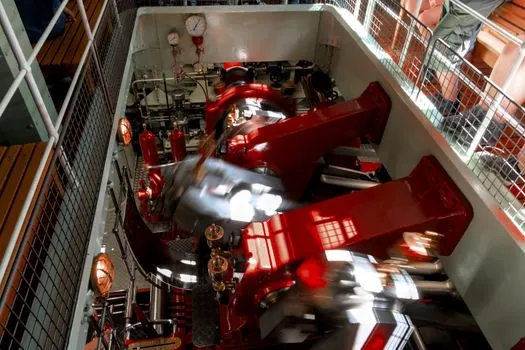
A shakeout machine is for green-sand iron and steel foundries running flask sizes typically above 500 x 500 mm, for non-ferrous lines pouring aluminum and bronze into medium-to-large molds, and for jobbing shops that need to clear the casting from the flask quickly between pours; it is also for plants that want to integrate used-sand discharge directly to a recovery conveyor, keeping the core machine return loop fed [S4][S5].
It is not for very small precision castings where vibration would damage the part, not for investment-cast lines that decouple shakeout from the casting entirely, and not for high-mix low-volume shops that cannot keep a heavy deck loaded; plants running a shell core shooter for shell-cored telecom work often pair it with a lighter-duty vibratory conveyor rather than a heavy deck shakeout [S4][S5].
For telecom-enclosure cells specifically, the working assumption is a vertical shell core machine in the 8-25 kg single-shot class feeding a moderate flask weight that a 15-45 kW mid-range mechanical inertia shakeout can clear at the line cycle, with the cutting machine and labeling machine cells downstream absorbing the cleaned castings [S3][S4].
Sourcing, Standards, and 2026 Trade Reference
Power draw on a mid-size shakeout typically falls in the 15-45 kW band, dominated by the exciter motors during loaded starting, and that figure should be cross-checked against the plant's electrical service capacity before committing to a specific deck size [S4].
The OSHA respirable crystalline silica standard at 29 CFR 1910.1053 is the reference cited in the encyclopedia shakeout entry, governing dust exposure controls for the operator position and feeding the cyclone and wet-scrubber design downstream of every deck; ISO clean-air compliance is the parallel driver for plants shipping into European and East-Asian OEM customers [S2][S5].
For 2026 procurement, the practical path is: confirm flask-plus-casting mass and molds-per-hour against a 30-400 tph drum or equivalent vibratory deck rating, apply the 1.3-1.5 peak factor, match sand system (green vs no-bake) to vibration class, choose drive topology by the dominant constraint (cost, noise, throughput), then verify exciter power, enclosure, and dedusting scope against the operator-exposure rules above; the shakeout machine encyclopedia entry consolidates the selection sequence, and the parallel shakeout machine selection path for electronics housings article carries the same logic into thinner-wall, smaller-shot enclosure cells adjacent to telecom duty.
Component reference pages worth checking: coding machine, and core machine.