
Electronics enclosures cast in iron, steel, or aluminium typically weigh 1–50 kg per piece, run in batches of 200–10,000, and require shakeout energy that strips shell or sand without distorting thin walls or mating flanges.
Two casting routes dominate this segment: resin-bonded shell moulding, where a 5–15 mm cured shell is broken away, and binder-free V-process moulding, where the mould collapses when vacuum is released and loose dry silica sand is recovered [S1][S2]. The choice of shakeout equipment follows directly from which mould system feeds the line.
Process envelope: shell mould vs V-process for housing castings
Shell mould casting produces iron, steel, and aluminium parts in volume with tighter dimensional accuracy than green-sand methods, using reusable heated metal patterns and resin-coated sand shells [S1]. The post-pour operation breaks the cured shell, removes the casting, cuts gates, then blasts and inspects; shakeout intensity is set high enough to fracture a rigid bonded crust but controlled to avoid bending rib features typical of electronics housings [S1].
V-process casting uses vacuum pressure of 50–100 kPa to hold dry unbonded silica sand against a 0.05–0.2 mm thermoplastic film, with as-cast surface finishes of Ra 6.3–12.5 µm and tolerances of ±0.2–0.5 mm per 25 mm achievable [S2]. At shakeout, releasing vacuum causes the mould to collapse naturally; mechanical shakeout equipment is not required, and sand recovery approaches 100% with no binder contamination [S2]. The trade-off is the dedicated vacuum system, film stock, and flask-handling gear that V-process lines carry.
Who this is for, and who should look elsewhere
Mechanical shakeout machines are the right fit for shell-mould, green-sand, and resin-sand foundries producing electronics housings, gear blanks, brackets, and mounts in batch volumes above a few hundred pieces per month [S1]. Plants running V-process lines can usually skip a vibratory shakeout station entirely and route castings straight to a cooling conveyor and shot-blast cell [S2].
If a foundry mixes thin-wall aluminium enclosures (under 3 mm wall) with heavier steel gear cases, a single fixed-amplitude shakeout deck will not serve both; the aluminium line needs cushioned or vibratory-bowl handling, while the steel line can take a higher-energy inertia-block machine. Foundries below roughly 200 tonnes per year rarely justify a dedicated shakeout station and typically outsource to a jobbing foundry with the line already installed.
Selection criteria lined up against the main options

Four criteria separate the three common shakeout configurations: drive type, deck load, vibration frequency, and sand-handling duty. The table below maps each option against these factors, drawing on the vibration-source characteristics documented for foundry shakeout equipment [S3].
Inertia-block (eccentric-shaft) machines deliver high G-force at 6–12 Hz and suit castings above 20 kg, but transmit low-frequency energy through building structures and foundations, a known problem with shakeout machines in heavy manufacturing [S3]. Vibratory-screen decks run at 12–25 Hz with lower amplitude, fit small-to-medium housings under 20 kg, and couple to the floor less aggressively. Rotary drum shakeouts are continuous, handle high tonnages of mixed-size castings, and work well when a foundry feeds one shakeout cell from multiple moulding lines. V-process lines need none of the above and instead require vacuum pump sets sized to flask volume and a sand-cooling classifier rated for the pour rate [S2].
Foundry vibration and structural isolation
Shakeout machines and adjacent foundry equipment generate low-frequency vibration that can travel considerable distances through building structures and surrounding ground, which is why source identification often needs accelerometer data rather than visual inspection [S3]. For electronics-housing lines located near assembly or test cells, this transmission path is a real problem: vibration that is acceptable on the castings side can show up as measurement drift on a coordinate-measuring machine 30 m away.
The standard mitigation is an inertia block of 3–5 times the shakeout machine mass mounted on cork, rubber, or coil-spring isolators, sized so the system natural frequency sits at roughly half the shakeout operating frequency. Plants that skip this step typically retrofit isolation within two years once neighbours start logging vibration events, a pattern documented across rotating equipment, conveyors, and shakeout installations in mixed-use industrial facilities [S3].
Use case: housing, bracket, and mount production
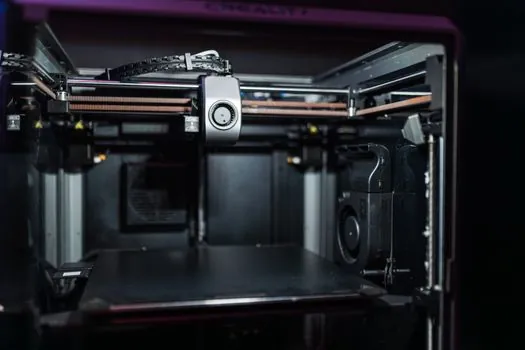
Electronics and electrical OEM castings on shell-mould lines cover housings, brackets, and mounts that need clean surfaces for downstream powder coating or plating [S1]. The shakeout step feeds directly into a gate-cut station and a shot-blast or rumbling cell; castings then go to machining for bearing seats and mounting faces before finish. A V-process line targeting the same part mix skips the bonded-shell fracture step and instead relies on vacuum release plus gentle vibration to free the casting, with the recovered sand returning to a fluid-bed cooler before re-use [S2].
For background on adjacent equipment decisions in electronics-adjacent lines, the spec map for industrial coatings on electronics housings covers the post-casting surface treatment side of the same workflow, while the parallel shakeout machine spec path for hardware manufacturing lays out the heavier cast-iron gear-case branch of the same selection tree.
Limitations, failure modes, and standards to anchor against
Over-amplitude shakeout cracks thin-wall housings, particularly aluminium enclosures below 4 mm wall; under-amplitude leaves bonded sand fused to the casting and pushes work into the blasting cell. V-process avoids both failure modes by eliminating the bonded crust entirely, at the cost of carrying plastic-film waste and maintaining a vacuum system at 50–100 kPa differential across every flask [S2].
Foundries specifying shakeout machines should anchor the build to ISO 230-5 for vibration testing of machines under no-load conditions, to ISO 1940-1 for balance quality grades on rotating elements, and to local structural codes governing low-frequency transmission to adjacent buildings. The reference baseline for housing-castings is the OEM's pattern and tolerance package: shell-mould buyers typically hold ±0.3 mm on critical features, V-process buyers accept ±0.2–0.5 mm per 25 mm as a process capability and design to it [S1][S2].
Sourcing and supplier-evaluation checklist
A pragmatic sourcing check: confirm the shakeout machine is rated for the heaviest housing plus its cluster (pouring cup, runners, feeders), not just the finished casting weight; ask for frequency and amplitude curves under load; and verify isolation-block drawings signed by a structural engineer. For shell-mould supply, suppliers such as Magnus Sourcing route work to Indian foundries with full traceability and 48-hour quote turnaround on resin-shell iron, steel, and aluminium housings [S1]. For V-process work, the differentiator is sand-recovery loop design and film-stock logistics, since the process is binder-free and almost 100% recyclable but not binderless in operating discipline [S2].
Track these signals over the next procurement cycle: foundry disclosures of installed shakeout power (kW per tonne of castings per hour), structural-isolation retrofit quotes on existing lines, and any shift toward V-process for new electronics-housing capacity in regions with strict binder-emission rules.
Component reference pages worth checking: shakeout machine, coding machine, and core machine.