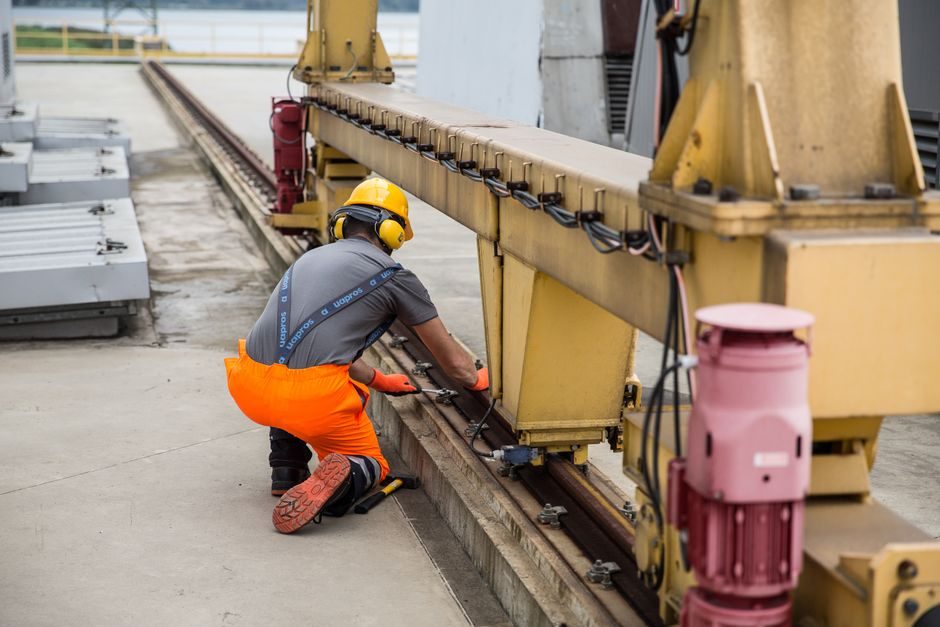
Shakeout machines separate cast parts from sand molds after pouring and cooling, and the right unit is sized first by casting-and-flask weight, second by sand system, and third by drive topology [S3]. A vibratory shakeout with an inertia exciter is the most common configuration in modern foundries; impact and pneumatic types remain in service for specific high-impact or low-noise duties [S3].
Selection is downstream of the coding machine and labeling machine stations only in the sense that shakeout feeds the rest of the sand loop — once a casting is knocked out, the used sand moves to a core machine return or a sand reclaimer, and the casting moves to a cutting machine cell for gate and sprue removal.
Definition, Scope and the Three Drive Topologies
Mechanically excited inertia shakeouts dominate green-sand and chemically bonded lines, with vibration sources grouped into mechanical, electromagnetic and pneumatic classes; the mechanical inertia type is the most widely deployed [S3]. The defining job is to break the mold, drop the casting out of the flask, and discharge used sand onto a belt or apron below the deck, all in one continuous pass.
Scope differs from a filling machine or a sand mixer: shakeout sits after cooling, not before mold formation, and it handles the most abrasive, hottest stream in the foundry. The encyclopedia shakeout machine entry covers the basic operating envelope and the related cast-process equipment in the same loop.
Selection Criteria: Load, Vibration Class, Sand Type, Drive
First criterion is payload — flask plus casting mass drives deck size, beam stiffness and exciter sizing. Second is vibration class: low-frequency high-amplitude for large castings, high-frequency low-amplitude for thin-wall or ductile-iron work where you do not want to crack the casting. Third is sand type: green sand tolerates aggressive vibration; resin-bonded or shell sand needs gentler treatment to avoid dust and to keep the sand reusable. Fourth is drive topology, which determines energy use, maintenance access and noise. [S1]
For each of these, the comparison against three common options looks like: mechanical inertia shakeout — high capacity, lower unit cost, highest noise and vibration transmitted to building steel; pneumatic impact shakeout — lower continuous-vibration load on the structure, higher compressed-air operating cost, suited to large discrete castings; electromagnetic shakeout — precise amplitude control, lower mechanical wear, smaller throughput per unit. Use whichever matches the dominant constraint on the line.
Who a Shakeout Machine Is For — and Who It Is Not For
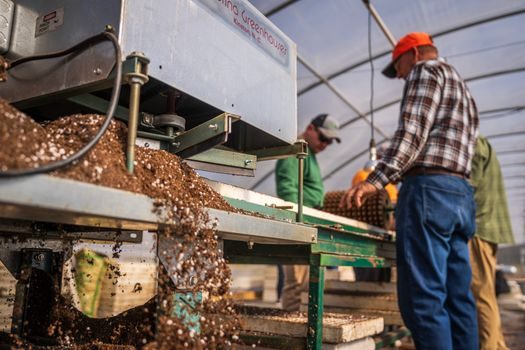
It is for green-sand iron and steel foundries running flask sizes typically above 500 × 500 mm, for non-ferrous lines pouring aluminum and bronze into medium-to-large molds, and for jobbing shops that need to clear the casting from the flask quickly between pours [S3]. It is also for plants that want to integrate used-sand discharge directly to a recovery conveyor, keeping the core machine loop fed.
It is not for very small precision castings where vibration would damage the part, not for investment-cast lines that decouple shakeout from the casting entirely, and not for high-mix low-volume shops that cannot keep a heavy deck loaded. Plants running a shell molding machine for shell-cored work often pair it with a lighter-duty vibratory conveyor rather than a heavy shakeout.
Operating Limits, Failure Modes and Maintenance Triggers
Bearings, exciter lubrication, and spring or rubber-element fatigue are the three mechanical failure points a spec has to absorb. Vibration amplitudes above the casting's fracture limit produce in-cast cracks; amplitudes below the sand's flow threshold leave bonded sand on the casting and force hand finishing. Match deck stroke to the heaviest expected flask and the lightest expected casting simultaneously — the design window is narrower than most catalogs admit. [S2]
Noise routinely exceeds 95 dB(A) on heavy inertia units; building-foundation isolation and acoustic enclosures are common retrofits. Dust loading at the discharge is severe when green sand is handled dry, and cyclones or wet scrubbers downstream are standard rather than optional. Power draw on a mid-size unit typically falls in the 15–45 kW band, dominated by the exciter motors during loaded starting.
Standards, Sourcing and Trade Reference
No single ISO or EN standard governs shakeout selection; foundry equipment is generally designed to foundry-specific mechanical-duty rules, with structural steel to EN 1993 and electrical to IEC 60079 for any hazardous-area rated motors in dust zones. Sourcing from China is common, and two customs tariff lookups for the term "shakeout-machine" and the variant "two plastid vibratory shakeout machine" returned no exact HS-code match [S1][S2], which means the equipment is normally declared under a broader foundry-machinery tariff line by the importer.
Buyers comparing hot-chamber die casting machine or low pressure die casting machine investments will recognize the same four-axis logic: process duty, payload, drive, then cost-of-ownership. The same logic applies to shakeout, only the payload is sand-and-flask and the duty is abrasive-impact, not thermal-shot.
Trackable Signals for the Next Buying Decision
Track the foundry's hourly throughput in tons of poured metal and the casting-weight distribution — that pair sets the deck load band and the exciter class. Track the sand system's reclamation loop and the moisture or binder content of the returned sand, because that changes how aggressively the shakeout can be tuned. Track the installed exciter-motor nameplate kW and the measured full-load current over a week, because drift on those numbers is the first sign of bearing wear and the cheapest maintenance trigger on the line. [S3]