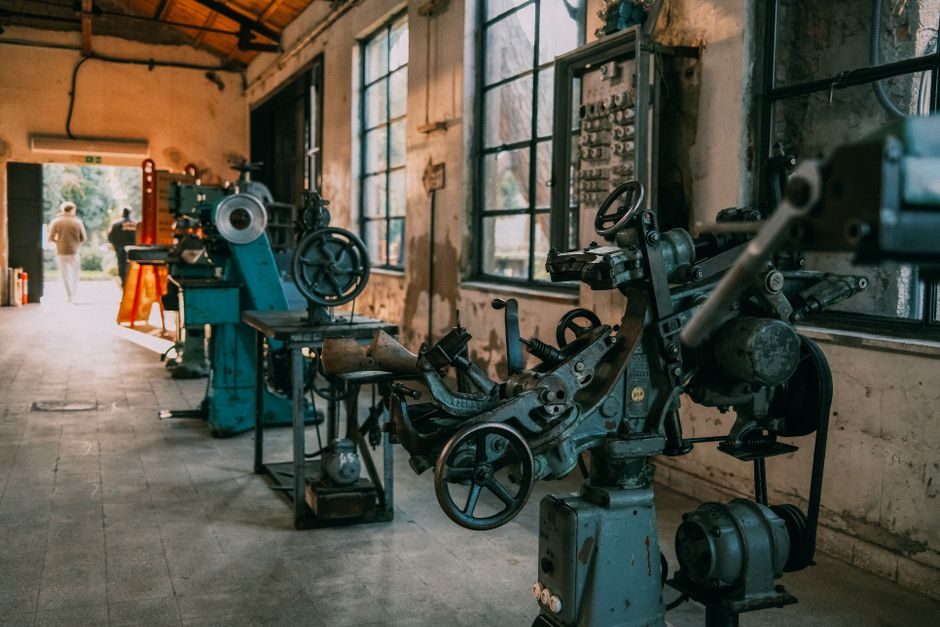
A new shell molding machine in 2026 lists from about US$8,000 for a small semi-automatic benchtop unit up to US$120,000+ for a fully automatic four-station phenolic-resin line, with most foundry buyers in the 3-5 t/h bracket paying US$28,000-55,000 FOB-China for a turnkey cell [S1][S2].
Scope: this guide covers the Croning-style (shell) process only — resin-bonded sand formed against a heated pattern (typically 220-280 °C), ejected as a thin half-shell, then clamped with a sand core and cured. It does NOT cover green sand molding or flaskless shell core shooters used purely for cores. Process engineers should treat any quote below ~US$15,000 as a benchtop / laboratory unit and verify shot weight, platen size and resin throughput before specifying [S2].
Price Bands by Machine Class (2026 FOB-China, Indicative)
Three distinct price tiers structure the market. Tier-1 benchtop / lab units (1-2 stations, 5-15 kg shot weight, manual or semi-automatic clamp) cluster between US$8,000 and US$18,000 and are typically sold to R&D shops, art-castings producers and short-run iron foundries [S1].
Tier-2 production units (2-3 stations, 30-90 kg shot weight, 3-5 t/h resin-sand throughput, semi- to fully-automatic cure/dump cycle) sit in the US$28,000-65,000 band and account for the majority of mid-volume automotive and valve-casting shipments [S2].
Tier-3 high-end four-station rotary or in-line cells (150-500 kg shot weight, integrated sand reclaimer, robotic pattern handling, PLC + HMI with cure-time recipes) start around US$85,000 and frequently reach US$120,000-180,000 once options such as servo-electric clamp, vacuum-assist venting and 6-axis pattern-change robots are layered in [S1][S2]. Buyers comparing to other casting cells can sanity-check tonnage logic against the cold chamber die casting price bands, since the same automation-stack ratio applies.
Six Cost Levers That Move the Quote
Platen / pattern footprint is the single largest cost driver: a 600 x 500 mm platen commands a 1.4-1.7x multiplier over a 400 x 300 mm platen of the same automation class, because the heated platens, hydraulic platens and pattern-change carriers scale with surface area [S1].
Station count matters: every additional station (from 2 to 4) adds roughly US$18,000-25,000 in mechanical hardware, plus a second resin hopper, second cure hood and additional sand-metering auger. Buyers should not over-spec — a 4-station line only pays back above ~4 t/h sustained throughput [S2].
Heating method: electric platens (typical 220-280 °C control, ±5 °C) cost less than oil-heated platens at the same platen size, but oil heating holds tighter uniformity (±2 °C) for thin-wall valve castings and adds US$4,000-7,000 to the cell price. Resin throughput — driven by shot weight and cycle time — is the second-order lever; phenolic-resin-coated sand consumption typically runs 1.4-1.8 t per ton of finished casting depending on shell thickness [S1][S2].
Automation stack is the third major multiplier: a fully-automatic dump + clamp + cure sequence adds US$12,000-20,000 over a semi-automatic unit, and a servo-electric pattern-change car riding on linear guide rails adds another US$8,000-15,000. Buyers evaluating similar trade-offs in a different casting family can cross-reference the vacuum die casting spec walkthrough, where the automation premium behaves almost identically.
Specification Comparison: Which Class Fits Which Buyer
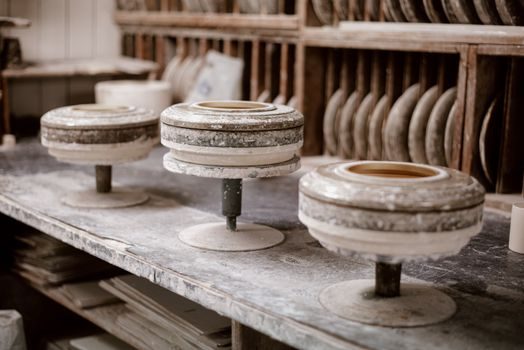
Tier-1 (US$8,000-18,000) is the right match for art castings, R&D labs, short-run iron decorative parts and university foundries, with shot weights under 15 kg and daily output below 2 t. It is the WRONG fit for any production cell that needs a 6- or 7-day week uptime above 85%. [S1]
Tier-2 (US$28,000-65,000) fits mid-volume ductile-iron valve bodies, pump housings, agricultural parts and small automotive brackets, typically 3-5 t/h with shot weights of 30-90 kg and 2-3 stations. Most Chinese OEMs ship this class with 1-year mechanical warranty and a 6-month electrical warranty, and reference installations concentrate in Jiangsu, Shandong and Henan [S1][S2]. For context on how this bracket compares to other casting cells, the squeeze casting buying guide breaks down an adjacent mid-volume segment with similar tonnage logic.
Tier-3 (US$85,000-180,000) targets high-mix, high-volume iron and steel foundries — typically 150-500 kg shot weights, 4 stations, 6-12 t/h throughput, integrated sand reclaimer and recipe management. Specify this class only when the casting mix justifies the automation premium; a 2-station cell is usually a better economic answer below 4 t/h [S2].
Total Cost of Ownership: Beyond the Sticker Price
FOB price is roughly 55-65% of the landed cost for a Chinese-built shell molding line; the remaining 35-45% breaks down as 8-12% ocean freight (cell weight 3.5-8 t depending on class), 5-8% import duty and VAT (varies by HS code 8474.30 across regions), 4-6% installation and commissioning labour, and 6-10% commissioning spare-parts kit and first-year phenolic-resin inventory [S2].
Consumables dominate the operating cost: phenolic-resin-coated sand runs US$320-480/t in 2026 spot pricing, and energy cost (electric platens + hydraulic clamp + sand reclaimer) typically lands at US$8-14 per ton of finished casting. Budget US$3,500-6,500/year in platen-heater element replacements and another US$1,500-2,500 in hydraulic seal kits at Tier-2 duty cycle [S1][S2]. Buyers already running sand mixers and resin-handling gear should account for the interface cost of integrating them with the new shell cell — typically 5-8% of the cell price.
What the Sourcing Channel Tells You
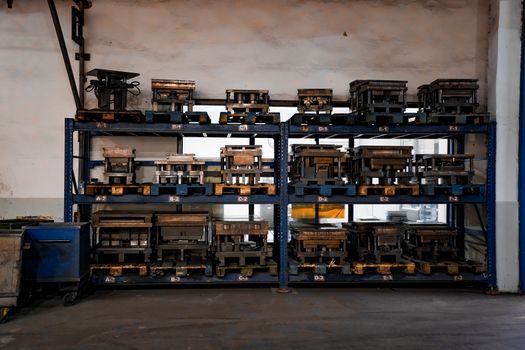
Direct-from-OEM sourcing remains the dominant channel for Tier-2 and Tier-3 shell molding machines, with most serious Chinese OEMs requiring a 30% T/T deposit, 70% balance against B/L copy, and a 35-50 day lead time after drawing approval for standard units [S1][S2]. Custom platen sizes or four-station rotary configurations extend lead time to 70-90 days and usually carry a +12-18% engineering surcharge [S1].
Trading-company listings on Alibaba and Made-in-China routinely show MOQ of 1 set for Tier-1 units, 1 set for Tier-2 with a small premium, and 1 set for Tier-3 with a 90-120 day lead time; verified-supplier badges on both platforms correlate with a higher likelihood of after-sales support, which matters more than headline price on a 5-7 year depreciation cycle [S1][S2]. Engineers cross-shopping this process against aluminum die casting should note that shell-molding cells carry longer mechanical-life expectations (12-15 years vs 8-10 for die-casting) because the tooling is the resin-bonded sand, not the machine itself.
Procurement Signals Worth Tracking
A practical pre-PO checklist: confirm platen temperature uniformity (≤±5 °C across the pattern face), verify shot-weight repeatability (±2% over 10 cycles), request a sand-consumption curve (t resin-sand per t casting) at your representative part geometry, and validate the OEM's commissioning team can be on-site within 14 days of arrival — a recurring failure point in user feedback on both major B2B platforms [S1][S2]. For engineers who want a single reference on adjacent casting-cell economics, the gravity die casting vs cold chamber write-up gives a useful tonnage-and-alloy baseline.