
Automotive-parts foundries pouring iron engine blocks, aluminum cylinder heads, and ductile-iron suspension arms should anchor shakeout selection on three numbers: sand-to-metal ratio (5:1 to 60:1 per published OEM data), casting entry temperature (often above 200 °C on green-sand lines), and peak mold throughput with a 1.3 to 1.5 surge factor applied to the tons-per-hour rating [S5].
Drum shakeouts typically cover 30 to 400 tph, vibratory grids handle 20 to 40 t per shift under a single fitter, and dedicated decoring cells run 40 to 120 parts per hour depending on geometry [S5]. Aluminum-friendly rubber decks are commonly specified at about 2 inches thick to dampen impact on brittle castings [S5]. A shakeout machine in this duty range is the workhorse separating castings from green-sand, no-bake, or resin-bonded molds after pouring and cooling.
Vibration Mode Comparison: Linear, Two-Mass, Rotary, Barrel-Horse
Conventional vibratory shakeouts use eccentric or vibrating-motor excitation at higher frequency and more vertical stroke than a feeder, which is what fractures the sand lump and walks the casting forward [S5]. Carrier's Delta-Phase two-mass design adds a counter-vibrating sub-frame, letting the operator trim conveying speed and retention time on the deck so fragile castings stay longer and robust castings exit faster [S1].
Rotary drum shakers tumble castings inside a rotating shell, the right answer when the foundry wants to avoid percussive impact on thin-wall iron or brass castings and prefers to polish the sand off by attrition [S5]. Barrel-horse shakeouts sit between the two extremes, vibrating a barrel-shaped deck so castings rotate as they advance, useful for batch-style no-bake lines where directional control on a flat deck is not needed [S1]. The L12 series inertial shaker published by Sanzhuji exemplifies the dual-vibration-motor self-synchronization layout, with rated loads from 3 t (L123, 2×3.7 kW, 2×50 kN exciting force) up to 20 t (L1220, 4×9.5 kW, 4×140 kN) on table sizes from 2010×1850 mm to 3400×2800 mm [S4].
Drive Layout: Above-Deck vs Below-Deck
OEM catalogs such as Sinfonia's foundry line standardize below-deck drive types as RVSO-800-1.2 and RVSO-800-1.5, with the eccentric mechanism mounted under the deck for a lower headroom envelope and a cleaner sand-fall path [S5]. Above-deck drive types mount motors on the side plates, simplifying belt or chain adjustment but raising overall height by the motor's vertical envelope [S5].
Below-deck arrangements dominate high-tonnage iron and steel shakeouts where the casting is hot (entry above 200 °C in many green-sand lines) and the operator wants the eccentric weights isolated from falling sand and tramp metal [S5]. Above-deck drives show up more often on smaller flask-handling or no-bake decks where cleaning access outweighs the extra headroom, and where overhead drives, double-deck designs, and integrated dust and fume hoods appear as configurable options for chemically bonded no-bake duty [S5]. Carrier's published sand-to-metal ratio envelope of 5:1 to 60:1 is the cross-application gate most buyers trip on first: above roughly 30:1, a lump-breaker or attrition mill must be planned downstream because the shakeout cannot fully reduce the sand clusters [S1][S5].
Capacity Sizing and Surge Factors
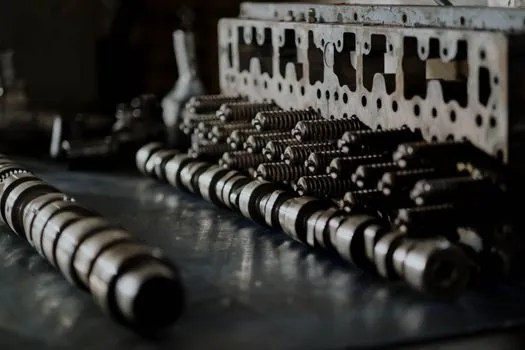
Size the capacity by summing sand-plus-metal mold weight times molds per hour, then add a 1.3 to 1.5 peak factor, and confirm the result against the machine's rated tons per hour (commonly 30 to 400 tph for drums) and over-deck load [S5]. Green-sand systems collapse readily and tolerate gentle continuous shaking; chemically bonded no-bake molds need more aggressive amplitude or a longer retention time, which is where two-mass or barrel-horse designs earn their keep [S1].
Carrier shakeouts accept sand-to-metal ratios as low as 5:1 and as high as 60:1, with unlimited recipe storage in the control system for diverse casting production [S1]. The economic break-even for a European-style green-sand shakeout line sits around 8 to 12 t/day of poured iron, dropping to 4 to 6 t/day in higher labor-cost regions, with reclaimed-sand value typically offsetting capex within 18 to 30 months [S5]. For automotive-parts plants running mixed alloy cells, the same rule transfers if capex is amortized against labor savings on a matched grid shakeout, where one fitter supervises 20 to 40 t per shift and residual lump sand feeds straight to reclamation [S5].
Decoring Cells for Aluminum Engine Blocks and Transmission Housings
SINEX positions its decoring machine as a CNC machine tool for the automotive sector, designed for shakeout of aluminum foundry parts with organic or inorganic sand cores (cold or hot box), at noise level below 85 dBA at 1 m, with manual or robotic loading, parts up to 80 kg, and a published part dimensions envelope of 600×400×300 mm on the base unit [S8]. This is a different class from the green-sand grid shakeout: the decoring cell focuses on residual core sand in internal passages of aluminum castings, not on the bulk mold shakeoff.
For automotive cylinder heads and transmission cases cast in resin-sand or shell systems, the integrated decoring cell is increasingly specified alongside the main shakeout deck, with throughputs of 40 to 120 parts per hour depending on geometry [S5]. Auxiliary equipment such as a cutting machine or core machine upstream or downstream in the same cell handles sprue trimming and core assembly, but the shakeout step remains the bottleneck where hot, sand-laden castings first hit a mechanical surface. SINEX also offers a four-station robotic version for higher-mix automotive lines [S8].
Selection Criteria Map: Type vs Application

For green-sand iron engine blocks in the 20 to 40 t per shift range under one fitter, a vibratory grid or two-mass deck with rubber impact damping at roughly 2 inches thick is the common call [S5]. For ductile-iron suspension arms and brake calipers on no-bake lines with sand-to-metal ratios above 30:1, plan a two-mass or barrel-horse deck plus a downstream lump-breaker, because the shakeout alone will not reduce sand clusters above that ratio [S1][S5]. For aluminum cylinder heads and transmission housings with internal sand cores, a decoring cell rated 40 to 120 parts per hour with noise below 85 dBA at 1 m is the dedicated solution, separate from the bulk mold shakeout [S5][S8].
For high-tonnage drum duty in the 30 to 400 tph band, the rotary drum shaker is the lower-impact attrition choice for thin-wall iron or brass castings [S5]. For small flaskless no-bake decks, above-deck motor mount with overhead drive options and integrated dust hoods keeps cleaning access simple, even at the cost of extra headroom [S5]. SLB-series shakeout-crushing combined units, with payloads from 5 t (SLB-05, 9.5 kW × 2, 130 kN × 2 at 980 r/min) up through 10 to 15 t (SLB-10, 18 kW × 2) on table sizes from 1800×1600 mm to 3000×2700 mm, fold lump-breaking into a single deck to reduce downstream equipment count [S9].
Integration with Sand Reclamation and Downstream Cleaning
Shakeouts often feed directly into sand screening and reclamation, which improves material reuse and reduces landfill waste [S1]. After pouring and cooling, castings remain surrounded by molding sand, and most foundries focus heavily on melting efficiency, molding automation, core production, and pouring systems while underestimating shakeout and sand recovery [S7]. The shakeout's job is to deliver a clean casting and a lump-controlled sand stream that the reclaimer can process without pre-crushing.
In automotive plants producing engine blocks and transmission housings by the thousands, high-speed automated shakeout lines are integrated with resin sand systems to meet just-in-time delivery requirements of global car brands [S6]. Sand reclamation picks up the shakeout output, and the recovered sand returns to the molding line; this closed loop is what gets the 18 to 30 month capex payback cited for European green-sand shakeout installations [S5]. Selecting a shakeout whose discharge profile matches the reclaimer's feed size, typically below 10 to 20 mm lump for most attrition mills, prevents the reclaimer from becoming the new bottleneck.
Maintenance, Controls, and Operating Limits

Maintenance on foundry shakeouts is built around three wear surfaces: the screening deck, the vibration isolators, and the vibration drives, all designed for easy access and straightforward replacement [S1]. Carrier's Delta-Phase controls accommodate unlimited recipes for diverse casting production, letting the operator manage conveying speed and retention time on the deck while optimizing sand removal [S1].
Standardized eccentric sizes such as RVSO-800-1.2 and RVSO-800-1.5 in Sinfonia's catalog make spare-bearing and weight-set replacement predictable across multiple cells on a single automotive line [S5]. The KRB AutoShakeout eliminates manual shaking or whipping of bars, automating bar removal from flasks and reducing operator exposure to heat and vibration on repetitive decoring tasks [S2]. Across published decks, rated loads span 3 t (L123) to 20 t (L1220), with double vibration-motor self-synchronization as the dominant drive architecture on Chinese-supplied L12 units and equivalent eccentric drives on European and North American OEM units [S4].
Trackable signals over the next two quarters: published updates to ISO 9001-quality foundry-shakeout OEM catalogs listing sand-to-metal ratio envelopes above 60:1, and any second-half 2026 release of a standardized decoring cell datasheet at noise below 80 dBA at 1 m for aluminum-intensive automotive plants. Linked spec context for adjacent automotive-cell equipment is available in the Picking a Sand Reclamation Unit for Semiconductor-Grade Foundry Output guide, and broader plant-floor protocol selection for automotive lines is mapped in the Best Automotive Protocol Gateway: Selection Map article.