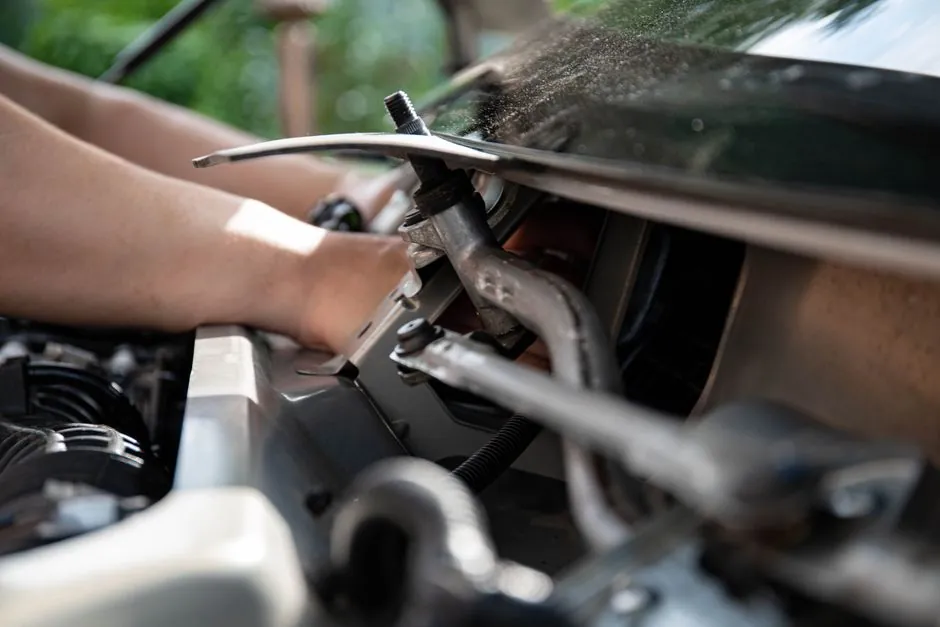
Automotive-parts foundries running aluminum cylinder heads, engine blocks, and suspension arms should anchor shakeout selection on three numbers: sand-to-metal ratio (5:1 to 60:1 per published OEM data), casting entry temperature (often above 200 °C on green-sand lines), and peak mold throughput with a 1.3 to 1.5 surge factor applied to tons-per-hour rating [S4][S6].
Drum shakeouts typically cover 30 to 400 tph, vibratory grids handle 20 to 40 t per shift under a single fitter, and dedicated decoring cells run 40 to 120 parts per hour depending on geometry [S4][S7]. Aluminum-friendly rubber decks are commonly specified at about 2 inches thick to dampen impact on brittle castings [S4].
Why a Spec-First Path Beats a Brand-First Path
A spec-first path forces the buyer to lock four gates before vendor shortlisting: alloy class, sand system, casting weight envelope, and downstream sand-reclamation route. Carrier's published sand-to-metal ratio envelope of 5:1 to 60:1 is the cross-application gate most buyers trip on first: above roughly 30:1, a lump-breaker or attrition mill must be planned downstream because the shakeout cannot fully reduce the sand clusters [S4][S5].
The economic break-even for a European-style green-sand shakeout line sits around 8 to 12 t/day of poured iron, dropping to 4 to 6 t/day in higher labor-cost regions, with reclaimed-sand value typically offsetting capex within 18 to 30 months [S7]. For automotive-parts plants running mixed alloy cells, the same rule of thumb transfers if capex is amortized against labor savings on a matched grid shakeout, where one fitter supervises 20 to 40 t per shift and residual lump sand feeds straight to reclamation [S7].
Drive Layout: Above-Deck vs Below-Deck
OEM catalogs such as Sinfonia's foundry line standardize below-deck drive types as RVSO-800-1.2 and RVSO-800-1.5, with the eccentric mechanism mounted under the deck for a lower headroom envelope and a cleaner sand-fall path [S4]. Above-deck drive types mount motors on the side plates, simplifying belt or chain adjustment but raising overall height by the motor's vertical envelope [S4].
Below-deck arrangements dominate high-tonnage iron and steel shakeouts where the casting is hot (entry above 200 °C in many green-sand lines) and the operator wants the eccentric weights isolated from falling sand and tramp metal [S4]. Above-deck drives show up more often on smaller flask-handling or no-bake decks where cleaning access outweighs the extra headroom, and where overhead drives, double-deck designs, and integrated dust and fume hoods appear as configurable options for chemically bonded no-bake duty [S4].
Vibration Mode: Linear, Two-Mass, and Rotary
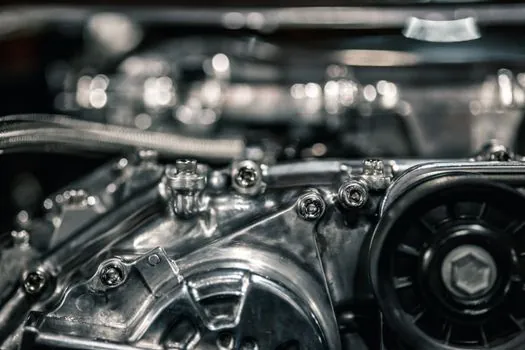
Conventional vibratory shakeouts use eccentric or vibrating-motor excitation at higher frequency and more vertical stroke than a feeder, which is what fractures the sand lump and walks the casting forward [S4]. Carrier's Delta-Phase two-mass design adds a counter-vibrating sub-frame, letting the operator trim conveying speed and retention time on the deck so fragile castings stay longer and robust castings exit faster [S4][S5].
Rotary drum shakers tumble castings inside a rotating shell, which is the right answer when the foundry wants to avoid percussive impact on thin-wall iron or brass castings and would rather polish the sand off by attrition [S4]. Barrel-horse shakeouts sit between the two extremes, vibrating a barrel-shaped deck so castings rotate as they advance, which is useful for batch-style no-bake lines where directional control on a flat deck is not needed [S4][S5]. The drum shaker in Sinfonia's catalog and barrel-horse units in Carrier's range both use deck angle and vibration amplitude as the principal tuning controls, rather than rotation rate as on a pure rotary drum [S4].
Application Family: Iron, Aluminum, No-Bake
Iron and steel foundries typically run heavy-duty steel-grizzly decks on a high-energy vibratory frame, with the deck sized for castings that tolerate high-impact excitation [S4]. Aluminum foundries move to 2-inch-thick steel-back rubber decks to dampen impact and prevent brittle fracture, a configuration called out specifically in OEM guidance for cylinder heads, manifolds, and turbo housings [S4].
No-bake and flask lines use slower, fully enclosed decks sized to the flask footprint, often paired with overhead drives and integrated dust and fume hoods [S4]. The Sinomach L814 vibrating shakeout for aluminum alloy castings runs at a vibrating frequency of 15 to 24 Hz, an impact frequency of about 1000 impacts per minute at 0.4 MPa, a max valid casting weight of 40 kg including core, and 16 kW total power, with envelope 4700 x 2240 x 3260 mm [S1]. The Sinex decoring cell targets parts up to 80 kg with envelope 800 x 500 x 400 mm, pneumatic pressure 6 bar, residual sand max 3 g without lumps, and vibration up to 25 g, with cycle rate 40 to 120 pcs/h [S3]. For broader process context inside a shakeout line, see the shakeout machine encyclopedia entry and the related coding machine reference used downstream for trace marking on finished castings.
Capacity Sizing and Surge Factors
Size the capacity by summing sand-plus-metal mold weight times molds per hour, then add a 1.3 to 1.5 peak factor, and confirm the result against the machine's rated tons per hour (commonly 30 to 400 tph for drums) and over-deck load [S6]. Green sand collapses readily and tolerates gentle continuous shakeout; no-bake forms rigid lumps and needs higher impact plus a matched reclamation route, whether thermal, wet, or dry attrition [S6].
Foundries running chemically bonded no-bake molds also have to manage the dust and fume envelope, which is why overhead drives, double-deck designs, and integrated dust and fume hoods show up as configurable items in OEM option lists for that duty class [S4]. Variable-speed drives and adjustable deck inclination are the two controls that let a single shakeout cover very different casting sizes within the same product family, which is the route most automotive tier-one suppliers take when consolidating aluminum and iron cells onto one deck [S4][S5]. For comparison against the labeling side of an automotive parts plant, see this labeling machine spec map.
Comparison: Vibratory vs Drum vs Barrel-Horse on Four Criteria
On impact energy, vibratory shakeouts deliver the highest per-cycle force and win on no-bake and heavy iron; rotary drum shakers win on fragile thin-wall castings because the cleaning mode is attrition, not percussion; barrel-horse units land in the middle with a rotating sand bed that gently tumbles parts as they advance [S4][S5]. On sand-to-metal ratio tolerance, vibratory handles the full 5:1 to 60:1 envelope, drum is most efficient below 30:1, and barrel-horse is tuned for batch-style no-bake where ratios sit toward the high end [S4][S5].
On footprint and headroom, below-deck vibratory types (RVSO-800-1.2 / 1.5 patterns) keep the lowest vertical envelope, above-deck vibratory types add motor height, and rotary drum shells need the most floor area for a given throughput [S4]. On cycle rate, dedicated decoring cells such as the Sinex platform run 40 to 120 pcs/h depending on part, while a grid shakeout fitter typically handles 20 to 40 t per shift on matched green-sand lines [S3][S7]. If your plant is also evaluating sand-reclamation choices downstream, the sand reclamation unit spec cut for 2026 maps the matched equipment side of the same selection problem.
Who This Is For, and Who It Is Not For
This path is for automotive-parts foundries pouring iron, steel, or aluminum castings in the 5 to 80 kg single-piece range, running green-sand or no-bake systems, and producing 4 t/day or more where a vibratory or drum shakeout is economic [S6][S7]. It also fits tier-one and tier-two suppliers decoring aluminum cylinder heads, engine blocks, turbo housings, manifolds, and suspension arms at 40 to 120 pcs/h, where a CNC-style decoring cell with soundproof cabin and robotic loading replaces manual hammer stations [S3].
It is not for job-shop investment casters running thin-wall or jewelry-grade work, where a small drum or hand-decor stations beat any high-energy vibratory deck on yield loss. It is also not for very low-volume prototyping cells below the 4 to 6 t/day break-even, where a manual or semi-automatic shakeout table is more capital-efficient than a fully enclosed vibratory line [S7]. Where a plant does need downstream cutting of gates and risers before machining, the cutting machine encyclopedia entry covers the matching spec path.
Standards, Sourcing Gates, and Trackable Signals
Buyers should anchor sourcing on a short list of verifiable gates: rated tons per hour, peak surge factor, sand-to-metal ratio envelope, deck material and thickness, drive layout, and noise level at 1 m (Sinex specifies under 85 dBA at 1 m as a benchmark for soundproof-cabin decoring cells) [S3]. Aluminum-specific cells should also confirm rubber deck thickness around 2 inches and a frequency band of 15 to 24 Hz as a starting envelope, with Sinomach's L814 published at those values [S1][S4].
Trackable signals to watch over the next buying cycle: published cycle-rate ranges (40 to 120 pcs/h on decoring cells, 20 to 40 t per shift on grid shakeouts), the 1.3 to 1.5 surge factor on rated tph, and the 5:1 to 60:1 sand-to-metal ratio envelope from Carrier's product line, all of which serve as live benchmarks when a vendor's quote drifts outside them [S3][S4][S5][S6][S7]. For plants already pairing shakeout output with downstream trace marking, the labeling machine spec guide for warehouse automation closes the loop on part-level identification after sand removal.