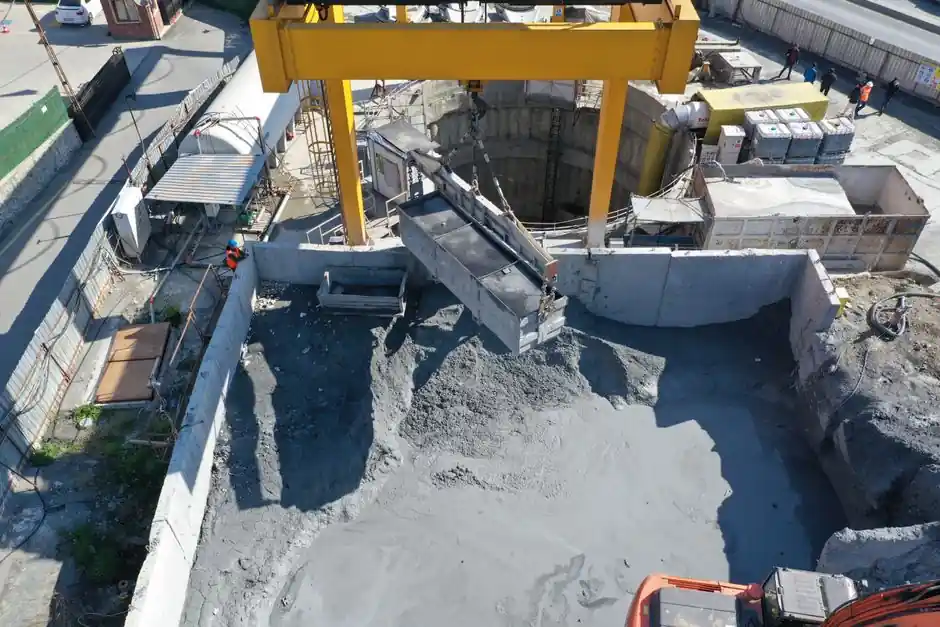
Shakeout selection starts with the sand-to-metal ratio of the mold line: Carrier specifies equipment rated for ratios as low as 5:1 (heavy castings, minimal sand) up to 60:1 (light castings, heavy sand mass), and the operating point should be defined before any drive sizing [S2].
Two distinct duty classes exist: a heavy main shakeout that handles hot green-sand molds straight from the molding line, and a pre-shakeout used ahead of a main deck to strip bulk sand and reduce thermal load on downstream equipment. JOEST lists both configurations as standard options with variable hole-geometry grates [S4]. For background on the broader vibratory equipment family, selection should always start with part weight, sand mass, and downstream sand reclamation.
Mold Type and Sand-to-Metal Ratio
Green-sand systems and no-bake (chemically bonded) systems impose different mechanical loads on a shakeout deck because no-bake sand adheres more aggressively to the casting surface. Carrier supplies separate machine lines for both flasked and flaskless no-bake molds, plus green-sand configurations [S2]. The wider the ratio range you run, the more important variable-frequency drive control becomes: Carrier's Delta-Phase Shakeout lets the operator adjust conveying speed and retention time on the deck to balance sand removal against casting damage [S2].
A practical decision point: if your line runs predominantly a single ratio (e.g. 10:1 to 15:1) and a single mold type, a fixed-angle mechanical drive is usually sufficient. If you run multiple part families across shifts with ratios spanning 5:1 to 60:1, specify a vibrator with adjustable amplitude and frequency from the quote stage [S2][S4].
Drive Type and Vibration Mechanics
Industrial shakeouts are almost exclusively vibratory decks driven by eccentric masses, unbalanced motors, or electromagnetic exciters. JOEST catalogues unbalanced motors, magnetic drives, and dedicated exciters as separate product lines, with drive size selected to match deck length and width rather than chosen in isolation [S4]. Drive placement (single-shaft under the deck, dual-shaft on the side, or top-mounted exciters) changes the vibration angle, which directly controls how aggressively sand is ejected versus how gently castings slide.
For thin-walled or fragile castings, a barrel-horse or rotating-bed configuration is an alternative to a linear deck: Carrier's barrel-horse shakeout uses a vibrating barrel to create a rotating sand bed so castings 'swim' rather than impact the grate, reducing breakage on delicate parts [S2]. If you need to compare shakeout output handling against other foundry material handling systems, document the part's maximum allowable drop height and surface-impact energy first.
Casting Fragility and Deck Geometry
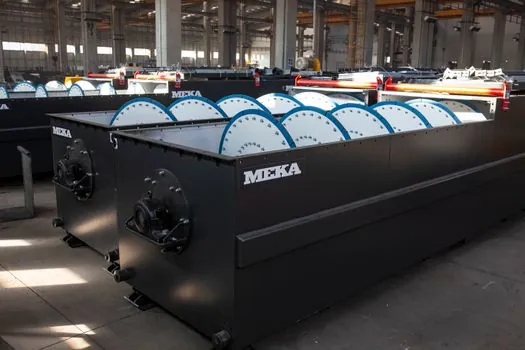
Every shakeout specification must answer one question: what is the maximum acceptable casting damage rate? The answer drives grate open area, vibration amplitude, and retention time. JOEST offers grates with variable hole geometry so the same frame can be reconfigured for heavy ferrous castings (large apertures, fast sand pass-through) or thin-wall non-ferrous (smaller apertures, longer retention) [S4]. A common pitfall is specifying a grate based on nominal part size without checking the smallest cross-section that must be retained on the deck.
For foundries running mixed part portfolios, the most flexible layout uses a pre-shakeout ahead of a main shakeout: the pre-shakeout strips 70-80% of free sand at high amplitude, and the gentler main deck handles residual sand and core removal where casting damage risk is highest [S4]. This is also where integration with sand reclamation and screening matters: shakeout underflow typically feeds a vibratory screener or sand reclaimer, and deck height should be set to feed those units by gravity.
Capacity, Throughput, and Sizing Rules
Sizing a shakeout by nameplate 'tons per hour' is unreliable because throughput scales with casting weight, mold weight, sand adhesion, and operator-set retention time. A more defensible approach is to specify the deck's effective screening area (m²) and the casting batch weight the deck can hold per cycle. JOEST provides various widths and lengths as standard options, with drive units selected to match the chosen machine footprint rather than dictated by a fixed tonnage figure [S4].
Control-side, recipe storage has become standard. Carrier describes a control system that accommodates unlimited recipes for diverse casting production, so changeover between part families is a parameter set rather than a mechanical reconfiguration [S2]. For plants running a job-shop mix, this is the single biggest throughput lever; for a dedicated high-volume line, the same controls are still useful for tuning amplitude as molds age and sand properties drift.
Maintenance Access and Wear Parts
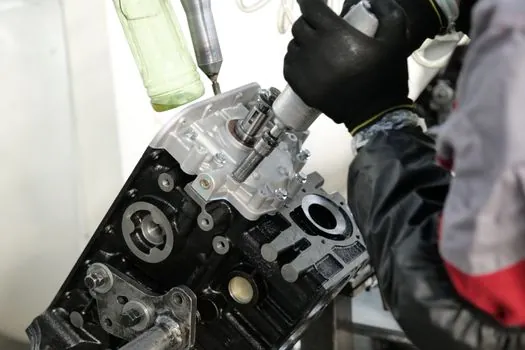
Foundry shakeouts operate in abrasive, high-temperature environments, so the realistic question is not whether components will wear but how quickly they can be swapped. Carrier's product FAQ calls out the screening deck, isolators, and vibration drives as the three routine maintenance items, with design intent around 'easy access and straightforward replacement' [S2]. JOEST supplies replacement grates, drive bearings, and isolation springs as cataloged spares, and offers a test center for vibration analysis on existing equipment [S4].
Build a spares list at the quote stage rather than after commissioning. At minimum, carry one full grate set, a set of isolator springs, and one drive bearing assembly. Plants that skip this typically face 24-72 hour stoppages the first time a grate fails, because cast grates are often not stock items at the OEM.
Integration with Sand Reclamation and Controls
Shakeouts rarely stand alone. Carrier explicitly notes that shakeouts 'often feed directly into sand screening and reclamation, improving material reuse and reducing landfill waste' [S2], and the parent group (Carrier Process Equipment Group) supplies atmospheric drum dryers, vibratory feeders, and vibratory screeners as complementary units on the same process line [S2]. JOEST likewise bundles shakeouts with compaction tables, sand attrition units, and pre-reclaiming sand attrition units as a coherent separation/compacting/breaking product group [S4].
When evaluating bids, require vendors to confirm interface dimensions (deck discharge height, discharge trajectory, sand moisture at discharge) and to provide a control architecture that talks to your existing PLC or SCADA layer. For context on how shakeout selection fits into broader industrial equipment procurement workflows, the same spec-first discipline applies: lock the duty cycle, the part mix, and the downstream interface before sizing the drive.
Selection Criteria: Mechanical vs Vibratory vs Barrel
Three configurations cover most foundry duty. A linear vibratory deck with unbalanced-motor drive is the default for heavy ferrous castings and high-throughput green-sand lines. A rotary or barrel-horse shakeout is preferred for fragile or thin-wall castings where impact damage is the primary failure mode [S2]. A pre-shakeout plus main-shakeout tandem handles mixed lines where thermal load on the main deck and casting fragility both matter [S4].
Use this shortlist logic: if your line is single-product, high-volume, and casting damage tolerance is moderate, specify a single linear vibratory deck. If you run thin-wall or non-ferrous parts with strict damage limits, move to a barrel-horse or rotary configuration. If you run a job-shop mix with both heavy and delicate parts, specify a pre-shakeout / main-shakeout tandem with recipe-driven amplitude control. In all three cases, the final shortlist should match deck area, drive type, and grate geometry to the documented part mix, not to a vendor's standard tonnage rating.
Two signals worth tracking before you commit: (1) request a paid trial of your worst-case part (heaviest sand mass, thinnest section) on the vendor's demo deck, and (2) require the OEM to commit in writing to a maximum casting-damage rate at your production throughput, with a defined test method. Vendors that decline either signal are telling you their standard offering is not engineered for your duty.