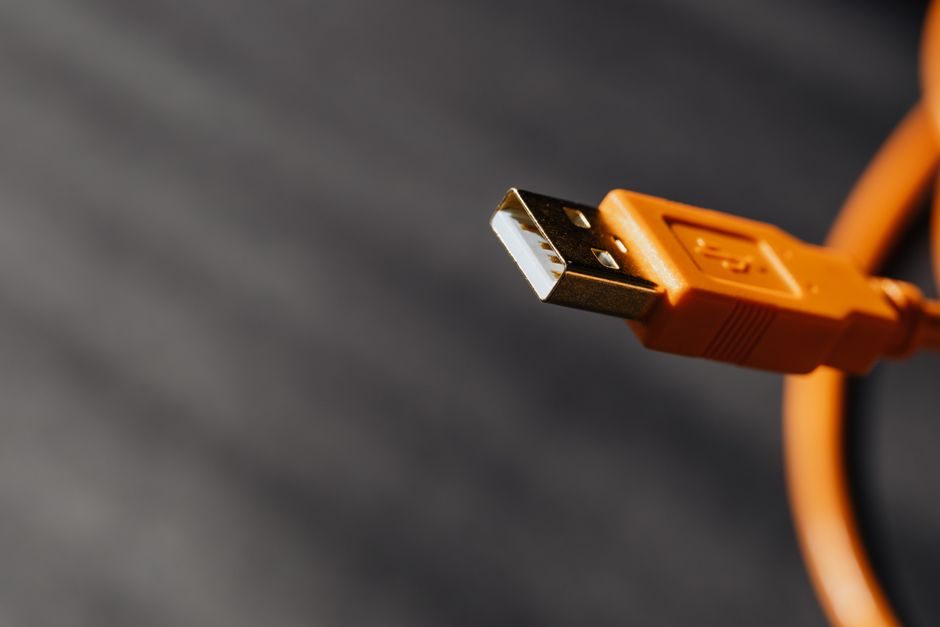
Shielded cable refers to any cable whose conductors are wrapped in a metallic barrier — typically aluminium foil, tinned-copper braid, or a foil+braid combination — whose job is to bleed coupled EMI to ground rather than let it ride into the signal pair [S4]. A 22 AWG three-core Alpha Wire shielded cable in 30.5 m (100 ft) reels and a Belden 8771 equivalent (22/3C stranded, 250 ft) are the workhorse SKUs spec'd for instrumentation and low-voltage control on 2026采购 lists [S2].
For panel builders and OEMs buying in volume, China-factory direct-sale PVC-insulated multicore flexible copper cables are typically quoted at a 2,000-metre minimum order, with stranded copper conductors, PVC insulation, and PVC sheath across RVVP, RVV, and BVR constructions [S3]. The shielded variants in that family add a thin aluminium-foil wrap with a tinned-copper drain wire, which is the cheapest way to pass a 30 MHz to 1 GHz radiated-emissions sweep.
Shield Construction: Foil vs Braid vs Foil+Braid
Braid-only shields (tinned-copper, 60–95% optical coverage) carry the lowest DC resistance to ground — usually under 10 mΩ/m for an 85% coverage braid — and dominate where low-frequency magnetic interference from VFDs, motors, or large transformers is the failure mode.
Foil+braid (often called "S/FTP" or "overall foil + overall braid" depending on the standard) is the default for industrial Ethernet, PROFIBUS, and any run that has to clear both CISPR 11 and CISPR 22 radiated emissions in one construction. For a procurement decision, the rule is: spec foil if the threat is RF above ~10 MHz; spec braid if the threat is 50/60 Hz harmonics and switching transients; spec both if you cannot separate the two environments.
AWG, Core Count, and Voltage Class
22 AWG stranded is the industry baseline for shielded signal cable, with 24 AWG chosen for higher-density multi-pair bundles and 18–16 AWG reserved for power or low-impedance analog outputs [S2]. RVVP cable from Chinese OEM lines is published in 2-core, 3-core, and 4-core configurations at 22 AWG and 24 AWG, all rated for electric-appliance and control-cabinet duty with copper conductor + PVC insulation + PVC sheath [S3].
Voltage class is the gate that stops a 300 V signal cable from being pushed into a 600 V motor branch. Most PVC-jacketed shielded cable in this class is rated 300 V (UL AWM 2464, AWM 2509 patterns); 600 V shielded variants move to XLPE or EPR insulation and a thicker jacket, and are outside the RVVP family [S3]. A buyer who needs both signal and power on one reel is looking at a hybrid or tray cable, not a generic RVVP — see the control cable selection guide for the 600 V transition.
Jacket and Insulation Materials: PVC, PE, PUR, and LSZH
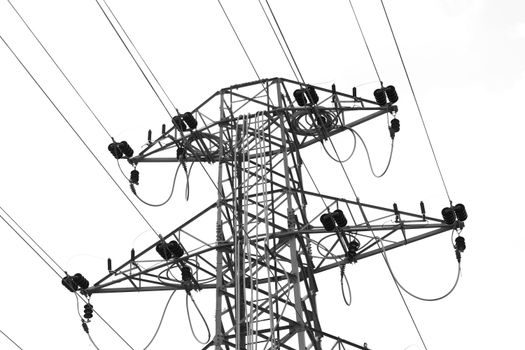
PVC is the default jacket for indoor, cabinet-internal runs, with a typical temperature window of -15 °C to +80 °C static; it fails in cold-flex, oil-exposure, and direct-sunlight outdoor use [S3]. Polyethylene (PE) is preferred for direct-burial and outdoor UV-stable runs because of its low moisture absorption and better low-temperature behaviour, usually rated -40 °C to +80 °C.
Polyurethane (PUR) jackets dominate drag-chain and high-flex applications — typically rated for 5–10 million flex cycles at a defined bend radius — while LSZH (low-smoke zero-halogen) jackets are mandatory in tunnel, rail, and offshore enclosed-space runs where a PVC fire would feed toxic HCl smoke. For the engineering decision, a PUR jacketed shielded cable is the only sensible answer on a cable carrier, and a PUR shielded drag-chain variant is covered in the flexible drag-chain cable selection guide.
EMC, Grounding, and Drain-Wire Practice
A shield only works if it is bonded to ground at one end (low-frequency analog, 4–20 mA, thermocouple) or both ends (high-frequency digital, Ethernet, video), and the wrong choice is the single most common source of "the shield is there but the noise is still there" field complaints. The drain wire is the engineered terminator: it gives you a tinned-copper stranded path to the ground stud because crimping directly to the fragile aluminium foil is unreliable. [S3]
For server-room and data-centre compliance, the SPARC M7-16 safety guide treats shielded cabling as a required mitigation for FCC Class A and ICES-003 Class A radiated-emissions limits, and explicitly lists the shielded-cable compliance statement alongside RoHS and SELV declarations [S1]. Buyers writing cabinet-level EMC test plans should reference that compliance page as the upstream evidence the OEM carries the regulatory statement on the exact SKU being shipped.
Comparison: Choosing Among the Main Shielded-Cable Variants
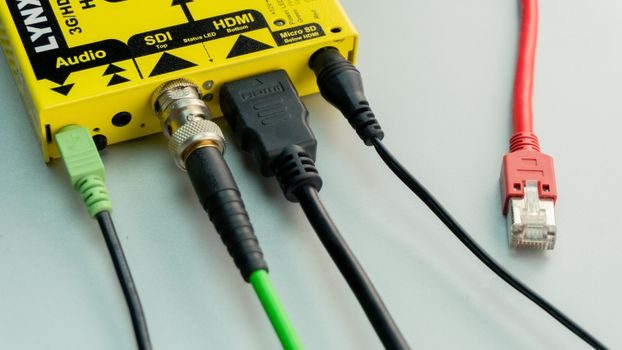
Across the four most-commonly procured shielded-cable families — RVVP (PVC signal), CY-type PVC braid shielded, PUR drag-chain, and LSZH rail/tunnel — the decision criteria line up as follows. Cost per metre ranks RVVP cheapest and PUR/LSZH highest, typically 1 : 1.4 : 2.0 : 2.5 on 2026 Chinese-factory price lists. Temperature window ranks PVC (-15 °C to +80 °C), LSZH (-30 °C to +90 °C), and PUR (-40 °C to +90 °C) in that order. Flex-cycle rating is effectively zero for fixed PVC, ~1–2 million for LSZH, and 5–10 million for a proper PUR drag-chain jacket. Shield coverage at 85% braid + foil is the minimum for both CISPR 11 industrial and CISPR 22 IT compliance in one construction. [S3]
Who should NOT pick RVVP: anyone routing through a cable carrier, anyone in an oil-rich machine-shop environment (PVC plasticiser migrates out), and any rail/tunnel/ship enclosed-space run where LSZH is contractually mandated. For those cases, the fire-resistant cable selection map covers the LSZH/FR-LSZH transition in detail.
Spec Checklist and Sourcing Signals to Track
Three pieces of paperwork to demand on every shielded-cable PO: (1) a datasheet that names the shield type, coverage percentage, drain-wire AWG, and jacket material by name — not just "shielded"; (2) a RoHS + REACH compliance statement, ideally bundled with the OEM's regulatory page for the family [S1]; (3) a minimum-order quantity that matches the project size, with 2,000 metres being the standard MOQ on Chinese OEM listings for RVVP and RVV families [S3].
Trackable signals for the next sourcing cycle: PUR drag-chain SKUs gaining IEC 60811-404 oil-resistance certification, and a 600 V LSZH shielded tray cable entering volume supply for offshore wind. The companion power cable selection guide covers the 0.6/1 kV transition that the RVVP family deliberately does not.
Spec-level background on the components involved: linear guide, and crossed roller guide.