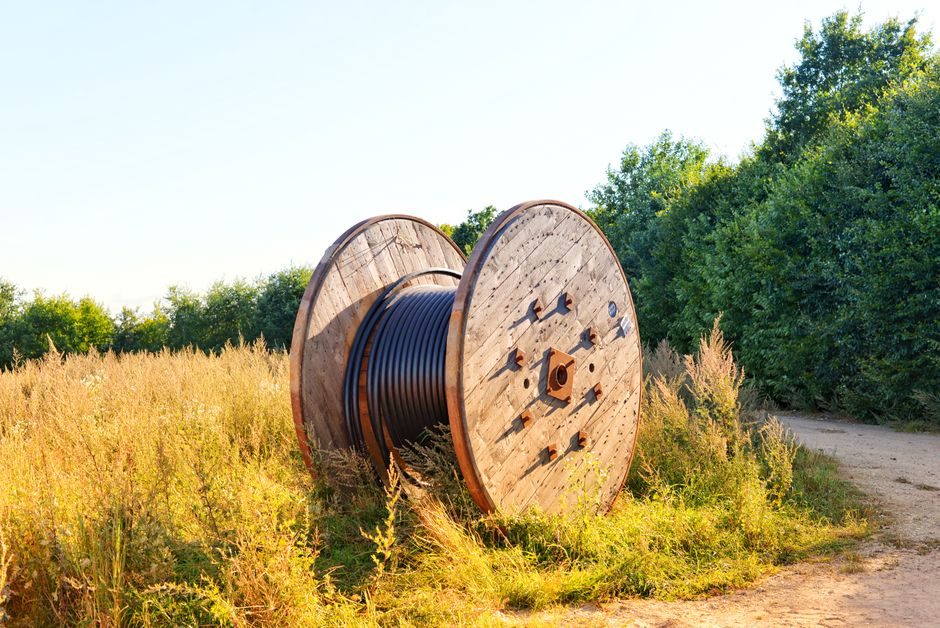
Industrial control cables on the 2026 export market are predominantly built to GB 9330 (PVC-insulated control cable) and the IEC 60227 / IEC 60502 family, with a 450/750 V class dominating instrumentation runs and 0.6/1 kV covering most power-control trays [S1][S2].
Spec sheets seen in 2026 listings consistently expose three decision gates before price: rated voltage (450/750 V vs 0.6/1 kV), core count and conductor size (2-61 cores, 0.5-10 mm²), and insulation/sheath material stack (PVC, XLPE, PE, FEP, or nylon) [S1][S2]. Buyers who fix these three numbers first can then compare like-for-like across at least five Chinese OEM catalogues.
Voltage class, core count, and conductor size: the three spec gates
Control cable spec sheets in 2026 cluster around two voltage bands: 450/750 V for instrumentation, signal, and protection circuits, and 0.6/1 kV where the same cable also serves a power-control role in motor starters, contactor panels, and MCC wiring [S1][S2]. A third, narrower band — 3.6/6 kV up to 26/35 kV — appears on XLPE/PE power-control hybrids rated to GB/T 12706 (equivalent to IEC 60502), with a 90 °C max continuous conductor temperature and a 250 °C / 5 s short-circuit limit [S3].
Core count and cross-section drive both ampacity and bending radius. Mainstream 2026 SKUs ship in 2-61 cores at 0.5-10 mm², with 0.75 mm², 1.5 mm², 2.5 mm², 4 mm², 6 mm², and 10 mm² as the high-runner sizes [S1][S2]. For multi-core runs, OEM datasheets call out a minimum bending radius of 15× the cable OD for three-core constructions and 20× for single-core, especially in the medium-voltage XLPE family [S3].
Insulation, sheath, and screen: how the codes map
Model code KVVP — the most common 2026 SKU on Chinese B2B listings — breaks down as K (control), V (PVC insulation), V (PVC sheath), P (braided screen); variants KVVP1 and KVVP2 differ mainly in braid coverage and drain-wire presence [S1]. The same OEM stack ships a 450/750 V XLPE/PE alternative whose code reads KVV, with XLPE substituted for PVC in the insulation position when higher conductor temperature or better dielectric performance is required [S1][S3].
Where the run passes near VFDs, large contactors, or instrumentation that is sensitive to common-mode noise, copper-braid screen (P) is the default; aluminum-plastic laminate (APL) and steel-tape armour (STA / STA22) are layered in for direct-burial or high-EMI routes [S1][S2]. Inner sheath codes documented in Chinese industry references map to L (aluminium), Q (lead), H (rubber), and V (PVC); the outer jacket typically defaults to V (PVC) or Y (PE) depending on flame and UV exposure [S4].
Fire performance codes: ZR, NH, WDZ, and the duty they actually cover
Derivative suffixes in 2026 control cable SKUs carry the fire-performance claim: ZR (flame retardant), NH (fire resistant / circuit integrity), WDZ (low-smoke halogen-free, enterprise-grade), and the FEP / XLPE insulation options for higher temperature ceilings [S1][S4]. A KVVP-ZR cable is the workhorse for indoor tray runs where IEC 60332-3 flame spread is specified; NH adds the 750 °C / 90 min circuit-integrity rating demanded in fire-pump and emergency-stop loops.
For subways, offshore platforms, and shipboard runs, EPR/PVC-insulated shipboard control cable appears as a separate category with its own shock, oil, and smoke approvals, typically sold at a 10-30× price premium over commodity KVVP [S3]. Buyers who do not need ABS, CCS, or DNV sign-off should not pay the shipboard premium — PVC/XLPE control cable at 450/750 V is the cost-correct choice for the bulk of factory-automation runs.
Price bands, MOQ, and supplier geography in 2026
2026 export pricing spans roughly US$ 0.10-15 per metre at the spool level, with the spread driven more by insulation stack and screening than by copper content. Entry-level PVC control cable from Henan and Hebei suppliers lists at US$ 0.34-0.55 per metre, KVVP with copper braid at US$ 0.376-8.63 per metre, and XLPE-insulated PE-sheath power-control cable at US$ 0.375-8.96 per metre; FEP, shipboard, and 26/35 kV medium-voltage SKUs sit at the top of the range [S1][S3].
Minimum order quantity is consistently 500 m on commodity KVVP, KVV, and 0.6/1 kV stock lines, climbing to 1,000 m on medium-voltage XLPE and 5,000 m on specialty push-pull / volume-control cable [S1][S2][S3]. Four production hubs dominate 2026 export supply — Henan (Zhengzhou Yuanda, Henan Guowang), Hebei (New Baofeng), Tianjin-port region, and a smaller cluster in Shanghai / Qingdao / Guangzhou shipment corridors — which matters for buyers because inland Henan factories price lower but quote longer lead times than Hebei or Tianjin.
Which control cable fits which duty

For a 450/750 V signal and control run inside a panel or cable tray, KVVP at 2.5 mm² × 4-12 cores is the default, costing roughly US$ 0.40-1.50 per metre on 2026 spot quotes [S1]. For a 0.6/1 kV MCC feeder that mixes power and control in one jacket, KVV22 (XLPE insulated, PVC inner sheath, steel-tape armoured, PVC outer) at 4-10 mm² is the practical pick. For subways, tunnels, and tunnels-with-emergency-ventilation, WDZ-grade LSZH cable with NH rating is the safer specification, priced at a clear premium.
Buyers who should NOT pick commodity KVVP include: (1) any run that needs medium-voltage rating, where GB/T 12706 / IEC 60502 XLPE cable is mandatory; (2) any run into ABS / CCS / DNV-classed marine areas, which needs the shipboard EPR/PVC family; (3) any intrinsically-safe or zone-classified hazardous area, where a dedicated blue-jacketed IS cable with appropriate earth continuity is the safe answer. For these three cases, specifying the wrong cable family is a sourcing failure that is expensive to fix after installation.
Conductor, screening, and termination choices that decide the BOM
Conductor material is the second-largest cost driver after copper content. 2026 catalogue SKUs split between bare copper, tinned copper, silver-plated copper, aluminium, and aluminium alloy, with copper-cladding rarely specified for control runs [S2]. Tinned copper adds corrosion resistance for humid or coastal sites; silver-plated copper is reserved for high-temperature FEP-insulated runs. For long-distance tray routes above 50 m, bare copper Class 2 stranded is the practical default; Class 5 fine-stranded is reserved for flexing service loops and robotics.
Screening options cascade the BOM: no screen (KVV) at the low end, copper-wire braid (KVVP) for EMC-sensitive signal, AL/PE tape + drain wire for higher-frequency rejection, and steel-tape armoured (KVV22, KVVP2-22) for direct-burial or mechanical-risk routes [S1][S2]. Termination hardware is a hidden cost — a screened, armoured cable needs glands rated for the braid, the drain wire, and the armour; an unscreened KVV does not. For buyers tracking landed cost, gland and gland-plate hardware can add 5-15 % to the cable-line item, so the cheapest cable on the reel is not always the cheapest installed.
Sourcing signals, standards to demand, and what to verify on the PO
Three standards appear on virtually every 2026 Chinese control-cable datasheet worth trusting: GB 9330 for PVC-insulated control cable, IEC 60227 for 450/750 V PVC-insulated cables, and IEC 60502 for 1-30 kV extruded solid-dielectric power cables [S1][S2][S3]. The export-grade variants add CE, CCC, and in some cases PCCC certification, plus ISO 9001 at the factory level [S3]. A PO that does not name at least one of GB 9330 / IEC 60227 / IEC 60502 as the governing standard is a red flag.
Cross-reference the cable you are about to PO against our Control Cable Selection Guide: Spec Gates for 2026 Sourcing for a side-by-side check of voltage, core count, and screening, and pair that with our encyclopedia entry on control cable construction for the model-code decoder. If the same panel also includes low-voltage signalling and relay logic, the Time Relay Selection Guide 2026 lines up the coil-voltage and contact-rating questions in parallel — that is where 24 VDC control cable cross-section decisions get stress-tested against real contactor loads.
Spec-level background on the components involved: linear guide, and crossed roller guide.