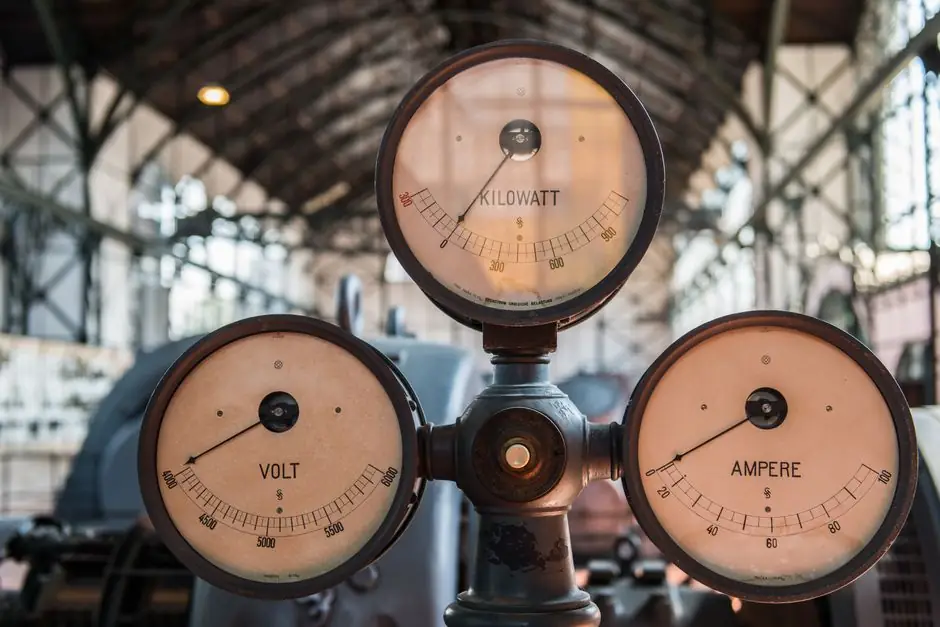
In-situ balancing can correct an installed rotor in 2–4 hours, while workshop balancing may require days or weeks but offers controlled, repeatable accuracy for the individual component [S4].
Shop balancing uses a dedicated machine with soft, calibrated bearings, whereas in-situ balancing measures the rotor in its installed bearings, foundation, couplings, alignment, and operating environment [S1][S4].
Decision Criteria: Accuracy, Downtime, and Access
Select workshop balancing for a new rotor, spare, batch of parts, or overhaul component that can be removed without disproportionate cost. The rotor is mounted on a dedicated balancing machine, where balancing is performed under controlled conditions [S4].
Select in-situ balancing for large, fixed, or difficult-to-dismantle equipment where teardown, transport, and reassembly would create unacceptable downtime. The machine remains coupled to its real bearing system and prime mover, and corrections are verified at operating speed under actual load [S1][S2][S4].
One explicit comparison governs the decision: workshop balancing offers the highest accuracy for one component, controlled repeatability, and batch efficiency, but incurs dismantling, transport, and reassembly costs. In-situ balancing offers a 2–4 hour job in the cited example, captures foundation, bearing, coupling, and alignment effects, and is better suited to operational corrections [S4].
When In-Situ Balancing Is the Correct Choice
In-situ balancing is appropriate when the machine cannot be removed safely or economically, when production downtime is critical, or when vibration appears only after installation under real operating conditions. It is commonly used on ventilation fans, blowers, hammer mills, pumps, turbines, and other installed rotating equipment [S1][S2].
The technique evaluates the rotor in its own bearings and under normal operating conditions [S5]. This captures the effects of operating frequency, rotor and bearing stiffness, load, and drive conditions, as well as balance changes caused by stress relief, erosion, and particulate buildup [S5].
The workflow has five defined stages: baseline vibration measurement, trial-weight placement, analysis and corrective-weight calculation, permanent weight installation, and verification with final readings documented in a balance report [S3].
When Workshop Balancing Remains Better

Workshop balancing is the stronger option when residual unbalance must be controlled on the individual component to a specified tolerance, especially where repeatability matters across serial production. Dedicated machines provide controlled bearing conditions and stable measurement geometry, while external vibration and temperature variation are excluded [S2][S4].
It is suitable for rotors, shafts, impellers, component assemblies, and complete fan, motor, or pump assemblies before shipment or installation [S4][S5].
A shop-balanced rotor can still require in-situ correction after installation because operating frequency, rotor and bearing stiffness, load, drive conditions, stress relief, erosion, and particulate buildup may alter its running behavior. For new installations and rebuilds, shop balancing can therefore form the quality-control baseline without eliminating the possible need for field verification [S5].
Operational Limits and Failure Modes
In-situ balancing depends on physical access for sensors, tachometer placement, trial weights, and permanent correction weights. Heat, dust, hazardous materials, restricted access, and external vibration can make the method impractical or reduce measurement confidence [S2][S4].
Field work may also require multiple machine runs to develop an accurate correction. Those runs consume operating time, and on-site labour can exceed workshop cost even though dismantling, transportation, and reassembly are avoided [S2].
Workshop balancing has a separate limitation: a rotor balanced on calibrated soft bearings does not reproduce the stiffness of installed bearings, foundation flexibility, thermal growth, process loading, coupling fit, or alignment. A low residual unbalance result on the balancing machine therefore does not guarantee equally low vibration after installation [S1][S4].
Excessive vibration should not be assumed to be pure unbalance. Field analysers can assist in distinguishing imbalance from misalignment and looseness before corrective weights are applied, because adding weight to a different fault can leave the underlying problem unresolved [S2].
Standards, Sourcing, and Acceptance Checks
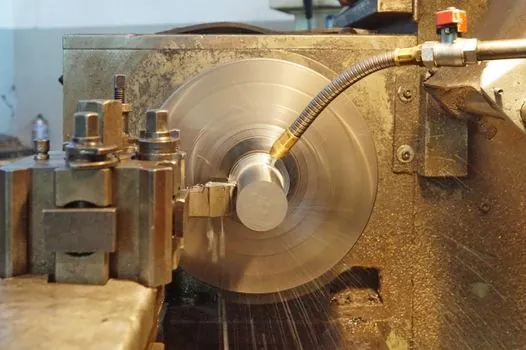
Shop balancing provides the controlled environment normally selected when compliance with the specified balance tolerance is the primary procurement requirement.
Do not select a method from the label alone. A grade designation, residual unbalance value, speed, rotor mass, support arrangement, and correction-plane configuration must be defined before comparing supplier scope. The dynamic balancing machine controls the workshop measurement environment, while a condition monitoring system can support baseline and post-correction vibration verification.
For procurement, separate the physical balancing operation from teardown, transport, reassembly, alignment, access engineering, and operating downtime. Workshop pricing that excludes dismantling and reinstallation is not directly comparable with an in-situ service quote, and neither should be accepted without the acceptance tolerance and final vibration-report requirements defined [S2][S4].
Application-Specific Recommendation
Use workshop balancing for a precision-critical component requiring G1.0 or tighter work, batch balancing of new parts, or an overhaul where removal and controlled machining are already planned. Use in-situ balancing for an operating machine with restricted disassembly access, critical production downtime, or vibration influenced by its installed foundation, bearings, couplings, or alignment [S4].
For a new machine, the practical sequence is shop balance the removable rotor, install it, verify alignment and coupling condition, then perform an in-situ running check when specified. For an operating machine with a clear unbalance signature, start with field baseline measurement and correct in place unless teardown work is already required for repair [S3][S5].
A portable accelerometer supports the baseline and verification measurements, but the final acceptance decision should combine residual unbalance, vibration reduction, operating stability, and correction-record completeness rather than rely on one number.