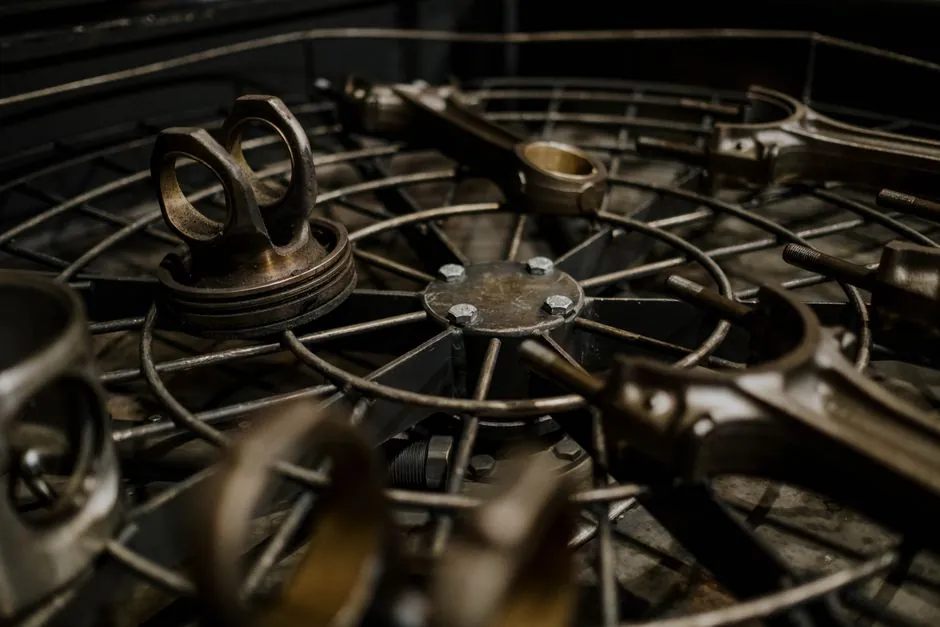
Automotive surface preparation is dominated by four machine types: hanger, catenary (overhead conveyor), tumble, and roller conveyor, each with a hard part-size, weight, and batch envelope defined in published selection tables.
Wheel velocity in centrifugal shot blasting machines typically runs 60-90 m/s, abrasive throughput ranges roughly 60 kg/min on small units to over 1,200 kg/min on multi-wheel lines, and conveyor speed must be matched to the cleanliness target rather than maximised in isolation [S8].
Match the Machine Type to Part Weight, Geometry, and Batch Size
Published selection tables segment automotive work into four practical bands: hanger-type for collision-free workpieces up to 2 t in single-piece or small-batch mode, catenary-type for automotive parts, castings, gas cylinders, and wheel hubs up to 500 kg on a fully automatic assembly line, tumble-type for small castings, fasteners, and springs up to 50 kg in bulk, and track-type (rubber belt crawler) for small to medium heat-treated parts up to 100 kg in small to medium batches [S2].
A hanger-style shot blasting machine handles medium and large auto parts where collision between parts must be avoided, and its design supports timed peening passes to raise surface roughness before coating [S1][S3]. Catenary systems win on high-volume OEM lines but carry a high investment and are difficult to switch between part families, so they suit captive automotive plants more than job shops [S2].
Selection Criteria: Cleanliness Grade, Shot Type, and Cavity Risk
Cleanliness grades in automotive pre-paint and pre-coat work sit at Sa2.5 or Sa3 per ISO 8501-1, with anchor profile and Ra defined by the next process, and a closed-loop tumble system typically handles parts 5-150 mm using steel grit, cut wire, or ceramic beads in the 0.2-2.0 mm size band [S5].
For thin-walled, deep-cavity, or precision components, drum and crawler (track) types are ruled out because of part-to-part impact, and hanger, turntable, or trolley machines are preferred so the part can be rotated or re-presented to expose shadowed areas [S2]. A 2025 OEM guide states: "If the part shadows itself, adding a wheel adds cost and power draw without adding coverage. Rotating or re-presenting the part is often the cheaper answer" [S6].
Wheel Velocity, Media, and Recovery Must Be Sized as a System
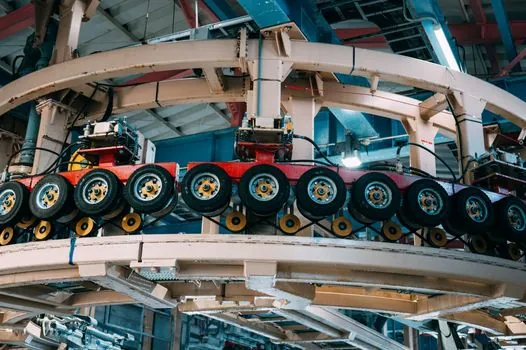
Wheel velocity in the 60-90 m/s band sets impact energy, cleaning aggression, and media fracture rate together, and higher velocity is not a free lunch because it accelerates wheel and shot wear [S8]. A 2026 wheel-selection guide confirms the same compromise: "Centrifugal wheel blast systems are widely used across automotive, foundry, forging, heat treat, and metal fabrication because they deliver speed, consistency, and strong automation potential" [S7].
Recovery has to keep up with the wheels: elevator, separator, and dust collection must return abrasive at the same rate the wheels throw it, and a 2025 engineering note warns that "if recovery is undersized, the working mix degrades and cleaning slows down even though nothing has failed. This is why two-wheel machines often pair matched-capacity recovery legs" [S6]. A tumble machine's barrel liner choice (manganese steel, rubber, or polyurethane) trades wear life against noise and part-damage risk, and is a selection factor in its own right [S5].
Options Compared on the Four Decisions That Matter
Lining the main automotive options against part weight, batch mode, collision risk, and typical industry gives a clean decision matrix: drum-type handles small parts up to 50 kg in bulk with low cost but tolerates part-to-part collision; hanger-type goes up to 2 t in single-piece or small batches with zero collision; catenary-type runs automotive lines up to 500 kg fully automatic with high investment; track-type covers heat-treated auto parts up to 100 kg in small to medium batches with rubber-belt part protection; roller-conveyor handles steel plates and structural shapes up to 4 m wide on continuous lines; turntable is for medium irregular parts, gears, and valves up to 500 kg in small to medium batches; and trolley-type carries ultra-large castings up to 500 kg as single pieces or small batches at the cost of footprint and capex [S2].
For automotive specifically, the published guide flags track-type and catenary-type as the two most common matches, with hanger-type as the third when parts are too large or too fragile for the bulk or line approach [S2]. The 2025 BESTECH buyer note for a Q324 tumble machine reinforces the same logic: "A low-cost machine may reduce your initial investment, but poor blast wheel design, weak recovery, and short-lived liners turn into hidden cost within the first year" [S10].
Limits, Failure Modes, and What Not to Specify
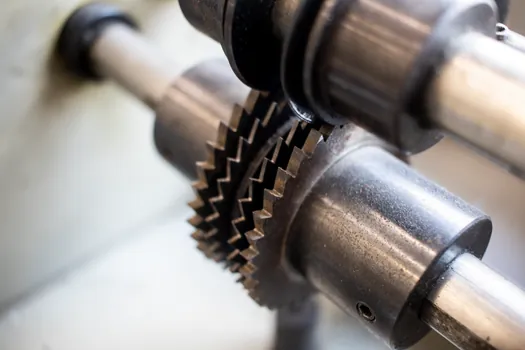
Drum and crawler machines are wrong for any thin-walled, deep-cavity, or precision automotive component, because part-to-part impact damages the surface and the geometry hides shadowed areas from the blast stream [S2]. Catenary lines are wrong for any job shop running mixed part families, because changeover is hard and line downtime is expensive relative to throughput [S2].
A wheel velocity pushed above the 90 m/s upper end of the typical band accelerates abrasive fracture, raises dust load on the collector, and shortens control cage life, and is therefore set as a tuned compromise rather than maximised for throughput [S8]. Undersized abrasive recovery is a silent failure mode: cleaning rate falls, working mix drifts in size distribution, and the operator sees a "soft" machine even though no component has broken [S6].
Standards, Sourcing, and the Sourcing Gate
Cleanliness grades Sa2.5 and Sa3 reference ISO 8501-1, the surface preparation standard that anchors most automotive pre-coat specifications [S5]. For shot peening of springs, gears, and fatigue-critical components, intensity and coverage are controlled by Almen strip procedures rather than visual grade, and peening-specific shot blasting machines are specified separately from cleaning machines [S3].
When sourcing, lock three specs on the quote: wheel diameter and kW per wheel, abrasive throughput in kg/min, and the media size band the recovery separator is tuned to, and reject any quote that gives only a model code and a price [S7][S8]. For buyers also weighing robotic finishing or peening of large casting lines, the same wheel-recovery balance logic applies to sand blasting machines configured for room work, where nozzle pressure, recovery floor, and dust collection are the matched trio rather than wheel velocity and elevator capacity [S8]. Buyers comparing machine type to part size can cross-check on the encyclopaedia entry for shot blasting machine and on the part-size, weight, and feature table reproduced in the KEEJOO selection note [S2][S8].
Two trackable signals for the next 90 days: the next round of OEM technical sheets on catenary line changeover time, and any 2026 update to Q-series tumble machine maintenance intervals for the rubber and polyurethane liner options.
For the relevant spec sheets and selection criteria, see shot sleeve.
This topic is covered further in Heat Detector Selection for Construction Sites: Spec Map 2026.