
Vertical automatic shell core machines in the 8-25 kg single-shot class cover 70-90% of foundry work tied to telecom-enclosure castings, with platen footprints from 550x400 mm up to 1100x900 mm, 25-45 s cycle times, and 0.4-0.7 MPa shooting pressure as the four hard numbers that decide a 2026 purchase [S2].
Telecom-enclosure cores are typically small-to-mid shell geometries: junction boxes, distribution frames, antenna radome bosses, 19-inch rack mount housings, where shot weight sits in the 5-20 kg band and draw depth rarely exceeds 200-250 mm, so the vertical-toggle machine class is the practical answer for most lines [S2]. The general shell core machine reference covers the common toggle-clamp envelope that Chinese and European OEMs use for this duty, and the same selection logic overlaps with the shell core shooter category for the 8-25 kg shot band.
Platen Size and Core Box Footprint for Enclosure Cores
Platen size is the first gate and scales almost linearly with shot weight: entry-level vertical units run 550x400 mm to 700x500 mm and deliver 5-8 kg per shot, mid-range machines span 800x600 mm to 900x700 mm at 12-20 kg per shot, and the heavy-duty 1000x800 mm to 1100x900 mm class supports 25-40 kg single-shot weights [S2]. For telecom-enclosure work the typical call lands in the 700x500 mm to 900x700 mm band, which lines up with the 8-20 kg shot envelope and 24-36 kW platen heating class [S2].
Beyond footprint, the 200-250 mm draw-depth ceiling is a hard practical limit for most vertical toggle clamps. Horizontal clamp frames open up 300-500 mm draws but cost 1.5-2x the vertical equivalent at the same platen class, which is rarely justified for 19-inch rack mount and junction-box cores [S2]. Buyers comparing telecom enclosure work against a sister duty can review the broader thin-wall hardware sizing logic in the shell core machine selection for hardware manufacturing map, since the platen-to-shot-weight ratio is shared.
Shot Weight, Resin Density and Platen Heating
Single-shot resin-sand weight is the most often misread number on a Chinese-OEM datasheet: the "maximum" figure typically assumes a low-density phenolic resin mix at 1.45-1.55 g/cm³ and a 70-75% fill ratio, so a 25 kg-rated machine usually delivers 18-20 kg on a real furan or phenolic no-bake shell core [S2]. Telecom-enclosure cores using standard phenolic-urethane shell resin at 1.50-1.60 g/cm³ will land at the lower end of any rated shot number, and the core machine glossary entry flags the same point: rated shot weight is binder-density-dependent, not a fixed sand-mass number.
Heating power tracks shot weight and platen class: small 5-8 kg machines run 12-18 kW electric platens heated to 220-260 °C, mid-range 12-20 kg units need 24-36 kW with gas-boosted platens common above 30 kW, and the 25-40 kg heavy class typically specifies 48-72 kW of electric heating with optional 60-90 kW gas burner backup for cold-start recovery under 15 min [S2]. For telecom cells a practical rule is 1.2-1.5 kW of platen power per kilogram of single-shot weight when sizing electrical infrastructure, which keeps a 15 kg-per-shot enclosure line on a 20-25 kW platen circuit [S2].
Cycle Time, Shooting Pressure and Curing Window
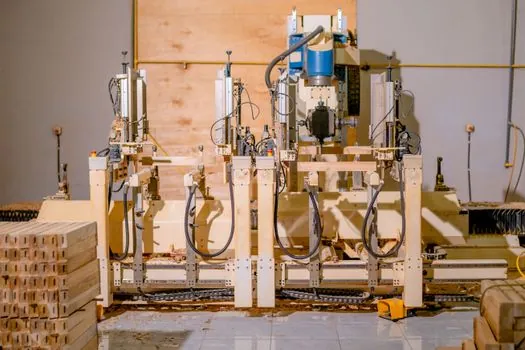
Cycle time is the throughput lever, and on a 2026 vertical automatic the realistic range is 25-45 s per core at 0.4-0.7 MPa shooting pressure, with the higher end of pressure reserved for thin-wall or deep-draw cores where sand compaction has to fight bridging [S2]. For telecom-enclosure geometry the mid-band 30-40 s cycle with 0.5-0.6 MPa shooting pressure is the working point, and the hot-box core machine cross-reference applies because the curing energy profile (220-280 °C platen, 15-30 s dwell) overlaps with the low end of the shell process.
Resin-coated sand cost is the hidden tax on a shell line. A phenolic no-bake backup mix is worth specifying for cores that are too large for the shell platen, since handhole cover frames above 25 kg per core typically route through a shell molding machine flasks line rather than a single-shot shooter [S2][S3].
Selection Criteria: Alloy, Tolerance, Lot Size
Process choice starts with the casting alloy. Gray iron and ductile iron telecom frames tolerate higher sand temperatures and coarser grain, so a hot-box core machine running furan or phenolic resin-bonded sand at 200-250 °C is normally sufficient [S3]. Aluminum components need finer silica or chromite sand and tighter thermal control, which favors a shell core machine using pre-coated resin sand dropped at 220-260 °C [S2][S3].
Tolerance decides the next step. Handhole cover frames commonly call for linear tolerance of ±0.5 mm on machined faces and ±1.0 mm on as-cast features. Shell cores hold that band consistently; cold-box (PU cold-box, phenolic-urethane) cores match it when amine catalyst and sand temperature are controlled within ±2 °C of the resin supplier's curve; hot-box cores drift more on long thin sections, so they are best reserved for short, thick features such as flange bosses and rib junctions [S3]. The cold-box core machine reference applies here for any amine-cured alternative a foundry may benchmark against.
Lot size separates the equipment classes. Manual or semi-automatic core machines make economic sense below 200 cores per shift; above 500 cores per shift a shell or cold-box shooter with automatic sand mixing, shooting, and curing becomes cheaper per piece, despite higher capex [S3]. Coding equipment should be specified alongside any new core line, not retrofitted later, because the recipe history becomes a quality-system deliverable; a coding machine for retail distribution lines is a useful analogue for the lot-code and shift-log integration pattern that the foundry version inherits.
Comparison: Shell vs. Cold-Box vs. Hot-Box for Telecom Castings
A side-by-side view clarifies the trade. Cold-box cores deliver comparable accuracy with cheaper raw sand, at the cost of amine catalyst handling, gas curing, and a more complex scrubber train. Hot-box cores are the lowest-capex option, but the longer cure (40-90 s) and coarser tolerance (±0.8-1.2 mm) push them into the short-feature bracket only [S3].
For telecom castings, a four-criterion ranking holds: dimensional control (shell first, cold-box second, hot-box third), cycle time (shell 15-30 s, cold-box 20-40 s, hot-box 40-90 s), capex per kg of hourly output (hot-box lowest, shell mid, cold-box highest once the amine loop is included), and sand-system operating cost (cold-box lowest, hot-box mid, shell highest because of pre-coated resin premium) [S2][S3]. A 19-inch rack mount housing at 8-12 kg per core in ductile iron, produced at 600 cores per shift, is the cleanest fit for a mid-range vertical shell shooter; a cast-iron handhole frame at 30-40 kg per core is the cleanest fit for a shell core shooter in the 1000x800 mm platen class.
Failure Modes and Operating Constraints
Three failure modes show up on telecom-enclosure shell lines. First, bridging on thin-wall radome bosses above 150 mm draw: cure-side sand falls out of the heated platen before the shell forms, and the cure is to bump shooting pressure to 0.6-0.7 MPa and drop platen temperature to 230-240 °C to slow the skin set [S2]. Second, amine carry-over on lines that run shell and cold-box side by side: residual triethylamine from a cold-box run attacks the phenolic-urethane shell binder and produces soft patches, so a 30-60 min purge cycle between process changes is standard on mixed lines [S3].
Third, platen heating drift on extended 24-hour shifts: 24-36 kW platens stabilize at 235 ±5 °C in steady state but sag to 215-220 °C under continuous load above 30 cycles per hour, which the resin supplier curve does not forgive [S2]. The fix is a gas burner backup of 60-90 kW for cold-start recovery under 15 min, or a duty-cycle cap at 25-28 cycles per hour for electric-only lines [S2]. For shop-floor coding and recipe logging, the same traceability principle that drives a coding machine for chemical shipping applies, since both environments demand batch-level proof of cure temperature and cycle count.
Sourcing, Standards and Documentation
Spec sheets to demand from any 2026 OEM: a rated shot weight stated with the resin density used (1.50 g/cm³ is the de facto telecom-enclosure baseline), a platen temperature uniformity map at steady state, a shooting-pressure-versus-draw-depth curve, and an amine-loop purge protocol if the line is mixed shell/cold-box [S2][S3]. For load-rating compliance on buried handhole covers, ANSI/SCTE-77 governs the structural test sequence, and it is the buyer's responsibility, not the core-machine vendor's, to confirm that the as-cast core produces a frame geometry that passes the test at the specified load class [S3].
Two trackable signals close the loop on a 2026 purchase. First, request a five-core sample run at the buyer's resin supplier's nominal density and a 70% fill ratio, then weigh the cured cores against the rated shot number: a discrepancy above 15% means the OEM's "max" figure assumes a low-density mix the buyer will never run [S2]. Second, ask for the platen temperature uniformity map at the cure setpoint and compare it against the resin supplier's ±5 °C window: a uniformity spread above 10 °C is a soft-core and warping risk on telecom-enclosure thin-wall castings [S2][S3].