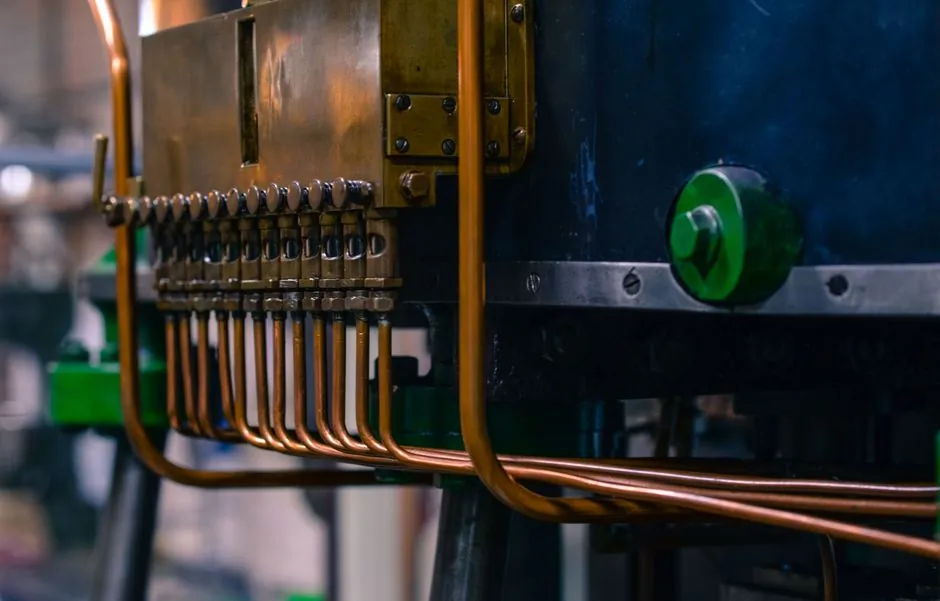
A shell core machine is sized by core weight and box footprint first, not by brand or control platform; sand thermal demand, resin class, exhaust duty follow, then cycle time and finally automation tier [S6]. Buyers in 2026 sit in the 200–5,000 t/yr jobbing-foundry band, where shell productivity beats hand core-blowing but does not justify a full automatic flask line [S4].
For hardware manufacturing, hardware meaning ferrous and non-ferrous castings for fittings, valves, and machinery sub-assemblies, the typical 2026 spec is a 600×500 mm core box, 12–25 kg max shot weight, 0.55–0.7 MPa system pressure, and 20–30 kW electric platen heating, sourced from the Fujian or Shandong vendor cluster at US$ 500–1,380 per set [S2][S4].
Seven engineering gates that decide spec before you quote
The first gate is core weight and box footprint, since max shot and platen size are the hardest specs to upgrade later; Z95 series machines from Qingdao Powerfu step from 15 kg shot at 450×400 mm (Z954K) to 40 kg at 950×600 mm (Z959K) within a single product line [S2]. The second gate is parting direction: vertical-parting machines, such as the Makewell MTSV-4030-M through MTSV-6040-MT, serve heavy solid cores, while horizontal-parting units suit thin-walled shell cores and faster cycling [S1].
Gate three is sand thermal demand, where phenolic/urethane-coated sand for shell process consumes 2.5–4.0% binder by weight and demands 220–280 °C platen temperature for an 8–25 mm shell cure in 30–90 s [S4]. Gate four is shot pressure: typical values sit at 0.4–0.7 MPa for shell and hot-box service, with static-pressure heads pressurised to 0.2–0.4 MPa over the core box for deep narrow cores above 15 kg [S4][S7]. Gates five through seven are cycle time (12–40 s depending on head type), exhaust and ventilation duty for resin smoke, and automation tier from manual bench through fully automatic cell with core retrieval trolley [S1][S6].
Three core-shooter head types: gravity, sand-blow, static-pressure
Gravity-fill heads are the cheapest option, suited to shallow low-density cores up to 3 kg, but cycle times run 25–40 s and density is the lowest of the three. Sand-blow pneumatic heads at 0.5–0.7 MPa raise cured density to 1.4–1.6 g/cm³ and drop cycle time to 12–20 s for 5–15 kg cores, which is why 2026 mid-size shell core machines standardise on this head type [S4].
Static-pressure heads hold 0.2–0.4 MPa over the core box from a pressurised sand tank, delivering the most consistent density for deep narrow cores above 15 kg, at the cost of higher compressor load and longer dwell [S4]. For a process engineer comparing options on four decision criteria, the trade matrix is: cost (gravity lowest, static-pressure highest), cycle time (sand-blow fastest at 12–20 s), density uniformity (static-pressure best, gravity worst), and compressor demand (static-pressure 30–50% higher than sand-blow).
Box heating: electric platen versus gas-fired burner
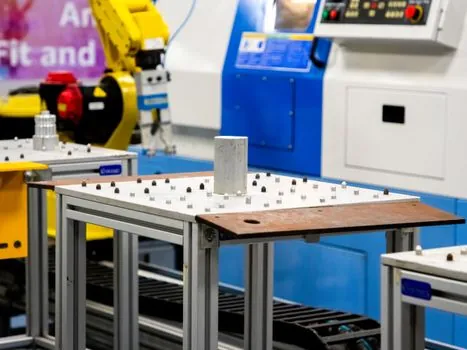
Electric platens on Z95-series machines step from 20 kW at the 450×400 mm Z954K up to 60 kW at the 950×600 mm Z959K, with closed-loop thermocouple control holding the working surface within a few degrees of set point [S2][S9]. Gas-fired burners become economical on plates above 800 mm where electric kW cost outweighs gas BTU cost, with quoted heating capacity on large gas-fired shell machines reaching several hundred thousand BTU per hour [S9].
For hardware foundries running two or three shifts on a 600×500 mm box, 25–30 kW electric heating is the default; the working envelope reaches 220–280 °C across the cavity within 20–30 minutes from cold start, and the exhaust must be sized to handle phenolic condensate at the dump-box inversion step [S4][S9]. Operators running mixed ferrous and non-ferrous work on a single shell core machine should verify that the heating control supports independent top and bottom platen zones, since cure uniformity is the difference between a shell that survives iron pour and one that cracks on the conveyor [S8].
Cycle time, dry-cycle benchmarks, and the real bottleneck
Dry cycle time on the Makewell MTSV series is 20 s across all three models, but loaded cycle time is cure-limited and not infinitely reducible; medium shell cores settle at 30–60 s end-to-end once sand fill, dwell, inversion, and ejection are summed [S1][S7]. Sand-blow heads add 12–20 s for the actual fill and shoot on 5–15 kg cores, after which the box must dwell until the resin reaches full cure at the set platen temperature [S4].
The bottleneck on most hardware-foundry shell lines is not the core shooter itself but core output, meaning how many boxes per hour come off the machine ready to drop into the next mold; one rule of thumb pairs a single shell-molding line with 2–3 core shooters because core throughput gates the line [S4]. For a foundry running 1,000 cores/day, a 600×500 mm box with 20 s dry cycle and 45 s loaded cycle delivers just over 1,200 cores per shift, which is the spec the Z956K and MTSV-5030-M are typically quoted against [S1][S2].
Selection criteria comparison: small bench, mid-size, full shell-molding
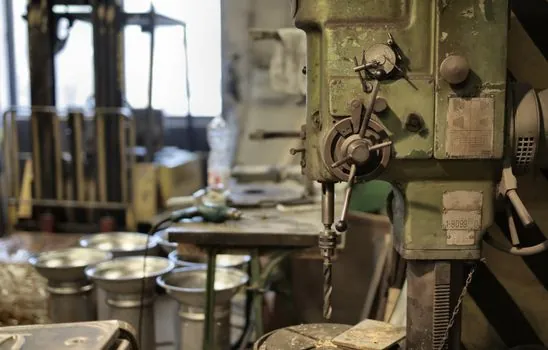
On the same four decision criteria, the 2026 China-sourced lineup splits clearly. A small bench-top core shooter at 300×200 mm box, 3 kg shot, 0.5 MPa, ~6 kW, and US$ 90–400/set suits brass and aluminium job shops under 200 cores/day. A mid-size shell core machine at 600×500 mm, 12 kg shot, 0.6 MPa, 18 kW, and US$ 500–900/set is the default for 500–2,000 cores/day iron foundries. A full shell-molding line at 1000×800 mm plate, 30–50 kg shot, automated dump-box, 36 kW, and US$ 1,000–1,380/set is the right spend for thin-wall shell castings in the 10–60 kg weight band [S4].
The same spec frame on the Makewell MTSV-6040-MT is a 600×500×400 mm tool, 25 kg shot, top-and-multi blow, 200 kg sand hopper, 400 kg core box weight, and 10 kW electricity at 5–7 kg/cm² pneumatic, with optional bottom tilting swing, auto sand feeder, and core retrieval trolley [S1]. Buyers who only need cores to drop into a green-sand or floor-mold mold should stop at a shell core machine and skip the shell-molding line entirely, since the capital step from US$ 900 to US$ 1,380 buys flask and pattern plate capacity the core-only shop will not consume [S4].
Standards, sourcing, and what to verify before purchase
Most 2026 China-origin shell core machines ship with ISO 9001 certification and a 12-month warranty, with engineering service available overseas on the same terms [S2]. System pressure on the Z95 family is published at 0.55–0.7 MPa across all six models, which is a tight band and lets the buyer standardise on a single compressor class for a multi-machine foundry [S2]. For the broader core machine selection context, binder and gas-handling choices on hot-box and cold-box machines carry different retrofit costs that do not apply to a pure shell-process line.
Before signing a purchase order, lock four numbers in writing: max shot weight, platen size, system pressure, and heating kW, then check that the dry-cycle figure is given at the same platen temperature you will run, since the 20 s number on the Makewell spec is for an empty cycle and loaded cycle will be cure-limited [S1][S6]. A shop running mostly short cores under 5 kg should verify the shell core shooter sand-blow head at 0.5–0.7 MPa rather than overspending on a static-pressure head; conversely, a shop running deep narrow water-jacket cores above 15 kg will not get acceptable density from gravity fill and should specify static-pressure from the quote stage [S4][S7]. For the aerospace-adjacent hardware tier, where tighter density and shell-thickness control push buyers toward matched platen heating and resin-class control, the parallel map at Shell Core Machine Selection for Aerospace Castings: 2026 Spec Map covers the spec band one tier above general hardware. Track next the resin-class certification on the coated sand supplier's data sheet and the exhaust ventilation spec on the foundry's air permit, both of which can retroactively force a heating or cycle-time change that a US$ 500–900/set quote did not anticipate.