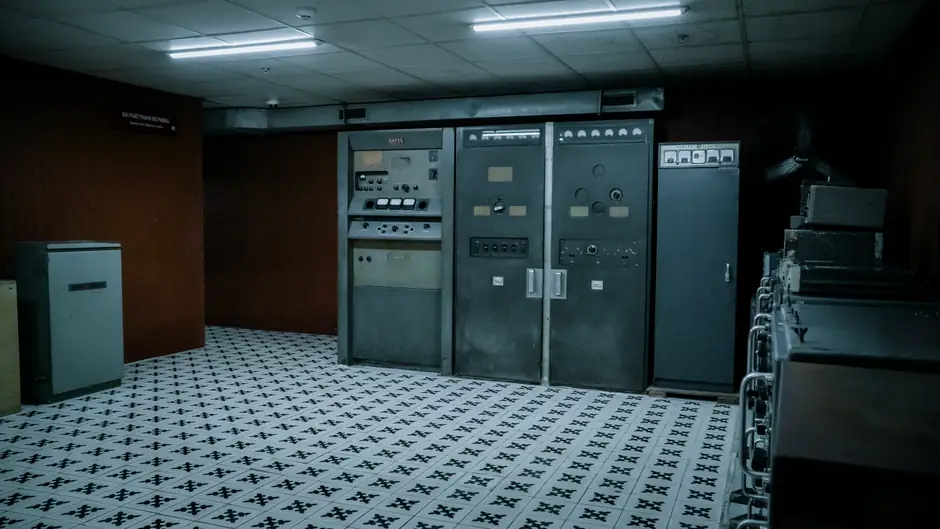
Electronics housings, typically aluminium server chassis, zinc die-cast enclosures, and thin-wall steel instrument cases in the 0.5-5 kg range, call for a controlled-impact, low-velocity blast rather than a heavy foundry-style tumblast [S1][S4].
The dominant configurations for these parts are cabinet-type and table-type shot blasting machines, both sized to keep part-on-part collision low and to allow single-piece fixturing when the housing geometry has deep cavities or threaded features [S9].
Why Tumblast Is Usually the Wrong Starting Point for Housings
A tumblast (also called tumble belt) shot blasting machine is sized by working load and cycle time, and it works on the premise that parts come in bulk, loose, and can be tumbled against each other [S2]. For electronics housings this premise fails on three counts: wall thickness is often below 1.5 mm and cannot tolerate repeated impact, mating faces and threaded bosses are masked by neighbouring parts in the load, and the resulting dent pattern shows up as visible cosmetic reject on the painted or anodised surface. The same source notes that tumblast machines are workhorse for iron and steel castings, fasteners, and springs, not for thin-wall enclosures [S2]. When a customer still wants batch cleaning, the practical workaround is to use a tumble machine for raw casting blanks only, then move the machined housings to a cabinet or table type shot blasting machine for the pre-paint step.
Cabinet vs. Table Type: Decision Criteria for Housing Cleaning
A cabinet-type machine is a closed enclosure with a door, a single blast gun or small wheel, a viewing window, and a dust collector; it suits low-to-medium volume, large or awkward parts, and manual loading [S9]. A table-type (rotary table) machine has a flat rotating worktable that carries several pieces under a fixed blast wheel or nozzle, which suits higher volumes of small, flat-bottomed parts and allows indexed PLC control of exposure time [S9]. For electronics housings the practical selection gate is part weight under 20 kg, presence of machined sealing faces, and required surface finish. Glass bead media at 100-200 μm grain size with a wheel velocity around 60 m/s produces a matte satin finish without embedding ferrous contamination, which is why it is common for pre-anodise cleaning of aluminium housings [S4][S8]. Steel shot at the same grain size gives a brighter cut and is preferred when the next step is powder coating, but it leaves a faint iron smear on aluminium unless the process is followed by a de-ironing rinse.
Technical Parameters That Actually Move the Decision
The four parameters that drive a housing-line selection are blast capacity, abrasive type, wheel speed, and dust collection sizing, per BESTECH's parameter map [S4]. Blast capacity for a single table machine typically falls in the 60-200 kg/min range, while a multi-wheel continuous line exceeds 1,200 kg/min; electronics housing lines almost always sit at the low end because cycle time is dominated by loading and fixturing, not by abrasive throw rate [S4][S8]. Wheel velocity is the tuning knob: 60-90 m/s is the standard band, and pushing above 80 m/s on aluminium increases media fracture rate without a proportional gain in cleanliness [S8]. Abrasive selection is governed by substrate: glass bead or aluminium oxide for aluminium and zinc, fine steel shot (S230 / S280, roughly 0.4-0.8 mm) for steel housings, and plastic media in the 0.6-1.0 mm range when the housing has a pre-applied powder coat that must not be stripped [S4]. A typical housing line quotes a 4-6 minute cycle time per fixture and 6-8 fixtures on the rotary table, giving 60-80 housings per hour for a single-station table machine, per the cabinet/table type comparison in Airo's December 2025 write-up [S9].
PLC Control, Automation, and the Consistency Argument
PLC-controlled shot blasting machines with VFD-driven wheels and sensor-monitored abrasive hoppers are the standard offering in this segment, and the documented payback logic is consistency rather than raw throughput [S3]. A PLC recipe stores wheel speed, cycle time, abrasive feed rate, and dust collector interlock per housing part number, which removes operator drift on a line that runs 5-10 part numbers per shift [S3]. For safety, the chamber doors are interlocked so the wheel cannot run when the door is open, and the dust collector is sequenced to start before the wheel and stop after, which keeps the baghouse from carrying live shot on shutdown [S3]. The same source flags manganese steel and polyurethane as the two common liner materials for the blast chamber, with polyurethane preferred when the line handles mixed aluminium and steel because it does not generate sparks on impact [S3]. The generic configuration guidance, applicable across PLC rotary-table and cabinet machines for housing work, is summarised in the rotary shot blasting machine selection map that Qinggong and other Tier 2 Chinese OEMs publish as a buyer's starting checklist [S1].
Sourcing Standards and What to Put on the RFQ
The two RFQ lines that catch the most mistakes are abrasive specification and emission compliance. Abrasive should be called out by standard grain size (SAE J444 for steel shot, MIL-PRF-9954 for glass bead when defence or aerospace traceability is required, or the OEM's internal glass-bead spec when it is not), not by a vague "fine media" note, because wheel and cabinet vendors tune their dust collector and reclaim screen to a specific media size range. Emission compliance typically references the local particulate limit; in the EU the benchmark is the industrial emission directive's 10 mg/Nm³ ceiling for abrasive blasting dust, while in the US the comparable New Source Performance Standard (NSPS) for metal abrasive cleaning is 40 CFR 63.1156, which sets a 0.01 g/dscm (10 mg/dscm) total metal HAP limit for affected sources, so the dust collector specification and the media choice must be aligned up front rather than retrofitted at commissioning [S2][S5]. Floor space, available ceiling height for the bucket elevator, and compressed-air supply for a cabinet gun (typically 80-100 cfm at 80-100 psi for a 1/2 inch nozzle) belong on the layout drawing before the machine vendor visits, per the CS Factor selection checklist [S5].
Limits, Failure Modes, and When to Walk Away
The three failure modes that show up within the first six months on a housing line are denting of thin walls, embedding of ferrous media in aluminium, and excessive dust carryback from an undersized baghouse [S2][S4]. Denting is fixed by switching from a tumble machine to a rotary table or by adding internal fixturing if tumblast is non-negotiable; embedding is fixed by moving from steel shot to glass bead or by adding a de-ironing rinse downstream; dust carryback is fixed by upsizing the collector to the wheel's peak load, not its average load, because the dust load spikes during the first 10-15 seconds of each cycle [S2]. Two signals to track over the next quarter: (1) whether cabinet-type machines with 6-axis robots start displacing rotary tables for low-volume, high-mix housing work, and (2) whether the EU's revised Industrial Emissions Directive pushes more housing lines to specify closed-loop abrasive reclaim with a HEPA-after-baghouse stack. The closest parallel to this spec-by-application gate in another finishing market is the lighting-fixtures selection map, which faces the same thin-wall, cosmetic-surface conflict between throughput and damage rate.
For readers cross-checking finishing steps on a related enclosure line, the shot blasting machine selection map for lighting fixtures walks the same cabinet vs. table decision for aluminium and steel lamp bodies, and it is a useful sanity check on wheel velocity and glass-bead sizing for cosmetic-grade surfaces.
The underlying component specifications are covered under sand blasting machine, and shot sleeve.